Panelists discuss novel and investigational therapies under study for small cell lung cancer, including immunotherapy combinations and targeted approaches.

Your AI-Trained Oncology Knowledge Connection!


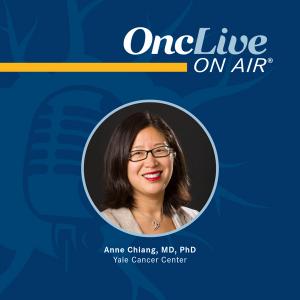
Anne Chiang, MD, PhD, is an associate professor of medicine in the Section of Medical Oncology and the associate cancer center director of Clinical Initiatives at the Yale School of Medicine

Panelists discuss novel and investigational therapies under study for small cell lung cancer, including immunotherapy combinations and targeted approaches.

Panelists discuss real-world experiences with novel agents for relapsed small cell lung cancer, focusing on efficacy, safety, and patient selection.

Panelists discuss treatment decision-making in second-line small cell lung cancer, balancing efficacy, toxicity, and patient-specific factors.

Panelists discuss the importance of shared decision-making, patient communication, and adherence strategies in small cell lung cancer treatment.

Panelists discuss therapeutic strategies for recurrent small cell lung cancer with central nervous system involvement, emphasizing adverse event (AE) management and patient support.

Panelists discuss the clinical relevance of emerging trial data evaluating combination maintenance strategies and their potential role in practice.

Panelists discuss practical considerations in selecting first-line regimens and managing maintenance therapy in patients responding to initial treatment.

Panelists review key clinical trial data demonstrating the efficacy and safety of chemo-immunotherapy regimens in extensive-stage small cell lung cancer.

Panelists discuss the diagnostic evaluation and staging process for extensive-stage small cell lung cancer, emphasizing comprehensive imaging and laboratory workup to guide initial treatment planning.

Panelists discuss how patient and disease factors, such as performance status, comorbidities, and extent of metastases, influence first-line treatment selection in small cell lung cancer.

Drs Chiang and Liu discuss the significance of the FDA approval of first-line maintenance therapy with lurbinectedin plus atezolizumab for ES-SCLC.

Dr Chiang discusses the use of lurbinectedin in small cell lung cancer and tips for managing toxicities associated with this agent.

In a forward-looking discussion, Ticiana Leal, MD; Anne Chiang, MD, PhD; Afshin Dowlati, MD; and Tarita O. Thomas, MD, PhD, offer their concluding insights on the evolving landscape of clinical trials and the future directions of small cell lung cancer (SCLC) treatment, highlighting promising areas of research and potential breakthroughs that may shape the management of this challenging disease in the years to come.

Experts delve into the DAREON-8 Phase 1 clinical trial, assessing the potential impact of incorporating the study into the current treatment algorithm for small cell lung cancer (SCLC).

Medical experts review the Ideate-Lung02 phase 3 clinical trial, exploring the potential for ifinatamab to elicit durable responses in patients with advanced small cell lung cancer (SCLC), and discussing the implications of these findings for the future treatment landscape of SCLC.

In a detailed analysis, key opinion leaders (KOLs) review the results of the DELLphi-301 Phase 2 clinical trial, assessing the efficacy of platinum-based chemotherapy in the treatment of small cell lung cancer (SCLC) and its impact on overall survival outcomes for patients enrolled in the study.

In a focused discussion, Anne Chiang, MD, PhD, explores the sequencing of later-line therapies for limited-stage small cell lung cancer (LS-SCLC), emphasizing key factors to consider when making treatment decisions for patients who have progressed on initial therapy.

Anne Chiang, MD, PhD, discusses treatment options for patients with extensive-stage small cell lung cancer.

Anne Chiang, MD, PhD, discusses the management of immune-related adverse effects in lung cancer.

A new FDA program is giving patients and providers first-time access to patient-reported outcome data from cancer clinical trials of marketed treatments.

Consolidation of community oncology practices with hospital-based cancer centers is an accelerating trend that will affect future healthcare delivery models. This year, the Community Oncology Alliance reported hospital acquisitions and corporate mergers among 55% of 1338 community oncology practices surveyed, representing a 20% increase over the previous year's results.

Published: October 2nd 2025 | Updated:

Published: September 10th 2020 | Updated:

Published: August 29th 2024 | Updated:

Published: October 21st 2013 | Updated: