Tarita O. Thomas, MD, PhD
Articles by Tarita O. Thomas, MD, PhD
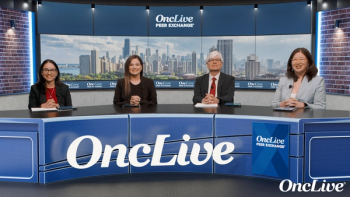
In a forward-looking discussion, Ticiana Leal, MD; Anne Chiang, MD, PhD; Afshin Dowlati, MD; and Tarita O. Thomas, MD, PhD, offer their concluding insights on the evolving landscape of clinical trials and the future directions of small cell lung cancer (SCLC) treatment, highlighting promising areas of research and potential breakthroughs that may shape the management of this challenging disease in the years to come.
Experts delve into the DAREON-8 Phase 1 clinical trial, assessing the potential impact of incorporating the study into the current treatment algorithm for small cell lung cancer (SCLC).
Medical experts review the Ideate-Lung02 phase 3 clinical trial, exploring the potential for ifinatamab to elicit durable responses in patients with advanced small cell lung cancer (SCLC), and discussing the implications of these findings for the future treatment landscape of SCLC.
In a detailed analysis, key opinion leaders (KOLs) review the results of the DELLphi-301 Phase 2 clinical trial, assessing the efficacy of platinum-based chemotherapy in the treatment of small cell lung cancer (SCLC) and its impact on overall survival outcomes for patients enrolled in the study.
In a focused discussion, Anne Chiang, MD, PhD, explores the sequencing of later-line therapies for limited-stage small cell lung cancer (LS-SCLC), emphasizing key factors to consider when making treatment decisions for patients who have progressed on initial therapy.
Redefining SCLC: Molecular Subtypes and Blood Biomarkers Guide Therapy
ByTiciana A. Leal, MD,Anne Chiang, MD, PhD, Yale School of Medicine Smilow Cancer Hospital,Afshin Dowlati, MD,Tarita O. Thomas, MD, PhD Key opinion leaders investigate the potential impact of redefining small cell lung cancer (SCLC) as a molecularly heterogeneous malignancy on personalized treatment strategies for SCLC subtypes with distinct therapeutic vulnerabilities, while exploring the emerging role of blood-based biomarkers in shaping the evolving treatment landscape for SCLC.
Examining the use of PD-L1 and tTMB in the CASPIAN Trial
ByTiciana A. Leal, MD,Anne Chiang, MD, PhD, Yale School of Medicine Smilow Cancer Hospital,Afshin Dowlati, MD,Tarita O. Thomas, MD, PhD Key opinion leaders examine the PD-L1 expression and tissue tumor mutational burden (TMB) data from the CASPIAN trial, which evaluated the combination of durvalumab with platinum-etoposide for extensive-stage small cell lung cancer (ES-SCLC), weighing the potential predictive value of PD-L1 and tissue TMB in assessing progression-free survival (PFS) and objective response rate (ORR) outcomes.
Overcoming Immunotherapy Resistance in Small Cell Lung Cancer
ByTiciana A. Leal, MD,Anne Chiang, MD, PhD, Yale School of Medicine Smilow Cancer Hospital,Afshin Dowlati, MD,Tarita O. Thomas, MD, PhD Medical experts specializing in small cell lung cancer (SCLC) delve into the complex topic of immunotherapy resistance, exploring potential mechanisms, clinical implications, and potential strategies to overcome this challenge in the treatment of patients with SCLC.
Predictors of Immunotherapy Response in Limited and Extensive SCLC
ByTiciana A. Leal, MD,Anne Chiang, MD, PhD, Yale School of Medicine Smilow Cancer Hospital,Afshin Dowlati, MD,Tarita O. Thomas, MD, PhD Afshin Dowlati, MD, explores which patients with small cell lung cancer experience the most significant benefit from immunotherapy in both limited and extensive stage disease, while also examining potential clinical or molecular characteristics that could serve as predictors of prolonged survival.
Examining 3-Year Update Data from the CASPIAN Trial
ByTiciana A. Leal, MD,Anne Chiang, MD, PhD, Yale School of Medicine Smilow Cancer Hospital,Afshin Dowlati, MD,Tarita O. Thomas, MD, PhD A medical expert discusses the impact of the 3-year overall survival data from the CASPIAN trial on the treatment landscape for extensive-stage small cell lung cancer (ES-SCLC), emphasizing the significance of the long-term follow-up results in shaping the current treatment paradigm.
cCRT-to-Durvalumab Interval in Limited Stage LS-SCLC
ByTiciana A. Leal, MD,Anne Chiang, MD, PhD, Yale School of Medicine Smilow Cancer Hospital,Afshin Dowlati, MD,Tarita O. Thomas, MD, PhD Tarita O. Thomas, MD, PhD discusses patients with LS-SCLC, and what she would consider to be a reasonable time interval between completion of cCRT to initiation of consolidation therapy with a PD-L1 inhibitor. The panel also discusses the potential for curative-intent immunotherapy with durvalumab for earlier stages of SCLC.
ADRIATIC Trial: Durvalumab, cCRT Timing, and Survival in LS-SCLC
ByTiciana A. Leal, MD,Anne Chiang, MD, PhD, Yale School of Medicine Smilow Cancer Hospital,Afshin Dowlati, MD,Tarita O. Thomas, MD, PhD Panel experts analyze findings from the phase 3 ADRIATIC trial, examining overall and progression-free survival data, exploring the interaction between durvalumab and concurrent chemoradiotherapy within the tumor microenvironment, and evaluating the impact of time intervals from the completion of concurrent chemoradiotherapy to the initiation of consolidation therapy with a PD-L1 inhibitor.
Optimizing First-Line Therapy for Limited-Stage Small Cell Lung Cancer
ByTiciana A. Leal, MD,Anne Chiang, MD, PhD, Yale School of Medicine Smilow Cancer Hospital,Afshin Dowlati, MD,Tarita O. Thomas, MD, PhD Medical experts in small cell lung cancer convene to examine first-line treatments, ongoing clinical trials, and emerging therapies shaping the evolving treatment landscape.