
Opinion|Videos|July 7, 2026 (Updated: June 23, 2026)
Early Treatment Access and Palliative Care Integration for Patients with ES-SCLC
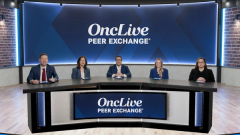
Dr. Sands argues that successful second-line agents should move earlier in treatment sequencing, citing precedent from other oncology fields. With only 40% to 50% of patients with ES-SCLC receiving second-line therapy due to rapid disease progression, declining functional status, or brain metastases, moving effective agents like tarlatamab earlier addresses this attrition problem.
Advertisement
Episodes in this series
Dr. Sands argues that successful second-line agents should move earlier in treatment sequencing, citing precedent from other oncology fields. With only 40% to 50% of patients with ES-SCLC receiving second-line therapy due to rapid disease progression, declining functional status, or brain metastases, moving effective agents like tarlatamab earlier addresses this attrition problem.
He emphasizes that patients with SCLC are frequently undertreated, sharing examples of patients told hospice was their only option who subsequently achieved over a year of good quality life with tarlatamab. He advocates against restricting treatment access based solely on clinical trial eligibility criteria.
Dr. Shields highlights early palliative care integration, calling it "supportive oncology" to avoid implications of comfort-focused care alone. She integrates this support at diagnosis for all patients with SCLC, emphasizing the importance of alignment between oncology and palliative care teams to avoid conflicting messages about treatment goals and prognosis.
Dr. Sands describes scenarios where patients hospitalized for treatable complications like pneumonia face premature hospice discussions, contrasting this with how patients with heart failure receive disease-specific management rather than immediate goals-of-care conversations. He advocates for balanced communication presenting both best-case and worst-case scenarios, noting patients sometimes only hear worst-case projections online, while excellent long-term outcomes exist for some patients now exceeding 7 years from diagnosis.
Advertisement
Related to this article

Read a refresh of breast cancer FDA news from August 2026, including an sNDA application in PIK3CA-mutant disease and a fast track designation.

Lanreotide injection, a generic formulation referencing lanreotide, was approved by the FDA for GEP-NETs management.
The FDA granted final approval to aLutetium Lu 177 dotatate biosimilar for patients with SSTR-positive GEP-NETs.

The TrueBeam photon therapy system has been added to the Statesir Cancer Center at Atlantic Health CentraState Medical Center.

The addition of the β-catenin pathway inhibitor tegavivint to osimertinib produced deep responses in a phase 1b study in first-line EGFR-mutated NSCLC.

Updated NCCN guidelines now recommend rusfertide as a Category 1 option for both low- and high-risk polycythemia vera.

An observational analysis showed a long-term OS benefit with Orca-T in adult patients undergoing allogeneic transplantation for hematologic malignancies.

FDA has granted fast track designation to LYT-200 plus a hypomethylating agent in relapsed/refractory high-risk myelodysplastic syndromes.
Advertisement
Advertisement
Trending on OncLive
1
FDA Grants Fast Track Designation to LYT-200 in R/R High-Risk MDS
2
Japan Approves Subcutaneous Pembrolizumab for All Approved Pembrolizumab Indications
3
NAPISTAR-1-01 Data Support Rapid TUB-040 Development in Biomarker-Unrestricted Ovarian Cancer
4
Making Invisible Cancers Visible: Study Suggests a New Route to Turn ‘Cold’ Tumors ‘Hot’
5