
Opinion|Videos|July 28, 2026
Academic Versus Community Practice Considerations and Performance Status in ES-SCLC
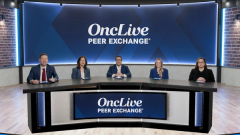
Dr. Sands discusses geographic and practice setting variations, noting lurbinectedin presents no administration challenges anywhere, whereas tarlatamab's rollout has been slower, initially concentrated in academic centers with clinical trial experience managing T-cell engagers and cytokine release syndrome.
Advertisement
Episodes in this series
Dr. Sands discusses geographic and practice setting variations, noting lurbinectedin presents no administration challenges anywhere, whereas tarlatamab's rollout has been slower, initially concentrated in academic centers with clinical trial experience managing T-cell engagers and cytokine release syndrome. He anticipates eventual transition toward outpatient tarlatamab administration while maintaining inpatient options for higher-risk patients with poor functional status or high disease burden experiencing more complicated CRS.
He highlights concerning geographic disparities, with some US cities lacking any tarlatamab-administering centers, creating access tragedies given the drug's paradigm-shifting potential. His practice involves receiving community referrals for initial dosing before returning patients to community oncologists for subsequent cycles.
Dr. Chiang addresses patients with an ECOG performance status of 2, excluded from IMforte, advocating for shared decision-making considering whether functional impairment stems from disease versus comorbidities. She mentions exploring subcutaneous atezolizumab administration potentially reducing CRS/ICANS risk, with successful outpatient pilot programs for low-risk patients, though emphasizes overnight observation remains generally well-tolerated, described to patients as comparable to "a spa night."
Dr. Sands shares a compelling case of a patient with symptomatic brain metastases after radiation, told hospice was the only option, who achieved 7 months of high-quality life with tarlatamab including attending a grandson's birthday party. He emphasizes the importance of providing realistic opportunities for meaningful benefit while being transparent about risks, noting real-world data from Emory and other centers shows lower efficacy and higher CRS rates in patients not meeting trial eligibility criteria, though individual patients may still experience meaningful, realistic possibilities for long-term disease control warranting informed shared decision-making.
Advertisement
Related to this article

Read a refresh of breast cancer FDA news from August 2026, including an sNDA application in PIK3CA-mutant disease and a fast track designation.

Lanreotide injection, a generic formulation referencing lanreotide, was approved by the FDA for GEP-NETs management.

The FDA granted final approval to aLutetium Lu 177 dotatate biosimilar for patients with SSTR-positive GEP-NETs.

The TrueBeam photon therapy system has been added to the Statesir Cancer Center at Atlantic Health CentraState Medical Center.

The addition of the β-catenin pathway inhibitor tegavivint to osimertinib produced deep responses in a phase 1b study in first-line EGFR-mutated NSCLC.

Updated NCCN guidelines now recommend rusfertide as a Category 1 option for both low- and high-risk polycythemia vera.

An observational analysis showed a long-term OS benefit with Orca-T in adult patients undergoing allogeneic transplantation for hematologic malignancies.

FDA has granted fast track designation to LYT-200 plus a hypomethylating agent in relapsed/refractory high-risk myelodysplastic syndromes.
Advertisement
Advertisement
Trending on OncLive
1
FDA Grants Fast Track Designation to LYT-200 in R/R High-Risk MDS
2
Japan Approves Subcutaneous Pembrolizumab for All Approved Pembrolizumab Indications
3
NAPISTAR-1-01 Data Support Rapid TUB-040 Development in Biomarker-Unrestricted Ovarian Cancer
4
Making Invisible Cancers Visible: Study Suggests a New Route to Turn ‘Cold’ Tumors ‘Hot’
5