
Press Release
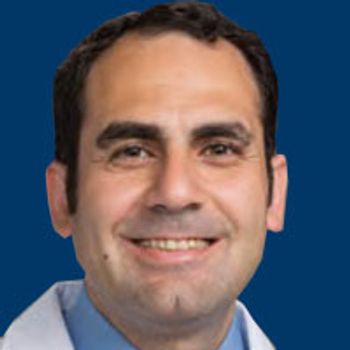
Amer Zeidan, MBBS, MHS, has been appointed inaugural chief of the Division of Hematologic Malignancies at Yale Cancer Center.
Press Release
Amer Zeidan, MBBS, MHS, has been appointed inaugural chief of the Division of Hematologic Malignancies at Yale Cancer Center.
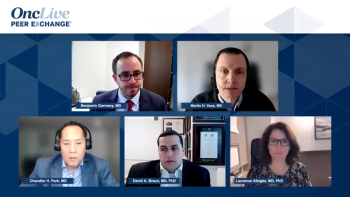
David A. Braun, MD, PhD, provides clinical insights on factors that influence treatment decisions in the second line and beyond for patients with advanced clear cell RCC.
Focusing on the LITESPARK-003 and LITESPARK-024 trials, Laurence Albigès, MD, PhD, discusses novel doublet regimens under investigation in the first-line setting in advanced renal cell carcinoma.
Medical oncologists provide clinical insights on managing adverse events associated with IO-TKI and IO-IO regimens in patients with advanced renal cell carcinoma.
The expert panel reacts to 55-month follow-up data from CheckMate 9ER assessing nivolumab plus cabozantinib in patients with newly diagnosed advanced RCC.
David A. Braun, MD, PhD, shares his takeaways from the network meta-analysis on lenvatinib plus pembrolizumab in advanced RCC, and Martin H. Voss, MD, discusses outcomes with cabozantinib following frontline lenvatinib plus pembrolizumab.
Chandler H. Park, MD, discusses the LEAP study investigating lenvatinib plus pembrolizumab in patients with renal cell carcinoma with brain metastasis.
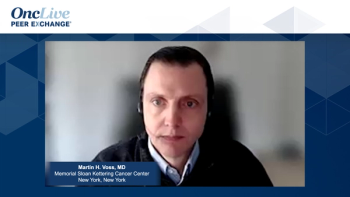
Martin H. Voss, MD, gives an overview of the CLEAR study evaluating lenvatinib plus pembrolizumab in frontline advanced RCC and discusses recent subgroup analyses.
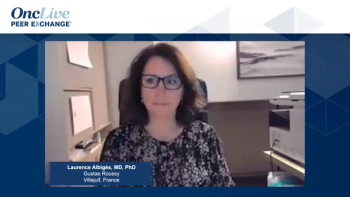
Laurence Albigès, MD, PhD, reviews recently presented data from CheckMate 67T, which is assessing subcutaneous vs intravenous nivolumab in patients with previously treated RCC.
The expert panel discusses the 8-year follow-up data from CheckMate 214 looking at nivolumab plus ipilimumab in first-line advanced RCC and provide clinical insights on treatment decisions.
A panel of medical oncologists who specialize in renal cell carcinoma (RCC) introduce themselves and discuss the first-line treatment landscape and risk stratification of clear cell RCC.
Harriet Kluger, MD, discusses the FDA approval of the tumor infiltrating lymphocyte therapy lifileucel for patients with advanced melanoma.
Press Release
Non-small cell lung cancer, with an EGFR mutation, tends not to respond well to immunotherapy treatments, including durvalumab.
An acceptable safety profile and early evidence of clinical activity was observed with ziftomenib plus standard regimens in select patients with AML.
The initiation of immunotherapy at the end of life among patients with advanced cancers is increasing over time.
Although use of immunotherapy near the end of life has increased over time, a closer look at the benefit of this in those with advanced cancers is needed.
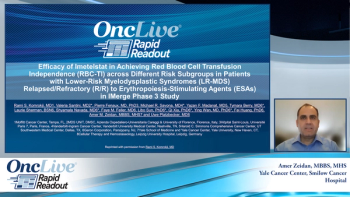
Amer Zeidan, MBBS, MHS, presents data from the IMerge phase 3 study on the efficacy of imetelstat in achieving red blood cell transfusion independence across different risk subgroups in patients with lower-risk myelodysplastic syndromes relapsed/refractory to erythropoiesis-stimulating agents.
Anne Chiang, MD, PhD, discusses treating patients with advanced non–small cell lung cancer without driver mutations.
Lenvatinib plus pembrolizumab, pemetrexed, and carboplatin or cisplatin did not improve treatment outcomes compared with placebo plus pembrolizumab, pemetrexed, and carboplatin or cisplatin when given as first-line therapy in patients with stage IV nonsquamous non–small cell lung cancer.
Oral decitabine/cedazuridine and parenteral hypomethylating agents were associated with similar levels of comorbidities and disease burden in patients with myelodysplastic syndrome.
Amer Zeidan, MBBS, discusses classification and treatment updates for patients with myelodysplastic syndrome.
Michael Hurwitz, MD, PhD, discusses the feasibility of utilizing CAR T-cell therapies in patients with solid tumors, such as kidney cancers.
David Braun, MD, PhD, discusses the findings from the phase 3 CONTACT-03 trial investigating immunotherapy rechallenge in patients with renal cell carcinoma and the implications of these findings on the RCC treatment paradigm.
Sarah Goldberg, MD, MPH, highlights the mechanism of action of VIC-1911, expands on its ongoing investigation in the phase 1 trial, and sheds light on next steps planned for the agent’s investigation in KRAS G12C–mutant non–small cell lung cancer.

While progress in outcomes has been greater in non–small cell lung cancer, recent advances, including molecularly targeted therapies against EGFR and ALK, checkpoint inhibitors that boost immune response, improved staging, and video-assisted surgery have all contributed to progress in treatment of all types of lung cancer, including in SCLC.
Press Release
A new study led by Yale scientists shows that the activity of a portion of a human papillomavirus protein does not depend on its amino acid sequence or composition.
Stacey Stein, MD, discusses key considerations when selecting a first-line treatment approach for higher-risk patients with hepatocellular carcinoma, and in what scenarios the combination of atezolizumab and bevacizumab is a viable approach in this population.
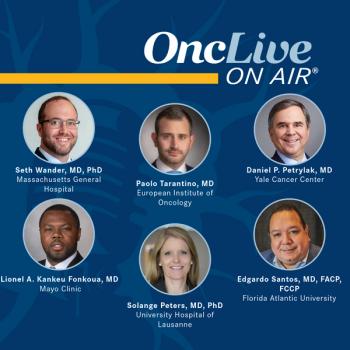
Oncology experts discuss the platinum chemotherapy shortage in the United States.
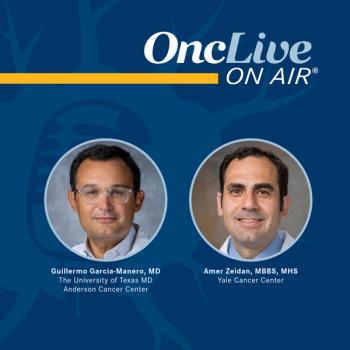
Drs Garcia-Manero and Zeidan discuss the significance of efficacy and safety data from the COMMANDS trial in myelodysplastic syndrome, takeaways from the subgroup analyses, and expectations around treatment sequencing in the lower-risk population.
Daniel P. Petrylak, MD, discusses the potential uses for erdafitinib, highlighting key studies evaluating the use of the agent in patients with metastatic urothelial cancer.