
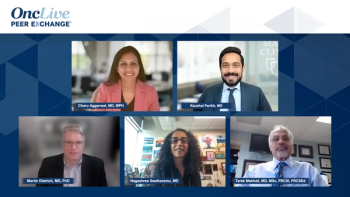
Shared insight into strategies in genomic testing for lung cancer, emphasizing the importance of comprehensive next-generation sequencing, DNA vs. RNA sequencing, and the evolving role of liquid biopsy.
Shared insight into strategies in genomic testing for lung cancer, emphasizing the importance of comprehensive next-generation sequencing, DNA vs. RNA sequencing, and the evolving role of liquid biopsy.

The Network continues its strong growth trajectory and its mission to enhance community-based cancer care.
Experts reflect on the evolving landscape of biomarker testing in lung cancer, examining its crucial role in treatment decisions and advancements in perioperative and adjuvant therapies.
Explore the latest breakthroughs in precision medicine with a focus on biomarker testing and emerging targets in patients with non–small cell lung cancer.

A closer look at some of the approaches being used across The US Oncology Network to improve patient access can provide helpful insight into how practices can meet the growing need for their services.
Press Release
Ontada®, a McKesson business dedicated to leveraging oncology real-world data and evidence, clinical education, and provider technology, was awarded a competitive contract with the U.S. Food and Drug Administration to advance the use of real-world data in the U.S. community oncology setting.
Ontada, a McKesson business dedicated to leveraging oncology real-world data and evidence, clinical education, and provider technology, announced the appointment of Christine Davis as its new president.
Although some community oncologists may think they can do little to abate the reimbursement reform forces that are affecting their practices, there are actions they can, and should, take to influence the success of their value-based care journey that may not be part of the fundamentals of their current practice.
The US Oncology Network announced that the Cancer Center of Kansas has joined The Network by entering into a new managed services partnership.
Bradley Monk, MD, FACS, FACOG, discusses findings from the phase 2 RAMP 201 trial in patients with low-grade serous ovarian cancer and the importance of these results within the context of the larger ovarian cancer treatment paradigm.
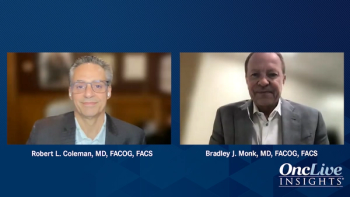
Comprehensive insights on unmet needs, ongoing research, and the future of advanced ovarian cancer treatment.
Expert oncologists review the current PARP inhibitor treatment indications for patients with advanced ovarian cancer and discuss how to best manage patients who have been impacted by the recent updates to the PARP inhibitors.
Drs Coleman and Monk discuss what led to the recent withdrawal of several indications for PARP inhibitors in the treatment of advanced ovarian cancer.
Expert oncologists give an overview of PARP inhibitors available for the treatment of patients with advanced ovarian cancer and review adverse events seen with each agent.
Experts on advanced ovarian cancer give detailed insights on the role of biomarker testing and identify important biomarkers.
Robert L Coleman, MD, FACOG, FACS, and Bradley J Monk, MD, FACOG, FACS, provide an overview of advanced ovarian cancer and discuss its prevalence and diagnosis process.
By retrospectively analyzing health care financial data and using the intelligence generated to guide future claims to a more successful outcome, machine learning platforms may reduce the need for repeated insurance submissions and appeals and can improve the practice’s clean claim rate.
Press Release
The US Oncology Network announced that Regional Cancer Care Associates entered into a strategic relationship with The Network effective April 1, 2023
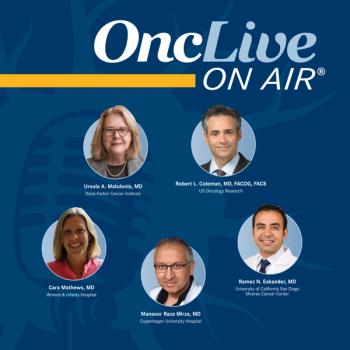
Presenters from the 2023 SGO Annual Meeting share their insights on the treatment of patients with gynecologic cancers.
Robert L. Coleman, MD, FACOG, FACS, discusses an analysis of the phase 3 SORAYA trial evaluating response rates in patients with platinum-resistant ovarian cancer who received mirvetuximab soravtansine at different points in their disease course.
Ensuring a positive patient experience should be a top priority throughout the entire treatment journey, as higher patient satisfaction can drive improved health outcomes, treatment adherence, and quality of life.
Jeff P. Sharman, MD, discusses the meaning of the long-term follow-up data from ELEVATE-TN, the efficacy of acalabrutinib regimens in patients with treatment-naïve chronic lymphocytic leukemia with deletion 17p or TP53 mutations, and factors to consider when adding obinutuzumab to acalabrutinib.
Dr Monk discusses pertinent efficacy and safety data from the ATHENA-MONO trial, which evaluated first-line maintenance treatment with rucaparib in patients with stage III-IV high-grade ovarian cancer.

Real-world evidence is finding an expanded role in oncology, prompting experts to rethink how data are gathered on the day-to-day usefulness of drugs for regulatory decisions.
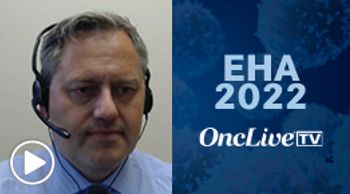
Jeff Sharman, MD, discusses 5-year follow-up data from the phase 3 Elevate CLL TN trial in treatment-naïve patients with chronic lymphocytic leukemia.
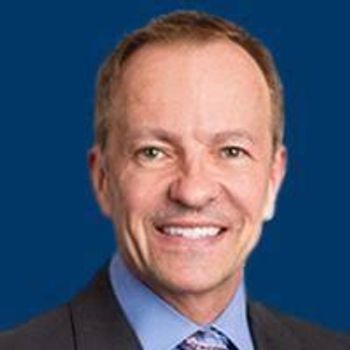
Rucaparib elicited a significant improvement in progression-free survival outcomes vs placebo as first-line maintenance therapy in patients with ovarian cancer who responded to first-line platinum-based chemotherapy across patient subgroups.
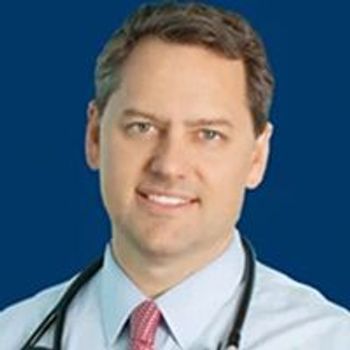
At approximately 5 years of follow-up, findings from the phase 3 ELEVATE-TN study show that treatment outcomes are more favorable with acalabrutinib with or without obinutuzumab compared with obinutuzumab and chlorambucil in treatment-naïve chronic lymphocytic leukemia.
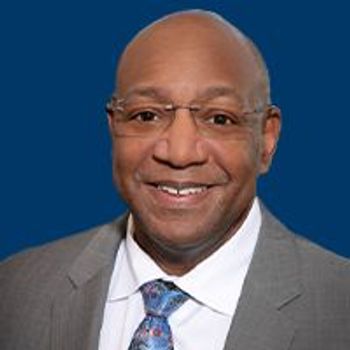
Mark T. Fleming, MD, reviews the use of first-line checkpoint inhibitors in bladder cancer, the efficacy of enfortumab vedotin-ejfv in urothelial cancer, and the clinical benefits of using different mechanisms of action to treat renal cell carcinoma.

Bradley J. Monk, MD, FACS, FACOG, discusses the growing role of checkpoint inhibitors in cervical cancer.
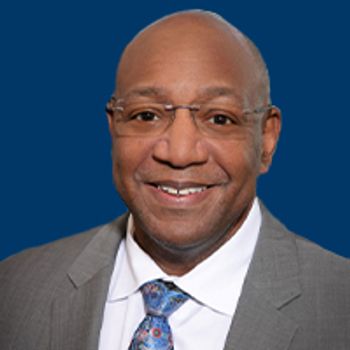
Prostate cancer is the most common cancer in men and the second-leading cause of cancer-related deaths in men in the US.