The US Oncology Network | Strategic Alliance Partners
Latest from The US Oncology Network
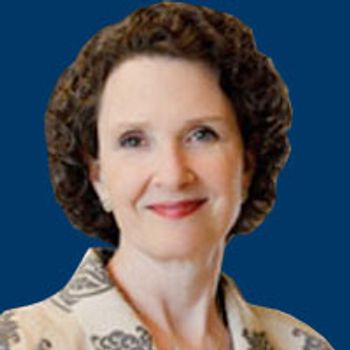
Joyce A. O’Shaughnessy, MD, addresses the key issues in breast cancer discussed at the 2017 OncLive® State of the Science Summit on Treatment of Metastatic Breast Cancer and shared her expert insight on where triple-negative breast cancer treatment is headed based on recent findings.
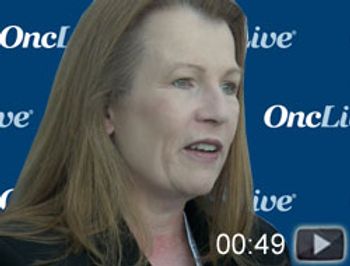
Kathryn Kolibaba, MD, co-chair, Hematology Research Committee, US Oncology Research, discusses why the Syk inhibitor entospletinib demonstrates efficacy in patients with mantle cell lymphoma (MCL).
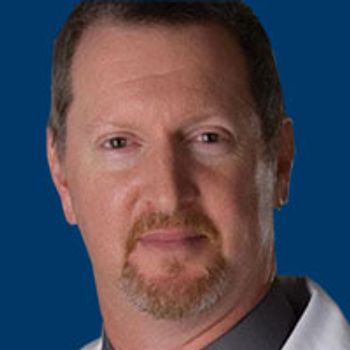
Keeping a medical practice strong and independent in today’s turbulent environment can be quite challenging.
Kathryn Kolibaba, MD, co-chair, Hematology Research Committee, US Oncology Research, discusses the mechanism of action with entospletinib (GS-9973) and its potential as a treatment for patients with mantle cell lymphoma (MCL).

New program automates and simplifies processes needed to successfully participate in the Oncology Care Model.

Christopher A. Yasenchak, MD, associate chair of Hematology Research, Willamette Valley Cancer Institute and Research Center/US Oncology Research, discusses results of a study examining the addition of brentuximab vedotin to R-CHOP for the treatment of patients with diffuse large B-cell lymphoma.

Pathways are effective tools for reducing unnecessary variability in care, a key factor in achieving better outcomes and more predictable costs.
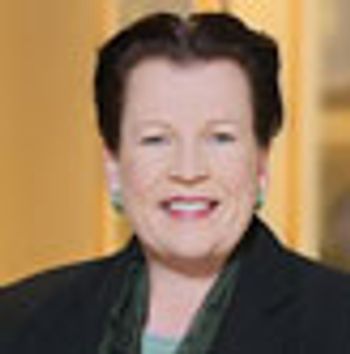
Kathryn Kolibaba, MD, discusses the significance of the PYRAMID and other studies, and how she hopes the treatment paradigm for diffuse large b-cell lymphoma will evolve in the future.

One of the most widely talked about trends in healthcare is precision
medicine, which uses detailed genetic information about a patient’s cancer to
more precisely treat the disease, effectively targeting the tumor. This heightened
awareness raises an important question: are precision medicine and
pathways compatible?
Collaboration to share the latest news from The US Oncology Network, a physician-led organization uniting top oncology practices across the nation to deliver high-quality, evidence-based cancer care
Debra Patt, MD, physician, Texas Oncology, discusses the current healthcare reform changes and what effects they will have on oncology care.
Joyce A. O'Shaughnessy, MD, Texas Oncology-Baylor Charles A. Sammons Cancer Center, discusses new developments in molecular profiling in patients with metastatic breast cancer.
Joyce A. O'Shaughnessy, MD, Texas Oncology-Baylor Charles A. Sammons Cancer Center, discusses how the results of phosphoprotein assays can impact treatment decisions for select patients with advanced breast cancer.
Many healthcare reforms are dramatically changing the payment landscape for oncologists.
Like all new ideas or technologies, rapidly occurring changes present both opportunities and challenges for everyone involved, including government, patients, payers and physicians.
Several initiatives that have a dramatic impact on healthcare today were born during that time–managed care, transitioning away from inpatient care toward outpatient care, and the introduction of clinical pathways.

In a recent guideline for the treatment of men with metastatic castration-resistant prostate cancer (mCRPC), the American Society of Clinical Oncology (ASCO) and Cancer Care Ontario (CCO) shared their thoughts on the implementation of six drugs approved since their previous recommendations were issued in 2007, as well as on older drugs.
Ten years ago, Nicholas J. Vogelzang, MD, helped design a study of docetaxel added to first-line androgen deprivation therapy (ADT) in men with newly diagnosed metastatic, hormone-sensitive prostate cancer.

Eribulin mesylate (Halaven) proved safe and effective as first-line therapy for locally recurrent or metastatic HER2-negative breast cancer in final phase II clinical trial results
As PARP inhibitors continue to emerge as a novel class of anticancer agents, BMN 673 has entered late-stage clinical development as a treatment for patients with locally advanced or metastatic breast cancer whose tumors test positive for germline BRCA1/2 mutations.
Nicholas J. Vogelzang, MD, member of the US Oncology Network, site research leader for Comprehensive Cancer Centers of Nevada, professor of medicine at the University of Nevada School of Medicine, describes the Prostate Health Cocktail.

Ben Jones, Senior Director of Government Relations & Public Policy at McKesson Specialty Health & The US Oncology Network, discusses the impact of sequestration on drug and physician reimbursement.
Nicholas J. Vogelzang, MD, from the University of Nevada School of Medicine, describes two additional analyses of the phase III ALSYMPCA trial.
Nicholas J. Vogelzang, MD, from the Comprehensive Cancer Centers of Nevada, discusses the comparison of axitinib to sorafenib as first-line therapy in patients with metastatic renal cell carcinoma.

Nicholas J. Vogelzang, MD, from Comprehensive Cancer Centers of Nevada, discusses sequencing abiraterone acetate and enzalutamide in the treatment of men with metastatic castration-resistant prostate cancer.

The economics of running an oncology practice is forcing physicians to consider whether they should stay in private practice, join a large network or hospital, or become hospital employees.

The rising costs of healthcare have caused payers to analyze spending and take measures to contain costs.
An experimental intra-arterial delivery system injects high-dose chemotherapy directly into the ocular tumor and may not only save the eye, but the vision as well.
To help physicians manage the complexities of meeting benchmarks and reporting their compliance to payers, US Oncology recently announced Payer Quality Services. This program will give physicians in the United Network of US Oncology access to a collection of resources and tools, including the Level I Pathways Program.
Participation in clinical trial research is essential to continued improvement in cancer care. Yet, fewer than 10% of U.S. adults enroll in trials. A recent US Oncology�sponsored survey found that most
oncologists remain optimistic about the future of clinical trial research. We discuss obstacles to clinical trial enrollment with Nicholas Vogelzang, MD, and Matthew Galsky, MD, of the Comprehensive CancerCenters of Nevada.