

Drs Rotow and Dietrich discuss the significance of the accelerated FDA approval of zongertinib (Hernexeos) for patients with HER2 TKD–mutated NSCLC.
Drs Rotow and Dietrich discuss the significance of the accelerated FDA approval of zongertinib (Hernexeos) for patients with HER2 TKD–mutated NSCLC.
Experts reflect on pivotal data, emerging agents, and highly-anticipated trends spanning CML, CLL, B-cell lymphomas, and other hematologic malignancies.

Martin Dietrich, MD, PhD, discusses how zongertinib offers a new targeted option for HER2-mutant NSCLC, yielding durable responses and strong CNS activity.

Pain management specialists are rarely consulted to help assess pain in patients with cancer, leading oncologists to often prescribe narcotics.
The use of patient-reported outcome measures—the gold standard in quality measurement—is crucial to building a patient-centered, value-based care system.

Tennessee Cancer Specialists, the third largest oncology practice in the state, strengthens its ability to deliver cutting-edge advanced care by joining The Network.
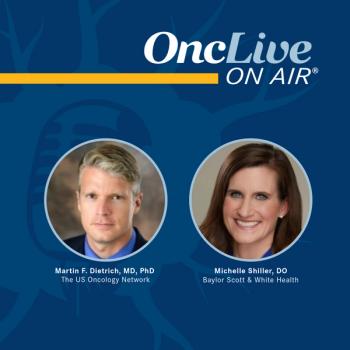
Drs Dietrich and Shiller detail the importance of collaboration between medical oncologists and pathologists to ensure beneficial oncology reflex testing.
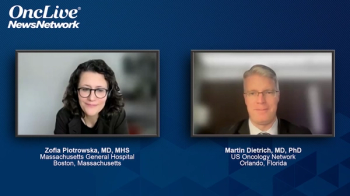
Zofia Piotrowska, MD, MHS, and Martin Dietrich, MD, PhD, emphasize the critical role of both tissue and liquid biopsies, the necessity of rapid time-to-treatment initiation, and the increasing likelihood of liquid biopsies becoming the standard of care for metastatic non-small cell lung cancer patients in the near future.
Key opinion leaders delve into the challenges posed by payers, costs, out-of-pocket maximums, and the need for letters of medical necessity, while also addressing additional sources of resistance encountered in clinical practice.
Zofia Piotrowska, MD, MHS, shares insights into the challenges and advantages of diagnostic testing practices at Massachusetts General Hospital, including the benefits of on-site testing, the need for less streamlined consent forms, and areas for improvement to expedite the diagnostic testing ordering process.
The expert panel underscores the critical importance of rapid diagnostic testing and identification of driver alterations to optimize patient outcomes, given the often-narrow therapeutic window for chemotherapy and targeted therapies.
Key opinion leaders examine the current National Comprehensive Cancer Network (NCCN) guidelines regarding the utilization of liquid and tissue biopsies, highlighting the necessity for the NCCN to prioritize and recommend concurrent testing as the preferred approach over relying on a single liquid or tissue biopsy alone.
Martin Dietrich, MD, PhD, shares his approach to optimizing the use of diagnostic testing from both a tissue perspective and cost perspective, noting he routinely orders tissue and liquid biopsies during the initial patient visit if prior testing has not been conducted.
Zofia Piotrowska, MD, MHS, and Martin Dietrich, MD, PhD, emphasize the crucial role of molecular testing in disease diagnosis, focusing on the significance of rapid turnaround times and the ability of liquid biopsies to address time-sensitive diagnostic needs.
The current health care economy has driven many employers to self-funding models to offer affordable health care coverage to employees.
Steven E. Finkelstein, MD, DABR, FACRO, discusses the importance of disseminating treatment advancements and ongoing research in radiation oncology.
Press Release
McKesson has received approval from the CMS to participate in the Merit-based Incentive Payment System as a Qualified Clinical Data Registry.
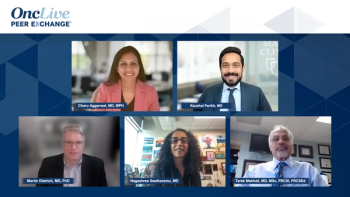
Discover the latest insights on treating uncommon EGFR mutations, emphasizing the importance of NGS, personalized therapy, and ongoing advancements in TKIs and ADCs.
Experts share treatment experiences with osimertinib and afatinib, the potential role of immunotherapy, and ongoing investigations with ADCs and emerging TKIs for patients with uncommon EGFR mutations.
Insights into how the UNICORN study, which assessed osimertinib, is impacting treatment decisions for uncommon EGFR mutations, and other ongoing trials shedding light on effective treatments for this patient population.
Expert insights on sequencing treatment options for patients with uncommon EGFR mutations who have progressed on afatinib, emphasizing clinical trial considerations, biomarker testing, and emerging therapeutic approaches.
Explore dosing nuances and adverse event management strategies for afatinib in treating EGFR mutant non-small cell lung cancer, reflecting real-world practices and clinical insights.
Panelists discuss the intricacies of treating uncommon EGFR mutations, dissecting approved treatment options, considerations for specific mutations, and insights into the evolving drug landscape.
Explore the complexity of uncommon EGFR mutations in lung cancer with experts discussing classifications, testing methodologies, and the necessity of comprehensive panels for accurate identification.
The combination comprised of zanubrutinib, obinutuzumab, and venetoclax elicited high response rates and 2-year progression-free survival rates that compared favorably with historical outcomes achieved with chemoimmunotherapy in high-risk patients with previously untreated mantle cell lymphoma harboring TP53 mutations.
Acalabrutinib, as monotherapy or in combination with obinutuzumab, continued to improve progression-free survival vs obinutuzumab and chemotherapy in patients with treatment-naive chronic lymphocytic leukemia, regardless of genomic marker status.

Bradley Monk, MD, FACS, FACOG, discusses the rationale for investigating B7-H4–directed vedotin antibody-drug conjugates and highlights how these agents may address unmet needs for patients with gynecologic cancers.
Delve into the evolving landscape of treating EGFR mutations in lung cancer, exploring emerging therapies, structural classifications, and the complexity of individual mutation responses.
The impact of and strategies for addressing less frequent mutations in NSCLC treatment decisions, emphasizing actionable alterations and timely interventions in challenging scenarios.
Expert perspectives on improving turnaround times in genomic testing for lung cancer, covering strategies, challenges, and the significance of liquid biopsy in optimizing patient care.