
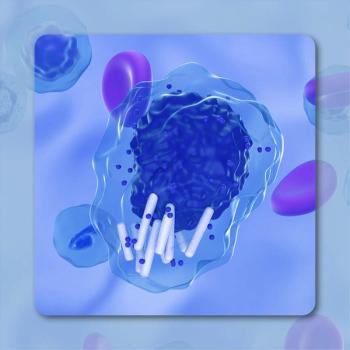
Updated NCCN Guidelines recommend pemivibart in immunocompromised patients with B-cell lymphomas who are at higher risk of contracting COVID-19.
Updated NCCN Guidelines recommend pemivibart in immunocompromised patients with B-cell lymphomas who are at higher risk of contracting COVID-19.
Orca-T boosts cGVHD-free survival in hematologic malignancies, cilta-cel continues to impress in CARTITUDE-4, and more.
As more treatment options enter the oncology landscape, access to these life-changing medicines has become a paramount concern.
Cancer screenings rapidly decreased during the COVID-19 pandemic as health care practices considered not urgent came to a halt.
Treatment with ruxolitinib impaired antibody responses to complete vaccination with the BNT162b2 SARS-CoV-2 vaccine in patients with myelofibrosis or polycythemia vera.
One of the more perplexing issues surrounding scientific questions is the extended time required to provide an answer. Even once a well-considered and vetted conclusion is obtained, an additional interval of time may be required to modify or reverse the answer because of new, relevant data.
Mili Arora, MD, talks about changing the fellowship program at UC Davis, the effect the COVID-19 pandemic has had on her trainees, and the importance of working late nights with her fellows.
Chapman, Swartz, Rhodes, Nightingale, and Denton highlight the evolution of Jefferson Health’s Senior Adult Oncology Center, the unique needs of older adults who develop cancer, and challenges stemming from the COVID-19 pandemic that have affected the care of geriatric patients with cancer, such as the strain put on caregivers and the shift to telemedicine.
Dr Abid discusses a review paper, published in Cancer Cell, that evaluated determinants of response to SARS-CoV-2 vaccines in patients who underwent allogeneic or autologous hematopoietic cell transplantation or who had received CAR T-cell therapy or bispecific T-cell engagers.
Although lower fatality rates were reported during the omicron wave of the COVID-19 pandemic in patients with chronic lymphocytic leukemia, close monitoring and preemptive antiviral therapy is still recommended following a positive SARS-CoV-2 test, particularly in patients with close hospital contacts and those older than 70 years of age with at least one comorbidity.
Disparities in access to telehealth for cancer care were seen across more than 20 tumor types, according to study findings that were presented during a press briefing ahead of the 2022 ASCO Annual Meeting.
The overall mortality rate for patients with mantle cell lymphoma who contract COVID-19 is high, and mortality rates rise significantly in patients who are hospitalized or enter intensive care units, according to findings from a retrospective study that were published in Hemasphere.
Dr Borgen recaps a presentation he made at the 2022 Miami Breast Cancer Conference highlighting the flaws with preprints, outlining his recommendations for fixing peer review, and explaining how this affects cancer research.

The National Comprehensive Cancer Network is advising individuals who are immunocompromised, including those with cancer, to receive a fifth COVID-19 vaccination.
The administration of a third dose of a SARS-CoV-2 mRNA vaccine yielded seroconversion responses in patients treated with hematopoietic cell transplantation or cellular therapy following initial failure of seroconversion after the first 2 vaccine doses.
Administration of the SARS-CoV-2 vaccine resulted in heterogeneous immune response in patients with chronic graft-vs-host disease (cGVHD), further highlighting concerns about protection against infection or severe COVID-19 disease in this population

CoVac-1, a multi-peptide COVID-19 vaccine, elicited promising T-cell activity and safety in patients with cancer who have disease- or treatment-related immunoglobulin deficiency.
Women of all races and ethnicities who were referred to a colposcopy clinic for cervical cancer screening following an abnormal Pap smear during the COVID-19 pandemic had a higher likelihood of not adhering to their appointment compared with appointment data collected prior to the pandemic.
Data from a retrospective observational study revealed that White patients with hematologic malignancies in the United States had significantly higher uptake of telemedicine vs Black patients, reflecting disparities that require further exploration.

Muhammad Bilal Abid, MD, MRCP, discusses clinical takeaways regarding the standard use of a third SARS-CoV-2 mRNA vaccine dose among patients treated with hematopoietic cell transplantation, CAR T-cell therapy, and bispecific T-cell engagers.
The pandemic appears to have caused or contributed to a number of lasting changes in the way oncologists provide clinical care to their patients.

The US Senate has confirmed Robert M. Califf, MD, a prominent cardiologist and expert in clinical trials, as the latest FDA commissioner today in a 50-46 vote.
The long-term dramatic effects of the COVID-19 pandemic on cancer research and patient care present several challenges but also future opportunities.
Treatment with rituximab prior to COVID-19 vaccination nearly halved the number of patients with B-cell non-Hodgkin lymphoma who developed blocking antibodies following COVID-19 vaccination compared with healthy controls.

Patients with cancer should be fully immunized against COVID-19, including third doses and/or any approved boosters.
Dr Basu discusses the “shadow curve” that could result from disruptions in cancer care during the COVID-19 pandemic and innovative strategies that Cancer Treatment Centers of America are taking to avoid this.
Christopher S. Lathan, MD, MS, MPH, discusses the lack of dissemination and implementation of evidence-based health care delivery innovations focused on addressing disparities in care.

The long-acting antibody combination of tixagevimab co-packaged with cilgavimab has been granted emergency use authorization in the United States for the pre-exposure prophylaxis of COVID-19.
A little self-reflection and a lot of self-compassion go a long way in a world of immense change.

At the onset of the pandemic, hematology/oncology physicians were challenged in counseling patients with serious underlying malignant conditions about their risk for severe disease due to COVID-19.