
Opinion|Videos|May 26, 2026
Emerging Ovarian Targets Beyond Folate Receptor Alpha
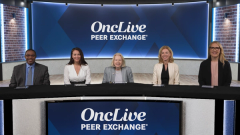
Development of new antibody drug conjugates in ovarian cancer continues to expand beyond folate receptor alpha, and the faculty review why both target selection and trial design will be critical to future success.
Advertisement
Episodes in this series
Development of new antibody drug conjugates in ovarian cancer continues to expand beyond folate receptor alpha, and the faculty review why both target selection and trial design will be critical to future success. Earlier programs are described as cautionary examples when broad enrollment diluted potential benefit and made it harder to identify the patients most likely to respond. That experience has increased interest in more biomarker directed development strategies, along with closer attention to the biology of recurrent ovarian cancer. The discussion also compares evolving payload approaches, including topoisomerase based constructs that may offer broader activity through bystander effect, while potentially introducing different toxicity burdens. Ocular events, myelosuppression, gastrointestinal adverse effects, and treatment logistics all emerge as practical factors that may influence adoption once new agents reach clinical practice. The larger point is that strong response data alone may not be enough. Success will likely depend on matching the right target and payload to the right patient population while preserving tolerability in a heavily pretreated disease setting.
Advertisement
Related to this article

FDA has granted fast track designation to LYT-200 plus a hypomethylating agent in relapsed/refractory high-risk myelodysplastic syndromes.

Toon Van Gorp, MD, PhD, discusses key data with TUB-040 in platinum-resistant ovarian cancer and next steps for development.

Japan approved subcutaneous pembrolizumab and berahyaluronidase alfa across all indications for which intravenous pembrolizumab is approved in the country.

New research reveals how cancers carrying mutations in the p53 tumor-suppressor protein can hide those mutations from T cells.

Elise A. Chong, MD, discusses real-world liso-cel efficacy and safety, outpatient use, and future directions in relapsed/refractory mantle cell lymphoma.

Brad S. Kahl, MD, discusses TRIANGLE and EA4151 data reshaping ASCT use in frontline MCL, induction intensity, and high-risk disease strategies.

Mary Ann Anderson, MBBS, FRACP, FRCPA, PhD, discusses recent CLL approvals, BTK and BCL-2 inhibitor safety, and individualizing frontline therapy.

The top 5 OncLive TV videos of the week cover insights in NSCLC, large granular lymphocytic leukemia, ovarian cancer, and myelofibrosis.
Advertisement
Advertisement
Trending on OncLive
1
CLL Treatment Individualization Prompts Changes in Patient Evaluation and Care
2
Japan Approves Subcutaneous Pembrolizumab for All Approved Pembrolizumab Indications
3
FDA Grants Fast Track Designation to LYT-200 in R/R High-Risk MDS
4
Olaparib Maintenance Yields Promising Long-Term OS Outcomes in Asian Patients With Platinum-Sensitive, Relapsed Ovarian Cancer
5