

Opinion|Videos|September 4, 2024
Expert Insights: SG Adverse Events Management including Alopecia & Nausea
Panelists discuss how to manage side effects of sacituzumab govitecan (SG), including counseling on alopecia, proactive management strategies, routine antiemetic premedications, and adjustments for chemotherapy-induced nausea and vomiting, as well as recommended breakthrough antinausea medications for home use.
Advertisement
Episodes in this series
Video content above is prompted by the following:
- Aside from neutropenia and diarrhea, we may also see alopecia and nausea with sacituzumab govitecan (SG)….
- What do you counsel your patients regarding the alopecia associated with SG? Are there any proactive management strategies?
- Please comment on your routine antiemetics premedications for SG.
- If your patient experiences chemotherapy-induced nausea and vomiting with their first infusion of SG on Day 1, how do you typically manage their antinausea meds for Day 8 infusion?
- What breakthrough antinausea medications do you generally prescribe for patients to have at home?
Advertisement
Related to this article

The 510(k) clearance covers an MRI-derived AI risk score for stage I to IIIA disease; the high-risk category carried an HR of 2.81 for recurrence.

The top 5 OncLive TV videos of the week cover insights in multiple myeloma, HR+ breast cancer, CAR T-cell therapy, CLL, and oral SERDs.
Nunnery and Bond discuss how patients and advocates can navigate second opinions, mental health support, and the long-term effects of cancer treatment.

Invikafusp alfa now holds fast track status across TMB-H solid tumors that progressed after prior therapy, including checkpoint inhibition.
Matthew P. Goetz, MD, explores menopausal status, recurrence risk, and adjuvant CDK4/6 inhibitor selection in HR-positive breast cancer.
Matthew P. Goetz, MD, explores first-line treatment selection, emerging targeted therapies, and unmet sequencing needs in metastatic breast cancer.
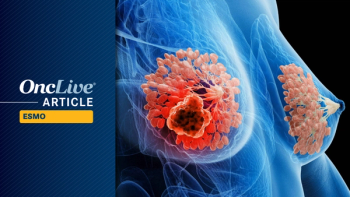
Readers share their opinions on some of the most talked-about breast cancer abstracts they’re looking forward to seeing at ESMO 2026.

The top 5 OncLive TV videos of the week.
Advertisement
Advertisement
Trending on OncLive
1
FDA Approves Dostarlimab for dMMR/MSI-H Locally Advanced Rectal Cancer
2
VOLGA, DASL-HiCaP Data Highlight Key Genitourinary Cancer Presentations Arriving at ESMO 2026
3
FDA Clears TumorSight Risk, an MRI-Derived AI Recurrence Tool for HR+, HER2– Breast Cancer
4
Japan Approves On-Body Injector for Subcutaneous Isatuximab in Multiple Myeloma
5