
Opinion|Videos|September 29, 2026
Framing the First Treatment Conversation With Patients and Families
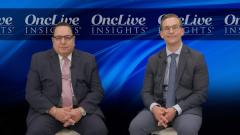
Wade Iams, MD, MSCI, of Tennessee Oncology, describes how he opens the first treatment conversation with patients who have EGFR-mutated advanced non–small cell lung cancer and with their families, after Edgardo Santos, MD, FACP, FASCO, of Starling Oncology, notes that grade 3 or higher adverse events were more common with amivantamab plus lazertinib than with osimertinib in MARIPOSA.
Advertisement
Wade Iams, MD, MSCI, of Tennessee Oncology, describes how he opens the first treatment conversation with patients who have EGFR-mutated advanced non–small cell lung cancer and with their families, after Edgardo Santos, MD, FACP, FASCO, of Starling Oncology, notes that grade 3 or higher adverse events were more common with amivantamab plus lazertinib than with osimertinib in MARIPOSA. Dr Iams offers to review trial numbers, but says families differ in how much detail they want and sometimes ask that a loved one hear them instead. His first point is that combination therapy is more likely to let patients live longer, so he steers away from osimertinib monotherapy. He then spends most of the visit comparing the toxicity profiles of platinum-based chemotherapy plus osimertinib and of amivantamab plus lazertinib, noting that the gap in grade 3 event rates between those 2 combinations is much narrower than the gap between either combination and osimertinib alone.
Advertisement
Related to this article
Jason Hafron, MD, discusses the emotional, clinical, and financial burden of false positive cancer screening results and improved risk stratification.
Raajit K. Rampal, MD, PhD, discusses JAK inhibitor choice in cytopenic myelofibrosis, emerging combinations, and anemia-directed agents.
The sNDA for elinzanetant seeks FDA approval for moderate-to-severe vasomotor symptoms in women receiving endocrine therapy for HR-positive breast cancer.
The NMPA has approved of pirtobrutinib in treatment-naive and previously treated CLL/SLL.
Roswell Park Comprehensive Cancer Center recognized members of its clinical, research and healthcare teams during the second annual Excellence Awards.

The top 5 OncLive TV videos of the week cover insights in breast cancer, PV, myeloma, and CLL.

The first MRD data from the phase 3 EXCALIBER-RRMM trial support iberdomide-based triplet therapy as early as first relapse, with PFS follow-up ongoing.
After nearly 7 years of follow-up, daratumumab added to VRd continued to improve PFS, PFS2, and sustained MRD negativity in transplant-eligible myeloma.
Advertisement
Advertisement
Trending on OncLive
1
Ifinatamab Deruxtecan BLA Voluntarily Withdrawn in Previously Treated Extensive-Stage SCLC
2
Long-Term PERSEUS Data Confirm Durable PFS Benefit With D-VRd in Transplant-Eligible Newly Diagnosed Myeloma
3
China's NMPA Approves Pirtobrutinib Across CLL
4
FDA Grants Priority Review to Elinzanetant for Endocrine Therapy–Associated Vasomotor Symptoms in HR+ Breast Cancer
5