
Opinion|Videos|June 16, 2026
INDIGO Trial Design and Initial Results
Author(s)Timothy Cloughesy, MD, Ugur Sener, MD
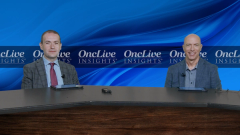
Dr. Cloughesy details the evolution from phase 1 studies observing gradual tumor shrinkage in non-enhancing tumors to the pivotal INDIGO phase 3 trial design. The study specifically enrolled patients with measurable tumors who experienced growth trajectories that subsequently changed during treatment, convincing investigators of meaningful drug activity.
Advertisement
Episodes in this series
Dr. Cloughesy details the evolution from phase 1 studies observing gradual tumor shrinkage in non-enhancing tumors to the pivotal INDIGO phase 3 trial design. The study specifically enrolled patients with measurable tumors who experienced growth trajectories that subsequently changed during treatment, convincing investigators of meaningful drug activity.
Key inclusion criteria included patients 1 to 5 years post-surgery with evaluable tumors who were not considered candidates for immediate radiation and chemotherapy. The study required controlled seizures and excluded patients with uncontrolled epilepsy. The 1 to 5 year window allowed surgical scarring to stabilize while ensuring patients hadn't progressed too extensively.
Primary endpoints included progression-free survival (PFS) and time to next intervention, recognizing that investigator decisions about progression don't always align with formal RECIST criteria. Secondary endpoints evaluated toxicity profiles, with particular attention to liver function test abnormalities identified in phase 1 studies.
The first interim analysis at approximately 14 months median follow-up demonstrated unprecedented efficacy with a hazard ratio of 0.4, a treatment effect rarely seen in neuro-oncology. The dramatic difference led the Data Safety Monitoring Board to recommend early study termination and crossover for placebo patients.
Initial results showed median PFS of 11.1 months for placebo versus 27.7 months for vorasidenib. However, these estimates seemed shorter than expected based on phase 1 experience, likely because of the statistical limitations of early Kaplan-Meier curve estimation with significant censoring.
Tolerability during the first 14 months proved excellent, with dose interruptions and reductions manageable and no irreversible toxicities. Liver function test elevations represented the primary toxicity signal, occurring predominantly during the first year of treatment.
Advertisement
Related to this article
Here is your cheat sheet to all therapeutic options that were cleared by the FDA in September 2026 spanning tumor types.

The FDA approved tucatinib plus trastuzumab and pertuzumab as maintenance for advanced HER2-positive breast cancer after induction.
The c-Met–directed ADC was designated for EGFR wild-type nonsquamous NSCLC after platinum chemotherapy and anti–PD-(L)1 therapy.
Dana-Farber’s Xin Gu, PhD, and Nicholas Polizzi, PhD, received NIH New Innovator Awards for high-risk, high-reward research.
The c-Met–directed ADC-based combination was designated for mCRC previously treated with fluoropyrimidine, irinotecan, oxaliplatin, and anti-VEGF therapy.

Pooled data from 3 randomized trials showed ropeginterferon alfa-2b improved responses vs phlebotomy alone but not vs hydroxyurea in polycythemia vera.

Experts break down key multiple myeloma data and trends from the 23rd Annual IMS Meeting.

Firmonertinib did not significantly improve BICR-assessed PFS vs platinum/pemetrexed chemotherapy in first-line EGFR exon 20–mutant NSCLC in FURVENT trial.
Advertisement
Advertisement
Trending on OncLive
1
FDA Approves Tucatinib Plus Trastuzumab/Pertuzumab as First-Line Maintenance in Advanced HER2+ Breast Cancer
2
FDA Grants Breakthrough Therapy Designation to Telisotuzumab Adizutecan Plus Bevacizumab in Refractory mCRC
3
Firmonertinib Fails to Meet PFS End Point in First-Line EGFR Exon 20 Insertion–Mutant NSCLC
4
FDA Grants Breakthrough Therapy Designation to Temab-A in Previously Treated c-Met–Expressing Nonsquamous NSCLC
5