
Opinion|Videos|July 14, 2026
Interim PET Management and ctDNA-Guided Decisions in DLBCL
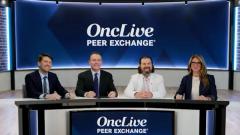
Dr. Graff discusses the challenging scenario of a positive interim PET scan mid-treatment.
Advertisement
Episodes in this series
Dr. Graff discusses the challenging scenario of a positive interim PET scan mid-treatment. Current practice continues planned therapy without escalation outside clinical trials, and she proactively counsels patients about this possibility at treatment initiation to prevent alarm when scans are incompletely clear.
False-positive considerations are particularly relevant with novel immunomodulatory agents; tumor flare, inflammatory responses, and necrotic changes may produce PET signal without representing active disease. She notes that the subsequent end-of-treatment assessment provides another evaluation point. She advocates for ctDNA as an emerging tool to help interpret equivocal PET findings, sharing personal experience using ctDNA in the relapsed setting to avoid repeat biopsies at difficult anatomic locations.
Dr. Westin discusses the transformative potential of ctDNA for treatment duration decisions, noting that a Columbia University study is prospectively evaluating whether patients clearing ctDNA by cycle 3 might safely stop after 4 cycles. He contextualizes this as the next evolution in a historical trajectory from 8 to 6 cycles of CHOP-based therapy, noting the original 6-cycle convention emerged more from tradition ("2 cycles plus complete response plus 2") than from rigorous evidence. Careful patient selection, particularly selection of those with the lowest relapse risk, is essential before shortening treatment outside a clinical trial.
Advertisement
Related to this article
Breast cancer experts address frequently asked questions on adjuvant and metastatic CDK4/6 inhibitor selection in HR-positive breast cancer.

The European Commission approved pembrolizumab plus enfortumab vedotin for muscle-invasive bladder cancer, irrespective of cisplatin eligibility.

Thoracic oncologists weigh how TROP2-directed antibody-drug conjugates fit into sequencing and combination strategies for EGFR-mutated NSCLC.

Patients with pancreatic cancer experience measurable changes in body composition years before diagnosis that differ from those seen in similar individuals without cancer.
Lisaftoclax plus acalabrutinib earned breakthrough therapy status in China for untreated CLL/SLL.

Andrea Cercek, MD, discusses the FDA approval of dostarlimab and its significance for dMMR locally advanced rectal cancer management.

Fadi Haddad, MD, discusses TKI adherence barriers, adverse effect management, and the role of alternative TKI formulations in CML.

Updated ARC-20 data showed casdatifan activity as monotherapy and in combinations across treatment lines in advanced clear cell RCC.
Advertisement
Advertisement
Trending on OncLive
1
FDA Approval of Dostarlimab Brings Potential Organ-Sparing Approach in dMMR Locally Advanced Rectal Cancer
2
Casdatifan Demonstrates Activity in Advanced Clear Cell RCC
3
Treatment Tailoring and Weighing Alternative Formulations Support Optimal TKI Deployment in CML
4
HER2+ Maintenance Therapy Approvals and Innovative Brain Metastasis Care Reshape Breast Cancer Management
5