Now Playing
Oncologists trace RAS from "undruggable" oncogene to daraxonrasib, which doubled survival in pancreatic cancer and earned a standing ovation at ASCO 2026.
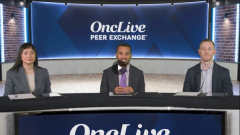
Opening this OncLive Peer Exchange, moderator Dr. Kalantri, incoming faculty at the University of Cincinnati, welcomed Dr. Jia Luo, a thoracic medical oncologist at Dana-Farber Cancer Institute, and Dr. Matthew Karr, a third-year oncology fellow at Rutgers focused on cell therapy and hematologic malignancies.
Framing the discussion around how novel therapeutic modalities are reshaping care broadly, Dr. Kalantri asked Dr. Luo to describe what's changed in her field. Her answer centered on RAS, one of oncology's oldest known but longest-unreachable targets. She traced it back to a landmark 1982 paper showing that introducing a virus into mice produced sarcomas driven by RAS mutations — a target biology students have learned about for decades without a way to drug it.
That changed at the 2026 ASCO Annual Meeting, and Dr. Kalantri filled in the data: daraxonrasib doubled overall survival from 6.7 to 13.2 months in the RAS G12 variant population, a result significant enough to earn a standing ovation at the meeting. The panel framed this as emblematic of a larger shift — targeted therapies once considered biologically impossible are now reaching patients, and researchers are racing to bring them into earlier lines and earlier stages of disease, not just relapsed or refractory settings. This opening segment functioned as scene-setting for the rest of the conversation, establishing that the RAS breakthrough isn't an isolated story but one example of a broader wave of novel modalities — a theme the panel would extend into cellular therapy and bispecific antibodies in hematologic malignancies as the discussion continued.