
News|Videos|August 23, 2026
Quality of Life and Neurotoxicity Management in Later-Line Cancer Treatment
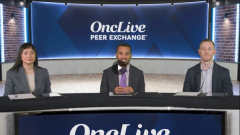
Two oncologists discuss time toxicity, subcutaneous dosing, and the infrastructure and monitoring challenges limiting community access to CAR T and bispecific therapies.
Advertisement
Dr. Kalantri turned the discussion toward a factor he said is undervalued in trial design: quality of life. Dr. Karr agreed and introduced the concept of "time toxicity" — the burden that clinic visits themselves place on patients, particularly those with incurable disease, by taking time away from family or simply daily life. He contrasted a full eight-hour infusion day with newer subcutaneous bispecific formulations that let patients be in and out of clinic in about 30 minutes, arguing that treatment schedule and administration route deserve as much weight as efficacy when counseling patients. Dr. Kalantri connected this to the broader shift toward subcutaneous over intravenous administration and asked how that intersects with access, especially for patients who live far from academic centers.
Dr. Karr's answer pivoted to infrastructure: CAR T-cell therapy, despite now being second-line standard for multiple myeloma and large B-cell lymphoma, reaches only about 20% of eligible patients, largely because of the logistical burden — apheresis, potential bridging therapy, inpatient observation, and a roughly two-week requirement to stay near a certified treatment center. He noted that window has shrunk from about a month as centers gain experience managing cytokine release syndrome and neurotoxicity syndromes through premedication and earlier recognition, and that bispecifics, being off-the-shelf, are being adopted in community settings more rapidly than CAR T as a direct result of being logistically simpler to deliver.
Advertisement
Related to this article

The liquid biopsy identifies ESR1 mutations in blood to select patients with metastatic breast cancer who may be eligible for treatment with camizestrant.

The FDA granted fast track designation to PSV359 for locally advanced unresectable or metastatic FAP-positive solitary fibrous tumors.
Experts spotlight the gastrointestinal cancer presentations they’re most excited to see at the 2026 ESMO Congress.

Surgeons at the UC San Francisco have performed over 25,000 robotically assisted minimally invasive surgeries.
Natera’s blood-based, cell-free DNA multi-cancer early detection assay received the designation after the FDA reviewed data spanning 12 cancer types.

Novel NAMPT inhibitors may circumvent the limited tolerability of previously studied agents and improve treatment outcomes in AML and MDS.

Did you catch all of this week's top oncology news? Test your knowledge with OncLive's Weekly News Quiz.

Experts break down key lung cancer data and trends from the IASLC 2026 World Conference on Lung Cancer.
Advertisement
Advertisement
Trending on OncLive
1
FDA Approves Atezolizumab Plus Chemo for Stage III dMMR Colon Cancer
2
FDA Grants Breakthrough Device Designation to Natera’s Multi-Cancer Early Detection Assay
3
VIR-5500 Receives FDA Fast Track Designation in mCRPC
4
MAVERICK, B7-H3–Directed ADCs, and ADAURA Data Headline Key Lung Cancer Findings From WCLC 2026
5