
News|Videos|August 23, 2026
Solid Tumor vs Hematologic Cancer Care - Cross-Specialty Lessons in Toxicity Management
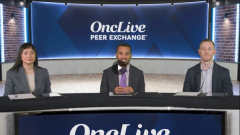
How solid tumor oncologists are borrowing hematology's CRS and ICANS management playbook as bispecific therapies like tarlatamab bring new toxicities into lung cancer care.
Advertisement
Closing the discussion, Dr. Kalantri asked whether the same community-access progress happening in hematologic malignancies is taking hold in solid tumors. Dr. Luo answered by describing how much her field has borrowed directly from hematology-oncology's playbook. Tarlatamab's arrival in small cell lung cancer forced thoracic oncologists to learn to recognize and manage cytokine release syndrome and ICANS — toxicities that were previously unfamiliar territory outside malignant hematology.
She credited early success at her institution to co-managing tarlatamab patients with the cellular therapy service, and to algorithms developed by colleague Dr. Jacob Sands for catching these side effects early, particularly during a patient's first two doses, when the risk of escalation is highest. She described a clear trajectory: what began as a small group of specialists learning the toxicity profile firsthand has since spread through outreach to multiple hospitals across the Northeast now comfortable initiating tarlatamab independently.
Dr. Luo framed this cross-specialty knowledge transfer as essential groundwork for what's coming next — more cellular therapy trials and bispecific T-cell engagers moving into solid tumors, all carrying similar toxicity profiles that solid tumor oncologists will need to manage with the same rigor hematologists already have.
Dr. Kalantri closed by thanking both panelists, summarizing the episode's arc from evaluating new modalities' evidence to communicating their risks and benefits to patients and colleagues, and reinforcing that collaboration across specialties is what ultimately gets these therapies safely into wider practice.
Advertisement
Related to this article

The liquid biopsy identifies ESR1 mutations in blood to select patients with metastatic breast cancer who may be eligible for treatment with camizestrant.

The FDA granted fast track designation to PSV359 for locally advanced unresectable or metastatic FAP-positive solitary fibrous tumors.
Experts spotlight the gastrointestinal cancer presentations they’re most excited to see at the 2026 ESMO Congress.
Surgeons at the UC San Francisco have performed over 25,000 robotically assisted minimally invasive surgeries.
Natera’s blood-based, cell-free DNA multi-cancer early detection assay received the designation after the FDA reviewed data spanning 12 cancer types.

Novel NAMPT inhibitors may circumvent the limited tolerability of previously studied agents and improve treatment outcomes in AML and MDS.

Did you catch all of this week's top oncology news? Test your knowledge with OncLive's Weekly News Quiz.

Experts break down key lung cancer data and trends from the IASLC 2026 World Conference on Lung Cancer.
Advertisement
Advertisement
Trending on OncLive
1
FDA Approves Atezolizumab Plus Chemo for Stage III dMMR Colon Cancer
2
FDA Grants Breakthrough Device Designation to Natera’s Multi-Cancer Early Detection Assay
3
VIR-5500 Receives FDA Fast Track Designation in mCRPC
4
MAVERICK, B7-H3–Directed ADCs, and ADAURA Data Headline Key Lung Cancer Findings From WCLC 2026
5