
Opinion|Videos|June 4, 2026 (Updated: May 14, 2026)
Patient Communication and Closing Thoughts
Author(s)Nicole Shonka, MD, Robert Chong, MD
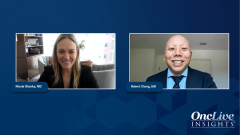
In this final episode, Dr. Chong asks Dr. Shonka how she approaches the initial conversation with a newly diagnosed patient — particularly a young adult or AYA patient.
Advertisement
In this final episode, Dr. Chong asks Dr. Shonka how she approaches the initial conversation with a newly diagnosed patient — particularly a young adult or AYA patient. Dr. Shonka frames it around what she would want to know if she were the patient planning her own life: above all, whether the disease is curable. She does not sugarcoat. After laying out the recommended treatment plan, she tells patients that even in 2026 this is not a cancer that can be cured and that it will shorten their life. Some patients can absorb only that much at the initial visit; she sets up advanced-care planning with the palliative-care team at a subsequent visit, and ultimately involves palliative care with everyone. She offers patients the choice of whether to hear average survival numbers and asks them to come to her with those questions rather than to Google. She also raises childbearing and contraception, given that the available therapies are not compatible with pregnancy. Dr. Chong agrees with the up-front honesty, adding that after the chemoradiation phase and a few visits, patients often shift into an “attack mode” where the conversation can broaden to active research, clinical trials, and reasons for measured hope without overpromising. Both close by emphasizing balance: honesty about diagnosis and prognosis paired with acknowledgment that the field is actively moving.
Thank you for watching this OncLive® Insights discussion. Please subscribe to our e-newsletter for information on upcoming video series.
Advertisement
Related to this article
Here is your cheat sheet to all therapeutic options that were cleared by the FDA in September 2026 spanning tumor types.

The FDA approved tucatinib plus trastuzumab and pertuzumab as maintenance for advanced HER2-positive breast cancer after induction.
The c-Met–directed ADC was designated for EGFR wild-type nonsquamous NSCLC after platinum chemotherapy and anti–PD-(L)1 therapy.
Dana-Farber’s Xin Gu, PhD, and Nicholas Polizzi, PhD, received NIH New Innovator Awards for high-risk, high-reward research.
The c-Met–directed ADC-based combination was designated for mCRC previously treated with fluoropyrimidine, irinotecan, oxaliplatin, and anti-VEGF therapy.

Pooled data from 3 randomized trials showed ropeginterferon alfa-2b improved responses vs phlebotomy alone but not vs hydroxyurea in polycythemia vera.

Experts break down key multiple myeloma data and trends from the 23rd Annual IMS Meeting.

Firmonertinib did not significantly improve BICR-assessed PFS vs platinum/pemetrexed chemotherapy in first-line EGFR exon 20–mutant NSCLC in FURVENT trial.
Advertisement
Advertisement
Trending on OncLive
1
FDA Approves Tucatinib Plus Trastuzumab/Pertuzumab as First-Line Maintenance in Advanced HER2+ Breast Cancer
2
FDA Grants Breakthrough Therapy Designation to Telisotuzumab Adizutecan Plus Bevacizumab in Refractory mCRC
3
Firmonertinib Fails to Meet PFS End Point in First-Line EGFR Exon 20 Insertion–Mutant NSCLC
4
FDA Grants Breakthrough Therapy Designation to Temab-A in Previously Treated c-Met–Expressing Nonsquamous NSCLC
5