
Opinion|Videos|June 4, 2026 (Updated: May 14, 2026)
Treatment Sequencing and Response Assessment in High-Grade Glioma
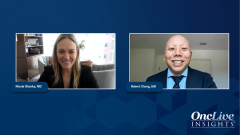
Author(s)Nicole Shonka, MD, Robert Chong, MD
In this episode, Dr. Shonka asks Dr. Chong how he sequences therapy across the disease course. For newly diagnosed DMG, both rely on radiation followed by temozolomide — acknowledging that benefit is limited — and then move to dordaviprone at first recurrence for H3 K27M-mutant disease.
Advertisement
In this episode, Dr. Shonka asks Dr. Chong how he sequences therapy across the disease course. For newly diagnosed DMG, both rely on radiation followed by temozolomide — acknowledging that benefit is limited — and then move to dordaviprone at first recurrence for H3 K27M-mutant disease. The unsolved question, both agree, has moved to third line and beyond. Dr. Shonka details what remains in her toolbox: re-irradiation, bevacizumab (Avastin) alone or with radiation, lomustine, and, for supratentorial tumors, tumor-treating fields (TTFields, Optune) when the patient has the willingness and a caregiver to support that regimen. She mentions an ongoing pediatric DMG TTFields trial that she hopes will inform adult practice. Dr. Chong agrees the third-line approach is largely a “kitchen sink” one and leans on clinical-trial enrollment and rational combinations based on molecular profiling at progression. Both also discuss combining TTFields with immunotherapy in glioblastoma as a forward-looking direction. The conversation turns to response assessment. Dr. Chong outlines the RANO (Response Assessment in Neuro-Oncology) framework and RANO 2.0 updates. In glioblastoma, perfusion imaging, time since radiation (at least 12 weeks), and changes in contrast enhancement are useful tools. These are harder to apply in DMG, where baseline lesions often lack enhancement, show minimal edema, and have low cerebral blood volume (rCBV). For DMG, he relies on subtle T2/FLAIR changes and clinical signs of progression, especially brainstem or spinal cord symptoms that may not appear on MRI. Both note that MR spectroscopy and amino acid PET have played a limited role in their DMG practice so far.
In the next episode, “Patient Communication and Closing Thoughts,” Dr. Shonka and Dr. Chong discuss how they frame prognosis and treatment goals in the initial visit.
Advertisement
Related to this article
Here is your cheat sheet to all therapeutic options that were cleared by the FDA in September 2026 spanning tumor types.

The FDA approved tucatinib plus trastuzumab and pertuzumab as maintenance for advanced HER2-positive breast cancer after induction.
The c-Met–directed ADC was designated for EGFR wild-type nonsquamous NSCLC after platinum chemotherapy and anti–PD-(L)1 therapy.
Dana-Farber’s Xin Gu, PhD, and Nicholas Polizzi, PhD, received NIH New Innovator Awards for high-risk, high-reward research.
The c-Met–directed ADC-based combination was designated for mCRC previously treated with fluoropyrimidine, irinotecan, oxaliplatin, and anti-VEGF therapy.
Pooled data from 3 randomized trials showed ropeginterferon alfa-2b improved responses vs phlebotomy alone but not vs hydroxyurea in polycythemia vera.

Experts break down key multiple myeloma data and trends from the 23rd Annual IMS Meeting.

Firmonertinib did not significantly improve BICR-assessed PFS vs platinum/pemetrexed chemotherapy in first-line EGFR exon 20–mutant NSCLC in FURVENT trial.
Advertisement
Advertisement
Trending on OncLive
1
FDA Approves Tucatinib Plus Trastuzumab/Pertuzumab as First-Line Maintenance in Advanced HER2+ Breast Cancer
2
FDA Grants Breakthrough Therapy Designation to Telisotuzumab Adizutecan Plus Bevacizumab in Refractory mCRC
3
Firmonertinib Fails to Meet PFS End Point in First-Line EGFR Exon 20 Insertion–Mutant NSCLC
4
FDA Grants Breakthrough Therapy Designation to Temab-A in Previously Treated c-Met–Expressing Nonsquamous NSCLC
5