An observational analysis showed a long-term OS benefit with Orca-T in adult patients undergoing allogeneic transplantation for hematologic malignancies.
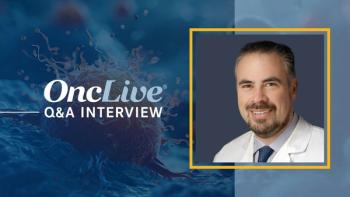
Franco Cavalli, MD, has dedicated his life to treating patients, developing drugs, and bringing higher quality cancer care to areas in need of improvement
It's a cold winter night in Ambrì, Switzerland. Fallen snow covers the village rooftops and the surrounding Alps. Deep inside the village, thousands pack inside Gottardo Arena. It’s chilly inside, but the local hockey team, HC Ambrì-Piotta, is playing its rival, Lugano, so the fans endure it. The game is tied at 1. A forward in a blue jersey skates down the length of the ice and rips a shot, beating the goalie. HC Ambrì-Piotta wins, and thousands of fans celebrate the victory.
Among them is a man who has saved the lives of thousands and impacted the lives of millions.
Professor Franco Cavalli, MD, when not watching hockey, hiking the Prealps, or reading Dostoevsky, has spent most of his life treating patients with cancer. By playing a major role in the clinical investigations for etoposide (VP-16); contributing to the development of cisplatin, carboplatin, and paclitaxel; being the founding editor-in-chief of Annals of Oncology; founding the International Conference on Malignant Lymphoma; and treating thousands of patients with cancer, Cavalli has left an indelible footprint in cancer care.
Throughout his pathway to becoming one of the most prominent oncologists alive, hardship and perseverance were staples as he constantly fought to deliver care to those who most needed it. Cavalli, the most recent Giants of Cancer Care inductee in the category of lymphoma, has had an impact on research and treatment that cannot be understated.
Born in 1942 in Locarno, Switzerland, to a modest family with a loving mother and a strict father, Cavalli was the first in his family to pursue higher education. With a love for the humanities and literature, he initially wanted to be a journalist. His father, however, encouraged him to look elsewhere, and that led him to consider engineering, law, and medicine as his only legitimate choices. Ultimately, he chose medicine.
In his first year at University Hospital in Bern, Switzerland, he did not enjoy his studies. However, in his second year, that changed once he started seeing patients. As “an old ’68 revolutionary,” he pursued psychiatry for 3 years because it was the “revolutionary part of medicine.” It was during those studies that he decided to switch to internal medicine, and met his mentor, Professor Kurt Brunner, MD, who suggested he study oncology. Brunner convinced him that, as much as cancer is a disease that requires science to solve, it is also a societal disease that requires working with people; around 40% of cancers are linked to behaviors.
At the age of 30, Cavalli decided to go into oncology, and it was in oncology that his interests blended. A few weeks after making that decision, he was “absolutely convinced” it was the right one.
Throughout his career, the teachings of his mentor, Brunner, remained apparent in Cavalli’s work. He recalled Brunner’s strictness in demanding a scientific reason for why a patient felt a certain way or why a treatment had a specific outcome. “Let’s go back to biology,” was one of Brunner’s teachings, Cavalli said.
Cavalli was drawn to the research and clinical trial design aspect of the work, an area where precision is crucial. His mentor’s teachings were invaluable. Cavalli went on to play a significant role in the clinical investigations of etoposide, one of the most prominent chemotherapy drugs. He also helped further the development of various adriamycin derivatives, oxaliplatin, cisplatin, carboplatin, and paclitaxel.
Cavalli also liked treating patients and continued to do so until 2024 at the age of 82. His training as a psychiatrist paid off greatly, helping him to communicate effectively with patients. However, there were challenges. He endured sleepless nights and the emotional burden of fighting to provide patients with the best care possible, Cavalli said.
“I was immediately impressed by the importance he gave to clinical research, but also by how much he valued the patient, who was always kept informed and involved in every decision about their care,” said Emanuele Zucca, MD, a colleague of Cavalli’s, and the scientific and medical director of the International Extranodal Lymphoma Study Group.
In 1990, the Annals of Oncology launched, and he served as the founding editor and editor-in-chief of the journal for approximately 10 years. He called this time an “extraordinary experience,” although he started out in a tiny room with a half-time secretary. Now, he expresses pride in the journal being the prime oncology journal in Europe.
In some ways, there is irony in the way Cavalli’s life panned out. Through his medical career, he ended up becoming a journalist after all, serving as an editor and writing over 600 articles that were published in peer-reviewed journals, on topics such as care in underdeveloped nations, clinical research in lymphoma, and thought pieces on the landscape of oncology. In addition to his other contributions to lymphoma research, Cavalli created the International Extranodal Lymphoma Study Group, the only cooperative group that carries out clinical research in extranodal lymphomas worldwide. This group has since been able to alter the standards of care for testicular lymphomas, brain lymphomas, and other malignant lymphomas, and it is what he called his most important achievement from a scientific standpoint.
In 1978, Cavalli had the opportunity to remain in the German-speaking part of Switzerland, where he already had a brilliant academic career before him and the oncology infrastructure was in place. He instead traveled to the Italian-speaking part of Switzerland, where there was “Absolutely nothing. No medical oncology, no radiotherapy, no surgical oncology. Nothing at all,” he said.
In the German-speaking part of the country, he would see patients who had to travel long distances from the Italian-speaking area just to be seen by the proper experts. This was one of the primary motivators for making the move: not just to treat patients, but to build a system where patients with cancer could be treated closer to home.
Cavalli said that his family history in the Italian region of Switzerland—around 500 years of lineage—also fueled him to work incredibly hard. For the first 10 years, he would work relentlessly, sometimes up to 36 hours at a time without stopping. That family legacy in that region continues: Today he is father to 8 children and grandfather to 13 grandchildren.
Even now, he said that proving wrong the doubters, those who told him not to make the move to the Italian region of Switzerland, motivates him. When he started to build up the infrastructure around 50 years ago, the situation was completely different. When he would see patients with breast cancer, they and their partners would ask if the disease was contagious. Now, not only is the region more educated, but it also has access to more resources.
“He also had the rare ability to turn his vision into reality. Under his leadership, I saw a small hospital department grow into a full-fledged academic comprehensive cancer center with an international reputation, later joined by a major cancer research institute,” Zucca said.
Prior to this move, Cavalli’s main areas of study had been breast cancer and leukemia; however, the Italian part of Switzerland did not have the infrastructure to support that type of research. For that reason, he had to find a new area of study. To understand how he chose lymphoma, it is important to reflect on what he calls his “most important achievement."
Cavalli’s founding and organizing of the International Conference on Malignant Lymphoma, the “key event for all parties involved in the study and treatment of lymphoid neoplasms worldwide,” stands out.1
While the first conference was held in 1981, the story of how it came about began 2 years earlier, when he organized a small meeting while attending the Union for International Cancer Control, where he and about 50 colleagues discussed recent advances in testicular cancer. At that meeting in a bar in Switzerland, Cavalli and his peers decided to launch a larger conference on the only remaining important topic without an international conference: malignant lymphoma.
The next day, he booked 500 hotel rooms in Lugano, Switzerland, for the 1981 conference, and a plane ticket to the US, so he could meet with the biggest experts on lymphoma.
From that point on, he studied lymphoma. “It is not that I have organized a conference because lymphoma was my topic, but lymphoma became my topic because I decided to organize a conference,” he said.
Since its initiation, the International Conference on Malignant Lymphoma has become central in many of the developments in lymphoma treatment. Cavalli partly attributes this to a closed workshop held the day before the meeting, where anywhere from 50 to 100 leading experts discuss the most pressing topics of the year.
The development of the Lugano classification for staging lymphomas, which Cavalli played a large role in creating, is among the greatest achievements of the conference.
Commemorating the achievement is a letter from President Bill Clinton that hangs on the wall of his office, congratulating him for organizing the conference.
Through the conference, Cavalli has built strong bonds with friends in the lymphoma field from the US to China. Some have even furthered his career. For example, Mary K. Gospodarowicz, MD, formerly the medical director of the Princess Margaret Cancer Center in Toronto, Ontario, encouraged the International Union Against Cancer to appoint Cavalli as president, a role that he held from 2006 to 2008. During that time, he wrote papers and declarations indicating that cancer, which at the time was believed to be a disease primarily found in richer countries, was becoming more common in poorer, developing countries.
When asked about what direction lymphoma care and oncology in general should head, Cavalli spoke about focusing on stem cells and artificial intelligence, but also emphasized the need to dedicate more resources to developing countries. One of the projects he worked on, My Child Matters, operates in Central American countries and other low- and middle-income countries, where, 40 years ago, almost all children with cancer died, except for the very few who were fortunate enough to travel to other countries for treatment.2 Now, those rates are sizably improved, though still lower than the 80% survival rate observed in developed nations.
Silke Gillessen, MD, medical director of the Oncology Institute of Southern Switzerland, said of Cavalli: “What makes it a great pleasure to work with him [is that] he is very efficient and has a never-ending energy, and you can feel that his highest goal is to improve the life of patients all over the world."
Currently, at 83 years old, Cavalli serves as the president of the Organizing Committee and Scientific Committee of the International Conference on Malignant Lymphoma; the president of the Institute of Oncology Research in Bellinzona, Switzerland; and the founder and coordinator of the International Extranodal Lymphoma Study Group. He continues to teach at the European School of Oncology and remains a member of the editorial boards of several prominent organizations and journals.
Throughout Cavalli’s long, illustrious career, a career that is defined by idea-sharing, unity, and perseverance, nothing is clearer than that he pushes whatever boundaries necessary to deliver the best, life-saving care to patients possible. As he iterated, “Nothing is impossible.”