
Opinion|Videos|April 1, 2026
Transplant-Eligible NDMM: Quad-Based Induction, Transplant Timing, and Selective Consolidation
Clinicians weigh quad induction for transplant-eligible myeloma: usually 3–4 cycles, selective consolidation, and rare travel-driven all-
Advertisement
Episodes in this series
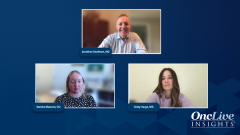
This segment transitions to patients with transplant-eligible (transplant-intended) newly diagnosed multiple myeloma (NDMM) and explores how quad-based induction regimens are being incorporated into clinical practice. Faculty discuss typical frontline strategies for fit patients, including the use of quad regimens and practical considerations such as the optimal number of induction cycles before autologous stem cell transplant, which commonly ranges from three to four cycles.
The panel also examines the role of post-transplant consolidation and how clinicians individualize this decision based on disease biology and response to therapy. While many standard-risk patients may proceed directly to maintenance, consolidation may be considered in selected higher-risk scenarios such as aggressive cytogenetic features, plasma cell leukemia, or extramedullary disease in order to deepen responses and achieve MRD negativity.
Real-world factors that influence treatment selection are also discussed, including patient travel distance, work obligations, and the feasibility of intensive clinic schedules. Overall, the segment highlights practical approaches to sequencing quad-based induction, transplant, consolidation in selected patients, and maintenance therapy in contemporary transplant-eligible NDMM management.
Advertisement
Related to this article
Here is your cheat sheet to all therapeutic options that were cleared by the FDA in September 2026 spanning tumor types.

The FDA approved tucatinib plus trastuzumab and pertuzumab as maintenance for advanced HER2-positive breast cancer after induction.
The c-Met–directed ADC was designated for EGFR wild-type nonsquamous NSCLC after platinum chemotherapy and anti–PD-(L)1 therapy.
Dana-Farber’s Xin Gu, PhD, and Nicholas Polizzi, PhD, received NIH New Innovator Awards for high-risk, high-reward research.
The c-Met–directed ADC-based combination was designated for mCRC previously treated with fluoropyrimidine, irinotecan, oxaliplatin, and anti-VEGF therapy.
Pooled data from 3 randomized trials showed ropeginterferon alfa-2b improved responses vs phlebotomy alone but not vs hydroxyurea in polycythemia vera.
Experts break down key multiple myeloma data and trends from the 23rd Annual IMS Meeting.
Firmonertinib did not significantly improve BICR-assessed PFS vs platinum/pemetrexed chemotherapy in first-line EGFR exon 20–mutant NSCLC in FURVENT trial.
Advertisement
Advertisement
Trending on OncLive
1
FDA Approves Tucatinib Plus Trastuzumab/Pertuzumab as First-Line Maintenance in Advanced HER2+ Breast Cancer
2
FDA Grants Breakthrough Therapy Designation to Telisotuzumab Adizutecan Plus Bevacizumab in Refractory mCRC
3
Firmonertinib Fails to Meet PFS End Point in First-Line EGFR Exon 20 Insertion–Mutant NSCLC
4
FDA Grants Breakthrough Therapy Designation to Temab-A in Previously Treated c-Met–Expressing Nonsquamous NSCLC
5