
Opinion|Videos|August 5, 2026
Unmet Needs in Transplant Recipients and Immunocompromised Patients
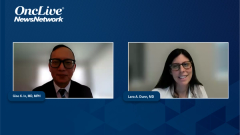
Author(s)Gino Kim In, MD, Lara A. Dunn, MD
Dr In and Dr Dunn turn to remaining unmet needs in advanced cutaneous squamous cell carcinoma, focusing on high-risk populations routinely excluded from pivotal trials, including solid organ transplant recipients, patients with hematologic malignancies, and those with autoimmune disease.
Advertisement
Episodes in this series
Dr In and Dr Dunn turn to remaining unmet needs in advanced cutaneous squamous cell carcinoma, focusing on high-risk populations routinely excluded from pivotal trials, including solid organ transplant recipients, patients with hematologic malignancies, and those with autoimmune disease. Dr Dunn raises allograft rejection as a central question, noting that rejection rates with anti–PD-1 inhibition have been reported at 36% to 46%, and asks whether the relatively more favorable toxicity profile observed with cosibelimab might translate into a lower rejection rate, which would make the agent appealing for transplant recipients who develop locally advanced disease not amenable to curative treatment or who develop metastatic disease. Dr In agrees this population is especially challenging, noting that transplant recipients face a several hundredfold higher risk of aggressive squamous cell carcinoma because of their immunosuppressive regimens, and confirms that studies examining cosibelimab in this setting are ongoing.
Advertisement
Related to this article

The top 5 OncLive TV videos of the week cover insights in MDS, multiple myeloma, pancreatic cancer, colorectal cancer, and uveal melanoma.

The combination nearly doubled the confirmed response rate in the randomized phase 2 portion of HexAgon-HN, with the greatest benefit in HPV-positive disease.
The FDA approved pirtobrutinib for untreated chronic lymphocytic leukemia, granted priority review to elinzanetant for breast cancer hot flashes, and more.

The 2026 amendment adds 40 new recommendations, including active surveillance, office-based treatment, and chemoablation for select recurrent low-grade disease.

The FDA has approved pirtobrutinib for the treatment of adult patients with previously untreated CLL or SLL harboring no known 17p deletion.

By finding a way to attack the most important human oncogene, KRAS, the UCSF chemical biologist launched a new era in cancer treatment.

TRE-515 earned fast track status in combination with KRAS inhibitors for G12C-mutated NSCLC after anti–PD-(L)1 therapy and platinum-based chemotherapy.

An NDA for zipalertinib in EGFR exon 20 insertion–positive NSCLC is being supported by phase 3 REZILIENT3 data.
Advertisement
Advertisement
Trending on OncLive
1
INBRX-106 Plus Pembrolizumab Improves Responses and PFS in First-Line PD-L1–Positive HNSCC
2
FDA Approves Pirtobrutinib for Previously Untreated CLL/SLL
3
The OncFive: Top Oncology Articles for the Week of 9/27/2026
4
NDA Submission Is Initiated for Zipalertinib Plus Chemotherapy in Frontline EGFR Exon 20 Insertion+ NSCLC
5