Articles by Brendon M. Stiles, MD

Cost-Effectiveness and Closing Perspectives in Early-Stage NSCLC
ByJamie E. Chaft, MD,Drew Moghanaki, MD, MPH,Brendon M. Stiles, MD,Isabel Preeshagul, DO, MBS,Eric Kumar Singhi, MD Panelists discuss how financial toxicity and cost-effectiveness analyses highlight the importance of appropriate patient selection for perioperative immunotherapy, while emphasizing that multidisciplinary care and patient involvement remain essential for optimal outcomes.
Treatment Strategies for Stage IIIB/N2 and High-Risk Early-Stage NSCLC
ByJamie E. Chaft, MD,Drew Moghanaki, MD, MPH,Brendon M. Stiles, MD,Isabel Preeshagul, DO, MBS,Eric Kumar Singhi, MD Panelists discuss how stage IIIB treatment decisions require individual assessment, with surgery considered for selected T3/T4 tumors but not routinely for N3 disease, while postoperative radiation is generally not recommended.
Integrating Radiation Therapy With Neoadjuvant IO in Early-Stage NSCLC
ByJamie E. Chaft, MD,Drew Moghanaki, MD, MPH,Brendon M. Stiles, MD,Isabel Preeshagul, DO, MBS,Eric Kumar Singhi, MD Panelists discuss how to carefully manage radiation therapy after induction immunotherapy in surgically ineligible patients, treating only visible disease and considering additional immunotherapy based on patient tolerance and response.
Best Practices for Use of Neoadjuvant Immunotherapy in Resectable Early-Stage NSCLC
ByJamie E. Chaft, MD,Drew Moghanaki, MD, MPH,Brendon M. Stiles, MD,Isabel Preeshagul, DO, MBS,Eric Kumar Singhi, MD Panelists discuss how restaging practices vary widely, with most favoring CT imaging over routine invasive restaging, while debating the optimal number of induction cycles (3 vs 4) and timing of surveillance.
Clinical Impact of Incorporation of Immunotherapy and Targeted Therapy in Early-Stage NSCLC
ByJamie E. Chaft, MD,Drew Moghanaki, MD, MPH,Brendon M. Stiles, MD,Isabel Preeshagul, DO, MBS,Eric Kumar Singhi, MD Panelists discuss how the rapid integration of immunotherapy and targeted therapies into perioperative care requires constant practice updates and individualized decision-making based on pathologic response and patient characteristics.
Defining Surgical Eligibility in N2 Early-Stage NSCLC
ByJamie E. Chaft, MD,Drew Moghanaki, MD, MPH,Brendon M. Stiles, MD,Isabel Preeshagul, DO, MBS,Eric Kumar Singhi, MD Panelists discuss how multistation N2 disease is no longer an absolute contraindication to surgery, with treatment decisions based on biology rather than just nodal station number, though bulky vs invasive disease characteristics matter.
Optimizing Care in Unresectable Stage III NSCLC: Chemoradiation and Immunotherapy
ByJamie E. Chaft, MD,Drew Moghanaki, MD, MPH,Brendon M. Stiles, MD,Isabel Preeshagul, DO, MBS,Eric Kumar Singhi, MD Panelists discuss how concurrent chemoradiation remains standard, when possible, with sequential approaches for frail patients, and consolidation immunotherapy recommended regardless of the initial radiation approach.
Balancing Surgery, Radiation, and Targeted Therapy in Early-Stage NSCLC
ByJamie E. Chaft, MD,Drew Moghanaki, MD, MPH,Brendon M. Stiles, MD,Isabel Preeshagul, DO, MBS,Eric Kumar Singhi, MD Panelists discuss how treatment selection for early-stage disease depends on lymph node metastasis risk, with SBRT considered for very low-risk peripheral tumors and surgery preferred when staging information is needed.
Defining Surgical Candidacy in Newly Diagnosed Early-Stage NSCLC
ByJamie E. Chaft, MD,Drew Moghanaki, MD, MPH,Brendon M. Stiles, MD,Isabel Preeshagul, DO, MBS,Eric Kumar Singhi, MD Panelists discuss how most patients with early-stage disease who would benefit from systemic therapy should receive neoadjuvant treatment, with direct surgery reserved mainly for those with medical contraindications to immunotherapy.
Managing Early-Stage NSCLC Post Neoadjuvant Therapy in Patients Who Are Not Surgery Candidates
ByJamie E. Chaft, MD,Drew Moghanaki, MD, MPH,Brendon M. Stiles, MD,Isabel Preeshagul, DO, MBS,Eric Kumar Singhi, MD Panelists discuss how to pivot treatment plans when patients cannot proceed to surgery after induction therapy, emphasizing the importance of determining resectability up front and having multidisciplinary contingency plans.
Surgical Decision-Making: Resectable vs Borderline Resectable NSCLC
ByJamie E. Chaft, MD,Drew Moghanaki, MD, MPH,Brendon M. Stiles, MD,Isabel Preeshagul, DO, MBS,Eric Kumar Singhi, MD Panelists discuss how resectability determination remains surgeon-dependent and institution-specific, requiring careful consideration of both technical feasibility (“can you”) and appropriateness (“should you”) for individual patients.
Streamlining Surgical Tissue Coordination for Biomarker Testing in Early-Stage NSCLC
ByJamie E. Chaft, MD,Drew Moghanaki, MD, MPH,Brendon M. Stiles, MD,Isabel Preeshagul, DO, MBS,Eric Kumar Singhi, MD Panelists discuss how multidisciplinary coordination and early communication between surgical, pulmonary, and oncology teams ensures adequate tissue procurement for molecular testing from the initial biopsy.
Integrating Biomarker Results Into Treatment Planning for NSCLC
ByJamie E. Chaft, MD,Drew Moghanaki, MD, MPH,Brendon M. Stiles, MD,Isabel Preeshagul, DO, MBS,Eric Kumar Singhi, MD Panelists discuss how to manage the waiting period for biomarker results while balancing urgency in curable patients, emphasizing the importance of tissue-based testing over liquid biopsies in early-stage disease.
Expanding Access to Biomarker Testing in Early-Stage NSCLC
ByJamie E. Chaft, MD,Drew Moghanaki, MD, MPH,Brendon M. Stiles, MD,Isabel Preeshagul, DO, MBS,Eric Kumar Singhi, MD Panelists discuss how surgeon-led ultrasound-guided biopsies can expedite care timelines and overcome barriers to guideline-concordant biomarker testing that still affects one-third of eligible patients.
Integrating Biomarker Testing Into Early-Stage NSCLC Care
ByJamie E. Chaft, MD,Drew Moghanaki, MD, MPH,Brendon M. Stiles, MD,Isabel Preeshagul, DO, MBS,Eric Kumar Singhi, MD Panelists discuss how comprehensive biomarker testing is essential for all patients with early-stage non–small cell lung cancer (NSCLC), with thoracic specialists emphasizing the importance of testing primary tumor samples and lymph nodes to identify actionable mutations that guide treatment decisions and inform patients about their therapeutic journey, particularly as targeted therapies and immunotherapies continue to advance in early-stage and locally advanced disease settings.
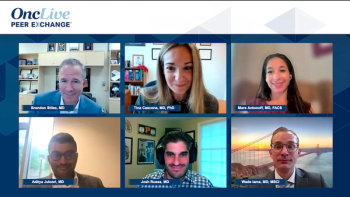
Closing Perspectives: Unmet Needs, Emerging Advances, and the Future of Early-Stage NSCLC Treatment
ByTina Cascone, MD, PhD,Josh Ruess, MD ,Wade T. Iams, MD,Aditya Juloori, MD,Brendon M. Stiles, MD Panelists discuss how future advances will focus on biomarker-driven personalized approaches, platform trials to increase pathologic complete response rates, circulating tumor DNA (ctDNA)-guided therapy escalation and de-escalation, and the critical importance of comprehensive molecular testing in the neoadjuvant setting.
PACIFIC-R 5-Year Follow-Up: Real-World Outcomes and Implications for Unresectable NSCLC Treatment
ByTina Cascone, MD, PhD,Josh Ruess, MD ,Wade T. Iams, MD,Aditya Juloori, MD,Brendon M. Stiles, MD Panelists discuss how the PACIFIC-R real-world data demonstrates excellent long-term outcomes with a median survival of 60 months, validating the durvalumab consolidation approach while addressing management strategies for patients who progress on or after immunotherapy.
Surgical Attrition in Resectable NSCLC: Risk Factors, Patient Communication, and Strategies to Optimize Continuity of Care
ByTina Cascone, MD, PhD,Josh Ruess, MD ,Wade T. Iams, MD,Aditya Juloori, MD,Brendon M. Stiles, MD Panelists discuss how neoadjuvant chemoimmunotherapy maintains acceptable surgical safety profiles with mortality rates under 4% and how technical complexity primarily stems from hilar lymph node involvement rather than the systemic therapy itself, requiring experienced surgeons to handle these cases.
Clinical Utility of ctDNA in Guiding Perioperative Treatment Decisions in Early-Stage NSCLC
ByTina Cascone, MD, PhD,Josh Ruess, MD ,Wade T. Iams, MD,Aditya Juloori, MD,Brendon M. Stiles, MD Panelists discuss how circulating tumor DNA (ctDNA) serves as a promising biomarker for identifying patients at higher risk who may benefit from therapy escalation, though they acknowledge the current lack of prospective data on how to act therapeutically on positive ctDNA results.
Optimizing Adjuvant Therapy Decisions in Resectable NSCLC: Integrating Pathologic Response, PD-L1, and Nodal Status
ByTina Cascone, MD, PhD,Josh Ruess, MD ,Wade T. Iams, MD,Aditya Juloori, MD,Brendon M. Stiles, MD Panelists discuss how treatment decisions should integrate multiple factors, including pathologic complete response (pCR), PD-L1 status, and nodal involvement, with particular emphasis on continuing adjuvant therapy for N2 disease and non-PCR patients despite the complexity of using residual viable tumor as a decision-making tool.
FDA Green-Lights Subcutaneous Nivolumab: What It Means for Early-Stage NSCLC Care
ByTina Cascone, MD, PhD,Josh Ruess, MD ,Wade T. Iams, MD,Aditya Juloori, MD,Brendon M. Stiles, MD Panelists discuss how subcutaneous (SQ) nivolumab administration offers patient convenience and potential logistical advantages, particularly in the maintenance setting, though they acknowledge limited current adoption and need for more biological data on efficacy differences.
MDT Management of Borderline Resectable Early-Stage NSCLC and Delayed Surgery After Neoadjuvant IO
ByTina Cascone, MD, PhD,Josh Ruess, MD ,Wade T. Iams, MD,Aditya Juloori, MD,Brendon M. Stiles, MD Panelists discuss how borderline resectable patients can be made resectable through neoadjuvant chemoimmunotherapy when surgeons have clear, objective goals for what they aim to achieve rather than vague hopes to make surgery “less scary.”
Expert Perspectives in Challenging Situations: Progression After Neoadjuvant Chemoimmunotherapy
ByTina Cascone, MD, PhD,Josh Ruess, MD ,Wade T. Iams, MD,Aditya Juloori, MD,Brendon M. Stiles, MD Panelists discuss how to manage patients who cannot proceed to surgery after neoadjuvant chemoimmunotherapy by pivoting to definitive concurrent chemoradiation with reduced-dose chemotherapy, while emphasizing the need to distinguish true progression from inflammatory changes.
ASCO 2025 Real-World Data on Neoadjuvant Therapy in Stage II to III NSCLC: Surgical Outcomes and Clinical Implications
ByTina Cascone, MD, PhD,Josh Ruess, MD ,Wade T. Iams, MD,Aditya Juloori, MD,Brendon M. Stiles, MD Panelists discuss how real-world data from the Flatiron Health database revealed that surgical completion rates after neoadjuvant therapy are lower in community practice (65%) compared with clinical trials, particularly for patients with poor performance status or more advanced stage disease.
Surgical Perspectives: Who Are the Best Candidates for Neoadjuvant Chemoimmunotherapy?
ByTina Cascone, MD, PhD,Josh Ruess, MD ,Wade T. Iams, MD,Aditya Juloori, MD,Brendon M. Stiles, MD Panelists discuss how surgeons evaluate candidates for neoadjuvant chemoimmunotherapy by emphasizing that all patients with stage II and III disease should be considered regardless of PD-L1 or mutation status, while highlighting the importance of multidisciplinary collaboration in treatment decisions.
CheckMate 77T: Updated Survival and Biomarker Insights Shaping Early-Stage NSCLC Care
ByTina Cascone, MD, PhD,Josh Ruess, MD ,Wade T. Iams, MD,Aditya Juloori, MD,Brendon M. Stiles, MD Panelists discuss how the CheckMate 77T perioperative trial updates showed that even patients receiving fewer than 4 cycles of neoadjuvant therapy still benefited, and circulating tumor DNA (ctDNA) clearance serves as an independent biomarker for predicting outcomes regardless of pathologic response status.
CheckMate 816 at ASCO 2025: OS Update and Impact on Early-Stage NSCLC Care
ByTina Cascone, MD, PhD,Josh Ruess, MD ,Wade T. Iams, MD,Aditya Juloori, MD,Brendon M. Stiles, MD Panelists discuss how the CheckMate 816 overall survival data presented at the 2025 American Society of Clinical Oncology (ASCO) Annual Meeting demonstrated a significant survival benefit with neoadjuvant chemoimmunotherapy, particularly in patients with higher PD-L1 expression and those achieving pathologic complete responses (pCRs).
Resectable Early-Stage NSCLC: How the Standard of Care Is Evolving
ByTina Cascone, MD, PhD,Josh Ruess, MD ,Wade T. Iams, MD,Aditya Juloori, MD,Brendon M. Stiles, MD Panelists discuss how the standard of care for resectable early-stage non–small cell lung cancer (NSCLC) has evolved from adjuvant chemotherapy alone to neoadjuvant chemoimmunotherapy and perioperative approaches that combine preoperative treatment with continued immunotherapy after surgery.
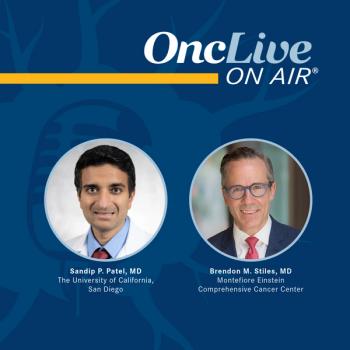
Drs Patel and Stiles discuss the significance of the FDA approval of perioperative durvalumab for patients with resectable non–small cell lung cancer.
Brendon M. Stiles, MD, discusses the FDA approval of perioperative durvalumab plus chemotherapy in early-stage non–small cell lung cancer.