
Frontline treatment with the combination of the CD40-directed monoclonal antibody agonist mitazalimab and modified FOLFIRINOX continued to produce responses in patients with metastatic pancreatic ductal adenocarcinoma.

Chris Ryan joined OncLive in November 2021 as a senior editor and became the website's managing editor in October 2023. Before arriving at MJH Life Sciences, he spent nearly a decade covering professional and high school sports—including the New Jersey Devils and the NHL from 2016 to 2021—for The Star-Ledger and NJ.com. Email: [email protected]
Frontline treatment with the combination of the CD40-directed monoclonal antibody agonist mitazalimab and modified FOLFIRINOX continued to produce responses in patients with metastatic pancreatic ductal adenocarcinoma.
The CD20-targeted CAR T-cell therapy MB-106 led to responses and was well tolerated in patients with Waldenström macroglobulinemia who were refractory to a BTK inhibitor.

The FDA has issued a complete response letter to the new drug application seeking the approval of ADX-2191 for the treatment of patients with primary vitreoretinal lymphoma.
Extended follow-up from the phase 3 SEQUOIA trial demonstrated that zanubrutinib maintained a progression-free survival benefit compared with bendamustine plus rituximab in previously untreated patients with chronic lymphocytic leukemia or small lymphocytic lymphoma.

The novel, autologous, anti-CD19 CAR T-cell therapy anbalcabtagene autoleucel produced durable responses and was well tolerated in patients with relapsed/refractory large B-cell lymphoma.

Neoadjuvant treatment with pembrolizumab plus chemotherapy, followed by adjuvant pembrolizumab plus chemotherapy, then pembrolizumab monotherapy, led to a statistically significant improvement in pathological complete response rates vs neoadjuvant chemotherapy alone in patients with locally advanced, resectable gastric and gastroesophageal junction adenocarcinoma.

The CAR T-cell therapy lisocabtagene maraleucel produced rapid and durable responses in heavily pretreated patients with relapsed/refractory mantle cell lymphoma.

China’s National Medical Products Administration has granted a breakthrough therapy designation to infigratinib for the treatment of patients with gastric cancer.

The FDA has accepted a supplemental new drug application seeking approval of the NALIRIFOX regimen comprised of irinotecan liposome injection plus 5-fluorouracil, leucovorin, and oxaliplatin as a first-line treatment for patients with metastatic pancreatic ductal adenocarcinoma.

The phase 1 PLAT-08 trial investigating SC-DARIC33 in pediatric and young-adult patients with relapsed/refractory CD33-positive acute myeloid leukemia has been paused following the report of a grade 5 serious adverse effect.

Frontline treatment with the combination of brentuximab vedotin, nivolumab, doxorubicin, and dacarbazine led to an overall response rate of 98% and a complete response rate of 93% in patients with early-stage, classical Hodgkin lymphoma.

The novel SYK inhibitor cevidoplenib dosed at 400 mg twice per day led to robust platelet responses in patients with persistent or chronic primary immune thrombocytopenia who did not respond or relapsed after at least 1 prior therapy.
Treatment with ponatinib plus reduced-intensity chemotherapy led to an improvement in minimal residual disease-negative complete remission rate compared with imatinib plus reduced-intensity chemotherapy in newly diagnosed patients with Philadelphia chromosome-positive acute lymphoblastic leukemia.

Although patients with metastatic nonseminomatous germ-cell tumors who had teratoma in the primary tumor were found to have a higher rate of teratoma in residual non-retroperitoneal disease following chemotherapy, those without teratoma in the primary tumor could have teratoma or active testicular germ-cell tumors in residual disease post-chemotherapy and should be considered for resection.
A survey conducted by the National Comprehensive Cancer Network Best Practices Committee found that 93% of United States cancer centers polled in the report are experiencing a shortage of carboplatin, and 70% currently have a shortage of cisplatin.

The addition of pembrolizumab to pemetrexed and platinum-based chemotherapy resulted in a numerical, but not statistically significant, improvement in progression-free survival or overall survival vs chemotherapy plus placebo in patients with TKI-resistant, EGFR-mutated, metastatic nonsquamous non–small cell lung cancer.

Ciltacabtagene autoleucel significantly improved progression-free survival over standard-of-care pomalidomide, bortezomib, and dexamethasone or daratumumab, pomalidomide, and dexamethasone in patients with lenalidomide-refractory multiple myeloma who received 1 to 3 prior lines of therapy.

Treatment with adjuvant osimertinib produced a statistically significant and clinically meaningful improvement in overall survival compared with placebo in patients with resected, EGFR-mutated, stage IB to IIIA non–small cell lung cancer.

Treatment with elranatamab monotherapy produced early, deep, and durable responses in patients with relapsed/refractory multiple myeloma who received a prior BCMA-directed therapy, according to a pooled analysis of the MagnetisMM-1, MagnetisMM-2, MagnetisMM-3, and MagnetisMM-9 trials.

The safety review committee for the phase 1/2 Acclaim-1 trial has ruled that the study evaluating quaratusugene ozeplasmid in combination with osimertinib in patients with advanced non–small cell lung cancer can proceed to the phase 2 expansion portion.

The FDA has granted priority review to the biologics license application for the tumor infiltrating lymphocyte therapy lifileucel for the treatment of patients with advanced melanoma who progressed on or after prior anti–PD-1/PD-L1 therapy and targeted therapy.

The combination of durvalumab and platinum-based chemotherapy, followed by maintenance therapy with either durvalumab plus olaparib or durvalumab alone, elicited a statistically significant and clinically meaningful improvement in progression-free survival in patients with newly diagnosed, advanced or recurrent endometrial cancer.

Pembrolizumab plus chemotherapy with or without bevacizumab led to a substantial improvement in overall survival vs placebo plus chemotherapy with or without bevacizumab in patients with persistent, recurrent, or metastatic cervical cancer, according to the final OS analysis of the KEYNOTE-826 trial.

The combination of sitravatinib and nivolumab did not meet the primary end point of overall survival compared with docetaxel as second- or third-line treatment for patients with advanced nonsquamous non–small cell lung cancer who progressed on prior chemotherapy and immune checkpoint inhibitor therapy.

Voruciclib monotherapy and in combination with venetoclax demonstrated clinical activity and was well tolerated with no significant myelosuppression in heavily pretreated patients with relapsed/refractory acute myeloid leukemia or B-cell malignancies, according to initial data from a phase 1 trial.

The National Institute for Health and Care Excellence has recommended the combination of pembrolizumab and lenvatinib for use in previously treated patients with advanced or recurrent endometrial cancer whose cancer has progressed on or after platinum-based chemotherapy and who cannot have curative surgery or radiotherapy.
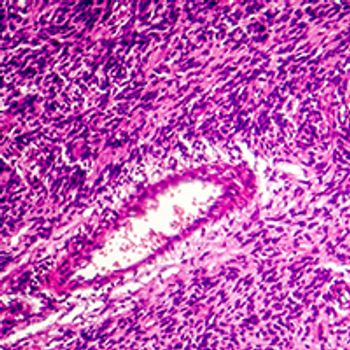
Treatment with milademetan did not lead to a statistically significant improvement in progression-free survival compared with trabectedin in patients with dedifferentiated liposarcoma, failing to reach the primary end point of the phase 3 MANTRA trial.

Eftilagimod alpha plus pembrolizumab provided an overall survival benefit over what has been reported with historical controls when given as first-line treatment in patients with non–small cell lung cancer and a PD-L1 tumor proportion score of at least 1%.

The combination of osimertinib and platinum-based chemotherapy led to a statistically significant and clinically meaningful improvement in progression-free survival compared with osimertinib alone in patients with locally advanced or metastatic non–small cell lung cancer harboring EGFR mutations.

China’s National Medical Products Administration has granted a breakthrough therapy designation to the KRAS G12C inhibitor IBI351 as monotherapy for previously treated patients with advanced colorectal carcinoma harboring a KRAS G12C mutation.