

The FDA has placed a clinical hold on a phase 1 trial investigating the antibody-drug conjugate XMT-2056 for the treatment of patients with advanced/recurrent solid tumors that express HER2.

Chris Ryan joined OncLive in November 2021 as a senior editor and became the website's managing editor in October 2023. Before arriving at MJH Life Sciences, he spent nearly a decade covering professional and high school sports—including the New Jersey Devils and the NHL from 2016 to 2021—for The Star-Ledger and NJ.com. Email: [email protected]
The FDA has placed a clinical hold on a phase 1 trial investigating the antibody-drug conjugate XMT-2056 for the treatment of patients with advanced/recurrent solid tumors that express HER2.
Soligenix has submitted a Type A meeting request to the FDA to discuss the contents of a refusal to file letter from the regulatory agency regarding the new drug application for synthetic hypericin for the treatment of early-stage cutaneous T-cell lymphoma.

First-line treatment with the combination of pembrolizumab and chemotherapy generated a statistically significant and clinically meaningful improvement in overall survival compared with chemotherapy alone in patients with unresectable advanced or metastatic malignant pleural mesothelioma.

Osimertinib produced a statistically significant and clinically meaningful improvement in overall survival compared with placebo as adjuvant treatment for patients with stage IB, II, or IIIA, EGFR-mutated non–small cell lung cancer after complete tumor resection with curative intent.
The progression-free survival benefit associated with the combination of nivolumab plus cabozantinib compared with sunitinib was largely independent of PD-L1 and c-MET status in previously untreated patients with advanced or metastatic renal cell carcinoma.

The FDA has granted a fast track designation to the novel aryl hydrocarbon receptor antagonist IK-175 in combination with nivolumab for the treatment of patients with advanced urothelial carcinoma who have progressed on or within 3 months of receiving the last dose of checkpoint inhibitors.
The FDA’s Office of Therapeutic Products has accepted a resubmission of the biologics license application (BLA) for remestemcel-L for the treatment of pediatric patients with steroid-refractory, acute graft-vs-host-disease.
The FDA has approved the VENTANA PD-L1 assay for expanded use in patients with advanced non–small cell lung cancer to help identify patients who may be candidates for treatment with cemiplimab.
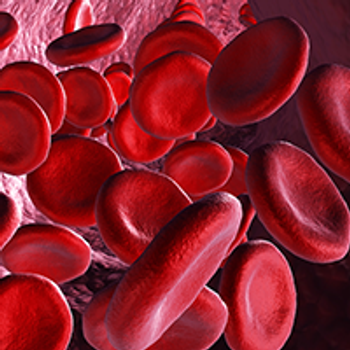
The European Commission has granted a full marketing authorization to luspatercept-aamt for use in adult patients with anemia associated with non–transfusion-dependent β-thalassemia.

The phase 3 LIMBER-304 trial evaluating parsaclisib plus ruxolitinib in patients with myelofibrosis will be discontinued after results of a preplanned interim analysis indicated that the study is unlikely to meet its primary end point of targeted reduction in spleen volume in the intent-to-treat population.

The antibody-drug conjugate trastuzumab deruxtecan met the prespecified target for objective response rate and demonstrated durable responses in heavily pretreated patients with HER2-expressing advanced solid tumors in the phase 2 DESTINY-PanTumor02 trial.

Brain metastases are a common complication in patients with breast cancer, and although systemic therapies for patients with HER2-positive disease have displayed promise in penetration of the blood-brain barrier, work remains for subsets of patients with central nervous system metastases.

As additional antibody-drug conjugates continue to emerge for the treatment of patients with HER2-negative breast cancer, identifying optimal sequencing strategies and managing toxicities associated with these agents remain top priorities for their use, according to Hope S. Rugo, MD.
A new drug application has been submitted to the FDA seeking the approval of niraparib in combination with abiraterone acetate, in the form of a dual-action tablet, and prednisone, for the first-line treatment of patients with metastatic castration-resistant prostate cancer harboring BRCA mutations.
The FDA has accepted a supplemental biologics license application for neoadjuvant pembrolizumab in combination with platinum-containing chemotherapy, followed by adjuvant pembrolizumab monotherapy, for the treatment of patients with resectable stage II, IIIA, or IIIB (T3-4N2) non–small cell lung cancer.

Enrollment has commenced for a phase 2 trial investigating the DNA-based interleukin-12 immunotherapy IMNN-001 in combination with bevacizumab and chemotherapy in patients with advanced ovarian cancer.
The FDA has accepted the supplemental biologics license application for nivolumab as an adjuvant treatment for patients with completely resected stage IIB or IIC melanoma.
The FDA has granted a priority review to the new drug application for nirogacestat for the treatment of adult patients with desmoid tumors.
The FDA has granted a breakthrough therapy designation to the investigational personalized mRNA cancer vaccine mRNA-4157/V940 in combination with pembrolizumab for the adjuvant treatment of patients with high-risk melanoma following complete resection.
The FDA has granted a priority review to the biologics license application for elranatamab for the treatment of patients with relapsed/refractory multiple myeloma.

The United Kingdom’s Medicines and Healthcare Products Regulatory Agency has granted full marketing authorization for selinexor in combination with bortezomib and low-dose dexamethasone for the treatment of adult patients with multiple myeloma who have received at least 1 prior therapy.

Talazoparib plus enzalutamide generated a statistically significant and clinically meaningful improvement in radiographic progression-free survival vs placebo plus enzalutamide as first-line treatment for patients with metastatic castration-resistant prostate cancer, irrespective of homologous recombination repair status.

ADI-001, a first-in-class, allogeneic gamma delta1 CAR T-cell therapy, elicited responses and demonstrated a favorable safety profile in patients with relapsed/refractory B-cell non-Hodgkin lymphoma.
The FDA has granted priority review to the new drug application for avasopasem manganese as a treatment for radiotherapy-induced severe oral mucositis in patients with head and neck cancer undergoing standard-of-care treatment.
The FDA has granted regenerative medicine advanced therapy and fast track designations to equecabtagene autoleucel for the treatment of patients with relapsed/refractory multiple myeloma.

Adding trilaciclib to FOLFOXIRI and bevacizumab led to statistically significant reductions in instances of severe neutropenia during induction and duration of severe neutropenia in cycles 1 to 4. However, the combination failed to improve antitumor activity vs placebo plus FOLFOXIRI/bevacizumab in patients with metastatic colorectal cancer.

Idecabtagene vicleucel improved progression-free survival compared with standard combination regimens in patients with relapsed/refractory multiple myeloma after 2 to 4 prior lines of therapy and who were refractory to their last regimen, according to results from the phase 3 KarMMa-3 trial.

Elevation Oncology is pausing development of the human anti–HER3 IgG2 monoclonal antibody seribantumab, along with the phase 2 CRESTONE trial investigating the agent, in patients with advanced solid tumors harboring NRG1 fusions.
The CAR T-cell therapy brexucabtagene autoleucel produced a median overall survival of 26 months in patients with relapsed/refractory B-cell acute lymphoblastic leukemia.

FDA approvals in recent years have started to carve out a role for immunotherapy in the frontline treatment of patients with small cell lung cancer.