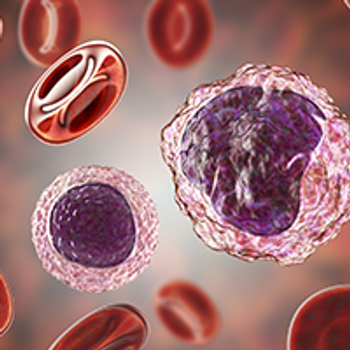
Eftilagimod alpha plus pembrolizumab demonstrated promising benefits in overall survival and progression-free survival as a second-line treatment in patients with non–small cell lung cancer who progressed on anti–PD-1/anti–PD-L1 therapy.

Your AI-Trained Oncology Knowledge Connection!


Chris Ryan joined OncLive in November 2021 as a senior editor and became the website's managing editor in October 2023. Before arriving at MJH Life Sciences, he spent nearly a decade covering professional and high school sports—including the New Jersey Devils and the NHL from 2016 to 2021—for The Star-Ledger and NJ.com. Email: chryan@onclive.com

Eftilagimod alpha plus pembrolizumab demonstrated promising benefits in overall survival and progression-free survival as a second-line treatment in patients with non–small cell lung cancer who progressed on anti–PD-1/anti–PD-L1 therapy.

Poziotinib produced an encouraging overall response rate in patients with non–small cell lung cancer harboring EGFR exon 20 mutations, meeting the primary end point in cohort 1 of a phase 2 trial.

The subcutaneous administration of atezolizumab produced non-inferior levels of the agent in the blood compared with intravenous atezolizumab in immunotherapy-naïve patients with locally advanced or metastatic non–small cell lung cancer who failed platinum-based chemotherapy.

The FDA has accepted a priority review of a biologics license application for omidubicel as a treatment for patients with blood cancers in need of allogenic hematopoietic stem cell transplant.

The FDA has lifted a clinical hold on the phase 1b KEYNOTE-B79 trial, which is evaluating the safety and clinical activity of CYAD-101 given concurrently with FOLFOX and followed by pembrolizumab in patients with unresectable metastatic colorectal cancer.

The combination of nivolumab and ipilimumab failed to elicit a statistically significant improvement in disease-free survival compared with placebo as adjuvant treatment in patients with localized renal cell carcinoma who had undergone a full or partial removal of the kidney and were at moderate or high risk of relapse, failing to meet the primary end point of part A of the phase 3 CheckMate-914 trial.

Leveraging EGFR TKIs as a backbone for combination therapies will be pivotal for expanding treatment options and delivering more personalized therapies in the first-line setting for patients with non–small cell lung cancer harboring EGFR mutations.

PD-L1 and tumor mutational burden are established biomarkers for leveraging immunotherapy in non–small cell lung cancer; however, their use may not be appropriate in determining treatment decisions for all patients.

Thought minimal residual disease can serve as an indicator for poor outcomes for patients with non–small cell lung cancer, it is not necessarily a predictor of response to immunotherapy.

Dan Pollyea, MD, MS, discussed the difficulties in developing new agents for the treatment of high-risk MDS, the objective of the ENHANCE trial, and the potential for other therapies to emerge in the treatment paradigm.

The addition of SHR3680 to androgen deprivation therapy significantly improved radiographic progression-free survival and overall survival compared with bicalutamide plus ADT in patients with high-volume, metastatic hormone-sensitive prostate cancer, according to data from the phase 3 CHART trial.

Maintenance therapy with niraparib significantly improved progression-free survival compared with placebo in Chinese patients with newly diagnosed advanced ovarian cancer who achieved a complete response or partial response to first-line chemotherapy.

The addition of zilovertamab to ibrutinib will be compared with ibrutinib plus placebo in patients with relapsed/refractory mantle cell lymphoma as part of the phase 3 ZILO-301 trial.

The European Medicines Agency’s Committee for Medicinal Products for Human Use has adopted a positive opinion recommending the conditional marketing authorization of teclistamab for the treatment of adult patients with relapsed/refractory multiple myeloma who have received at least 3 prior therapies, including an immunomodulatory agent, a proteasome inhibitor and an anti-CD38 antibody, and whose cancer has worsened since receiving the last treatment.

The FDA has granted an orphan drug designation to DSP-0390 for the treatment of brain cancer.

The FDA has granted fast track and rare pediatric disease designations to the CAR T-cell therapy WU-CART-007 for the treatment of patients with relapsed/refractory T-cell acute lymphoblastic leukemia and lymphoblastic lymphoma.

The Philippine FDA has granted approval to alpelisib in combination with fulvestrant for the treatment of patients with PIK3CA-mutated, HR-positive, HER2-negative advanced or metastatic breast cancer.

The European Medicines Agency has validated the marketing authorization application for trastuzumab duocarmazine for the treatment of patients with HER2-positive unresectable, locally advanced or metastatic breast cancer.

The FDA has granted an orphan drug designation to NT-I7 for the treatment of patients with glioblastoma multiforme.

The CD46-targeted antibody-drug conjugate FOR46 demonstrated encouraging evidence of antitumor activity in patients with metastatic castration-resistant prostate cancer with a safety profile that proved to be similar to other monomethyl auristatin E–based ADCs, according to data from a phase 1a/1b trial.

The FDA has granted a fast track designation to abelacimab for the treatment of thrombosis associated with cancer.

The addition of cabozantinib to nivolumab and ipilimumab generated a significant improvement in progression-free survival vs nivolumab/ipilimumab alone as a first-line treatment for patients with previously untreated advanced intermediate- or poor-risk renal cell carcinoma, meeting the primary end point of the phase 3 COSMIC-313 trial.

The phase 2 CP-MGA271-06 trial closed early following an internal review of safety data of enoblituzumab plus retifanlimab or tebotelimab as a first-line treatment for patients with recurrent or metastatic head and neck squamous cell carcinoma.

The CAR T-cell therapy anbalcabtagene autoleucel generated strong overall response rates in patients with relapsed/refractory large B-cell lymphoma.

The addition of belantamab mafodotin-blmf to lenalidomide and dexamethasone generated responses with acceptable safety in patients with newly diagnosed multiple myeloma who were ineligible to undergo autologous stem cell transplant.

The FDA has granted an orphan drug designation to PBI-200 for the treatment of patients with NTRK fusion–positive solid tumors, including primary and metastatic brain tumors.

Praluzatamab ravtansine achieved a promising overall response rate in patients with advanced hormone receptor–positive, HER2-negative breast cancer.

The addition of tislelizumab to nab-paclitaxel demonstrated efficacy and safety in patients with high-risk non–muscle invasive bladder cancer.

The FDA has warned that treatment with duvelisib has shown a possible increased risk of death and serious adverse effects compared with ofatumumab in patients with relapsed/refractory chronic lymphocytic leukemia and small lymphocytic lymphoma.

Philip A. Philip, MD, PhD, FRCP, discusses unmet needs for patients with pancreatic cancer, emerging targets and agents in the space, and his hopes for future developments in the field.