

The FDA has granted a fast track designation to the CAR T-cell therapy IMPT-314 for the treatment of patients with B-cell–mediated malignancies.

Chris Ryan joined OncLive in November 2021 as a senior editor and became the website's managing editor in October 2023. Before arriving at MJH Life Sciences, he spent nearly a decade covering professional and high school sports—including the New Jersey Devils and the NHL from 2016 to 2021—for The Star-Ledger and NJ.com. Email: [email protected]
The FDA has granted a fast track designation to the CAR T-cell therapy IMPT-314 for the treatment of patients with B-cell–mediated malignancies.
The FDA has issued a complete response letter to the biologics license application for vic-trastuzumab duocarmazine for the treatment of patients with HER2-positive unresectable, locally advanced or metastatic breast cancer.

The addition of atezolizumab to neoadjuvant chemotherapy generated numerical improvements in event-free survival, disease-free survival, and overall survival compared with chemotherapy plus placebo in patients with early-stage triple-negative breast cancer.

The FDA has issued a complete response letter regarding the biologics license application for N-803 in combination with Bacillus Calmette-Guérin (BCG) for the treatment of patients with BCG-unresponsive non–muscle-invasive bladder cancer with carcinoma in situ with or without Ta or T1 disease.

The European Commission has approved ivosidenib tablets in combination with azacitidine for the treatment of adult patients with newly diagnosed acute myeloid leukemia with an IDH1 R132 mutation who are not eligible to receive standard induction chemotherapy, and as monotherapy for the treatment of adult patients with locally advanced or metastatic cholangiocarcinoma with an IDH1 R132 mutation who received at least 1 prior line of systemic therapy.
The FDA has granted an orphan drug designation to RAD 301 for the imaging of patients with pancreatic ductal adenocarcinoma.
The FDA has granted fast track designations to ACR-368 monotherapy for the treatment of patients with platinum-resistant ovarian cancer and endometrial cancer who are positive for predicted sensitivity to the agent using Acrivon Therapeutics’ OncoSignature® test.

China’s National Medical Products Administration has approved 2 supplemental new drug applications of zanubrutinib for use in treatment-naïve adult patients with chronic lymphocytic leukemia or small lymphocytic lymphoma and Waldenström macroglobulinemia.

The combination of sintilimab and chemotherapy with or without the bevacizumab biosimilar IBI305 produced a statistically significant and clinically meaningful improvement in progression-free survival vs chemotherapy alone in patients with EGFR-mutated, nonsquamous non–small cell lung cancer who progressed after treatment with an EGFR TKI.

The FDA has granted 510K clearance to Bladder EpiCheck for use as a noninvasive method for surveillance of tumor recurrence in previously diagnosed patients with non–muscle invasive bladder cancer, in conjunction with cystoscopy.
The FDA has approved FoundationOne® Liquid CDx as a companion diagnostic for mobocertinib in patients with locally advanced or metastatic non–small cell lung cancer harboring EGFR exon 20 insertion mutations.

The European Commission has approved lisocabtagene maraleucel for the treatment of adult patients with diffuse large B-cell lymphoma, high-grade B-cell lymphoma, primary mediastinal large B-cell lymphoma, and follicular lymphoma grade 3B who relapsed within 12 months from completion of, or are refractory to, first-line chemoimmunotherapy.

The FDA has granted a fast track designation to ERAS-801 for the treatment of adult patients with glioblastoma harboring EGFR gene alterations.

Health Canada has approved the combination of cemiplimab and platinum-based chemotherapy for the first-line treatment of patients with locally advanced or metastatic non–small cell lung cancer without EGFR, ALK, or ROS1 aberrations who are not candidates for definitive chemoradiation.
The FDA has granted a priority review to the supplemental biologics license application seeking to expand the current indication of luspatercept to include treatment of anemia in patients with very low- to intermediate-risk myelodysplastic syndrome who have not previously received erythropoiesis-stimulating agents and who may require red blood cell transfusions.

Treatment with darolutamide was associated with lower rates of discontinuation and progression to metastatic disease compared with enzalutamide and apalutamide in patients with nonmetastatic castration-resistant prostate cancer.

The American Urological Association and Society of Urologic Oncology have released a clinical practice guideline for the diagnosis and management of patients with nonmetastatic upper tract urothelial carcinoma.

The American Society for Radiation Oncology and European Society for Radiotherapy & Oncology have released the first clinical guideline on the use of definitive local therapy, including radiation and surgery, for the treatment of patients with oligometastatic non–small cell lung cancer.

The FDA has granted a fast track designation to 177Lu-PNT2002 for the treatment of patients with metastatic castration-resistant prostate cancer.

The combination of tislelizumab plus chemotherapy elicited a statistically significant and clinically meaningful improvement in overall survival compared with chemotherapy plus placebo in patients with advanced unresectable or metastatic gastric or gastroesophageal junction adenocarcinoma.
The FDA has extended the review period for a new drug application for quizartinib in combination with standard cytarabine and anthracycline induction and standard cytarabine consolidation chemotherapy, and as continuation monotherapy following consolidation, for the treatment of newly diagnosed adult patients with FLT3-ITD–positive acute myeloid leukemia.

The combination of the potentially first-in-class off-the-shelf therapeutic cancer vaccine candidate VB10.16 and atezolizumab elicited a median overall survival greater than 25 months in patients with PD-L1–positive, human papillomavirus 16–positive advanced cervical cancer.
The FDA has granted a fast track designation to the combination of botensilimab plus balstilimab for the treatment of patients with non–microsatellite instability–high/mismatch repair–deficient metastatic colorectal cancer with no active liver involvement.

An independent data monitoring committee has recommended that the phase 3 REGAL trial examining galinpepimut-S in patients with acute myeloid leukemia continue as planned without modifications.

Pemigatinib generated efficacy and tolerability in previously treated patients with advanced/metastatic or unresectable solid tumors harboring activating FGFR mutations or fusions/rearrangements, including cholangiocarcinoma, central nervous system tumors, gynecologic tumors, and pancreatic cancer.

Hemostatic radiation is a method of managing bleeding in patients with gastrointestinal cancers or GI metastases from other primary tumors; however, a multidisciplinary team is required to implement this method, according to Marnee M. Spierer, MD, MBA.
The FDA has accepted a supplemental biologics license application seeking the approval of idecabtagene vicleucel for the treatment of adult patients with relapsed and refractory multiple myeloma who have received an immunomodulatory agent, a proteasome inhibitor, and an anti-CD38 monoclonal antibody.

Pembrolizumab plus cisplatin and gemcitabine produced a statistically significant and clinically meaningful improvement in overall survival vs placebo plus cisplatin and gemcitabine in previously untreated patients with advanced biliary tract cancer, according to data from the phase 3 KEYNOTE-966 trial.
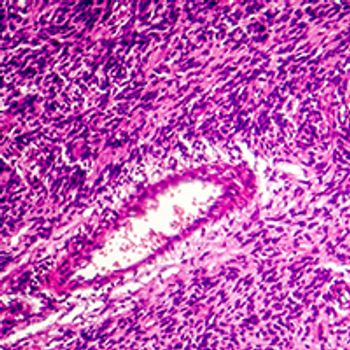
Thrombocytopenia is a common adverse effect associated with treatment with the MDM2 inhibitor milademetan in patients with sarcomas and other solid tumors, and the effects of thrombocytopenia can be mitigated with an intermittent dosing schedule and managed with dose interruptions or reductions.
The FDA has granted an orphan drug designation to OM-301 for the treatment of patients with multiple myeloma.