

An independent data monitoring committee has recommended that the phase 3 REGAL trial examining galinpepimut-S in patients with acute myeloid leukemia continue as planned without modifications.

Chris Ryan joined OncLive in November 2021 as a senior editor and became the website's managing editor in October 2023. Before arriving at MJH Life Sciences, he spent nearly a decade covering professional and high school sports—including the New Jersey Devils and the NHL from 2016 to 2021—for The Star-Ledger and NJ.com. Email: chryan@onclive.com
An independent data monitoring committee has recommended that the phase 3 REGAL trial examining galinpepimut-S in patients with acute myeloid leukemia continue as planned without modifications.

Pemigatinib generated efficacy and tolerability in previously treated patients with advanced/metastatic or unresectable solid tumors harboring activating FGFR mutations or fusions/rearrangements, including cholangiocarcinoma, central nervous system tumors, gynecologic tumors, and pancreatic cancer.

Hemostatic radiation is a method of managing bleeding in patients with gastrointestinal cancers or GI metastases from other primary tumors; however, a multidisciplinary team is required to implement this method, according to Marnee M. Spierer, MD, MBA.

The FDA has accepted a supplemental biologics license application seeking the approval of idecabtagene vicleucel for the treatment of adult patients with relapsed and refractory multiple myeloma who have received an immunomodulatory agent, a proteasome inhibitor, and an anti-CD38 monoclonal antibody.

Pembrolizumab plus cisplatin and gemcitabine produced a statistically significant and clinically meaningful improvement in overall survival vs placebo plus cisplatin and gemcitabine in previously untreated patients with advanced biliary tract cancer, according to data from the phase 3 KEYNOTE-966 trial.
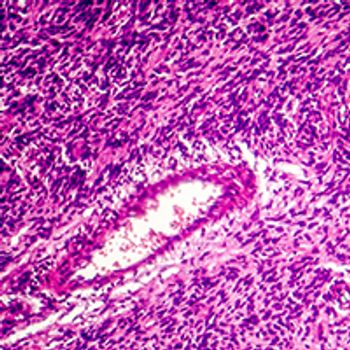
Thrombocytopenia is a common adverse effect associated with treatment with the MDM2 inhibitor milademetan in patients with sarcomas and other solid tumors, and the effects of thrombocytopenia can be mitigated with an intermittent dosing schedule and managed with dose interruptions or reductions.
The FDA has granted an orphan drug designation to OM-301 for the treatment of patients with multiple myeloma.

The oral MDM2/p53 antagonist BI 907828 elicited preliminary antitumor activity and had a manageable safety profile in patients with MDM2-amplified dedifferentiated liposarcoma.

Maintenance therapy with senaparib improved progression-free survival vs placebo for patients with stage III/IV ovarian carcinoma, fallopian tube cancer, or primary peritoneal cancer who achieved a complete or partial response to first-line platinum-based chemotherapy, meeting the primary end point of the phase 3 FLAMES trial.

The sequential combination of THIO plus cemiplimab did not lead to any dose-limiting toxicities or significant treatment-related adverse effects in patients with advanced non–small cell lung cancer.

The FDA has placed a partial clinical hold on a phase 1 trial investigating MT-0169 in patients with relapsed/refractory multiple myeloma or non-Hodgkin lymphoma.

Induction therapy with durvalumab plus chemotherapy and bevacizumab, followed by maintenance with olaparib plus durvalumab and bevacizumab, elicited a statistically significant and clinically meaningful improvement in progression-free survival compared with chemotherapy plus bevacizumab in patients with newly diagnosed advanced high-grade epithelial ovarian cancer who did not harbor BRCA mutations.

Data for adjuvant atezolizumab following neoadjuvant atezolizumab and resection demonstrated an improvement in disease-free survival and a trend toward improved overall survival in patients with resectable stage IB to IIIB non–small cell lung cancer compared with those who did not receive adjuvant atezolizumab.

The combination of the interleukin-12 encoding plasmid TAVO™-EP plus pembrolizumab did not meet the prespecified primary end point for overall response rate in patients with advanced melanoma that was refractory to anti–PD-1 therapy.

The European Medicines Agency’s Committee for Medicinal Products for Human Use has recommended the approval of sodium thiosulfate injection for the prevention of ototoxicity induced by cisplatin chemotherapy in patients 1 month to less than 18 years of age with localized, nonmetastatic solid tumors.

The combination of tusamitamab ravtansine and pembrolizumab with or without chemotherapy generated responses and was well tolerated when used as first-line treatment for patients with CEACAM5-positive nonsquamous non–small cell lung cancer.
The FDA has granted a fast track designation to PBP1510 (ulenistamab) for the treatment of patients with unresectable or metastatic pancreatic adenocarcinoma that has relapsed following and/or is refractory to at least 1 prior line therapy.

BDC-1001 monotherapy and in combination with nivolumab generated antitumor activity with acceptable tolerability in patients with advanced HER2-expressing solid tumors, according to topline data from the dose-escalation portion of a phase 1 trial.
The FDA has granted a fast track designation to RRx-001 for the prevention and attenuation of severe oral mucositis associated with chemotherapy and radiation in patients with head and neck cancer.

Up-front treatment with osimertinib reduced the risk of brain progression-free survival but provided a comparable overall survival benefit compared with sequential treatment with gefitinib followed by osimertinib in patients with advanced non–small cell lung cancer harboring EGFR mutations.

Canada Health has approved the fixed-duration, all-oral combination of ibrutinib and venetoclax for the frontline treatment of adult patients with chronic lymphocytic leukemia, including those with 17p deletion.

Japan’s Ministry of Health, Labor and Welfare has approved fam-trastuzumab deruxtecan-nxki for the treatment of adult patients with HER2-low unresectable or recurrent breast cancer after prior chemotherapy.

The combination of toripalimab, bevacizumab, and platinum-based chemotherapy elicited responses in patients with refractory, recurrent or metastatic cervical cancer.

Iovance Biotherapeutics has submitted a rolling biologics license application to the FDA seeking the approval of the tumor infiltrating lymphocyte therapy lifileucel for the treatment of patients with advanced unresectable or metastatic melanoma who progressed on or after prior anti–PD-1/L1 therapy and targeted therapy.

The addition of zolbetuximab to CAPOX led to a statistically significant improvement in progression-free survival and overall survival compared with placebo plus CAPOX for patients with Claudin-18.2–positive/HER2-negative, unresectable, locally advanced or metastatic gastric or gastroesophageal junction adenocarcinoma.

Axicabtagene ciloleucel produced a statistically significant improvement in overall survival compared with standard-of-caretherapy in patients with relapsed/refractory large B-cell lymphoma, according to data from the ZUMA-7 trial.

The FDA has granted an orphan drug designation to FORE8394 for the treatment of primary brain and central nervous system malignancies.

VTP-200 generated immunogenic responses and tolerability in patients with human papillomavirus–positive cervical lesions.

Patritumab deruxtecan elicited responses in previously treated patients with EGFR-mutated metastatic or unresectable non–small cell lung cancer and patients with HER3-expressing metastatic breast cancer.

The combination of JTX-8064 and pimivalimab generated deep and durable responses in patients with third- or fourth-line platinum-resistant ovarian cancer.