

The European Commission has approved cemiplimab-rwlc monotherapy for the treatment of adult patients with recurrent or metastatic cervical cancer who have progressed on or after platinum-based chemotherapy.

Chris Ryan joined OncLive in November 2021 as a senior editor and became the website's managing editor in October 2023. Before arriving at MJH Life Sciences, he spent nearly a decade covering professional and high school sports—including the New Jersey Devils and the NHL from 2016 to 2021—for The Star-Ledger and NJ.com. Email: [email protected]
The European Commission has approved cemiplimab-rwlc monotherapy for the treatment of adult patients with recurrent or metastatic cervical cancer who have progressed on or after platinum-based chemotherapy.

The combination of pembrolizumab and physician’s choice of chemotherapy produced a statistically significant overall survival benefit vs chemotherapy plus placebo in patients with HER2-negative, locally advanced, unresectable or metastatic gastric or gastroesophageal junction adenocarcinoma.

The oral PI3Kδ inhibitor zandelisib produced an overall response rate in Japanese patients with relapsed/refractory indolent B-cell non-Hodgkin lymphoma without small lymphocytic lymphoma, lymphoplasmacytic lymphoma, and Waldenström macroglobulinemia.

The FDA has accepted and granted priority review to a biologics license application seeking the apporoval of epcoritamab in patients with relapsed or refractory large B-cell lymphoma after 2 or more lines of systemic therapy.
After receiving FDA feedback regarding supplemental assay validation information and comparability data for lifileucel in advanced melanoma, Iovance Biotherapeutics will address these comments and plans to complete its rolling biologics license application submission during the first quarter of 2023.
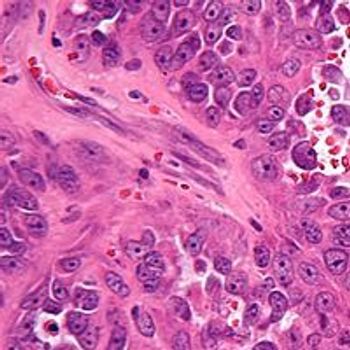
Camsirubicin in combination with pegfilgrastim produced encouraging clinical activity and safety in patients with advanced soft tissue sarcoma.

The FDA has granted an orphan drug designation to vebreltinib for the treatment of patients with non–small cell lung cancer harboring MET genomic tumor aberrations.

The combination of nivolumab and ipilimumab have shown overall survival benefit in patients with metastatic melanoma, according to long-term follow-up data, and other studies’ results highlight the efficacy and toxicity benefits of different sequences of the combination.
The addition of CBM588 to the combination of nivolumab and ipilimumab produced superior response rates and a progression-free survival benefit vs nivolumab plus ipilimumab alone in previously untreated patients with metastatic renal cell carcinoma.
Belantamab mafodotin-blmf did not generate a progression-free survival benefit vs the combination of pomalidomide plus low-dose dexamethasone, failing to meet the primary end point of the phase 3 DREAMM-3 trial.
The combination of lenvatinib plus everolimus is under evaluation vs cabozantinib in the phase 2 LenCabo trial for patients with metastatic renal cell carcinoma who have progressed on prior treatment with a PD-1/PD-L1 immune checkpoint inhibitor.

SRF388 elicited responses in pretreated patients with locally advanced or metastatic non–small cell lung cancer.

The administration of trilaciclib prior to treatment with sacituzumab govitecan meaningfully reduced adverse effects related to the antibody-drug conjugate in patients with unresectable locally advanced or metastatic triple-negative breast cancer, according to initial data from a phase 2 trial.

The European Commission has granted an orphan drug designation to selinexor for the treatment of patients with myelofibrosis.
In a 16 to 0 vote, the FDA’s Oncologic Drugs Advisory Committee voted that sufficient evidence has not been provided to conclude that 131I-omburtamab improves overall survival for pediatric patients with central nervous system /leptomeningeal metastases from neuroblastoma.

Luspatercept generated a statistically significant improvement in red blood cell transfusion independence with concurrent hemoglobin increase vs epoetin alfa in patients with very low–, low-, or intermediate-risk myelodysplastic syndromes who require RBC transfusions, meeting the primary end point of the phase 3 COMMANDS trial.

A biologics license application has been submitted to the FDA seeking the approval of subcutaneous epcoritamab for the treatment of patients with relapsed/refractory large B-cell lymphoma or diffuse large B-cell lymphoma after 2 or more lines of systemic therapy.

The novel brain-penetrant ROS1-selective inhibitor NVL-520 elicited clinical activity and was well tolerated in heavily pretreated patients with ROS1 fusion–positive non–small cell lung cancer.
The FDA has expressed concern about the efficacy of 131I-omburtamab prior to a meeting of the regulatory agency’s ODAC to examine data supporting the BLA seeking the agent’s approval for the treatment of pediatric patients with central nervous system/leptomeningeal metastases from neuroblastoma.

Capivasertib plus fulvestrant generated a statistically and clinically significant improvement in progression-free survival in select patients with hormone receptor–positive, HER2-low or -negative, locally advanced or metastatic breast cancer.

The combination of melphalan flufenamide and daratumumab plus hyaluronidase-fihj and dexamethasone improved progression-free survival over daratumumab and dexamethasone alone in select patients with relapsed/refractory multiple myeloma.

Jeannie Shen, MD, discussed the shifts in surgical practice for patients with breast cancer, the need for a multidisciplinary approach to optimize treatment for individual patients, and ongoing efforts at Huntington Hospital and Cedars-Sinai to increase awareness and improve care for these patients.

Yuan Yuan, MD, PhD, discusses the role immune checkpoint inhibitors have played in the treatment of triple-negative breast cancer, ongoing efforts to investigate the role of immunotherapy in breast cancer, and the work Cedars-Sinai is conducting to promote breast cancer awareness.
The FDA has accepted and granted priority review to the new drug application for quizartinib in combination with standard cytarabine and anthracycline induction and standard cytarabine consolidation chemotherapy, and as continuation monotherapy following consolidation, for the treatment of newly diagnosed adult patients with FLT3-ITD–positive acute myeloid leukemia.
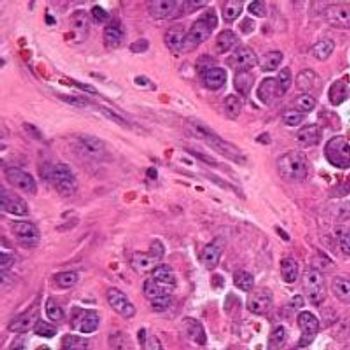
Salarius Pharmaceuticals has voluntarily paused enrollment of new patients into a phase 1/2 trial investigating seclidemstat in patients with Ewing sarcoma, sarcomas with FET-family translocations, and myxoid liposarcoma due to the death of a patient.
Ubamatamab monotherapy produced early clinical activity and an acceptable risk/benefit profile in heavily pretreated patients with ovarian cancer.

Lutetium-177-FAP-2286 produced preliminary evidence of antitumor activity with a manageable safety profile in patients with advanced or metastatic solid tumors, according to data from the phase 1/2 LuMIERE trial.
The FDA has granted an orphan drug designation to PCLX-001 for the treatment of patients with acute myeloid leukemia.

Celyad Oncology has discontinued development its investigational CAR T-cell therapy CYAD-101 for the treatment of patients with unresectable metastatic colorectal cancer.
The European Medicines Agency’s Committee for Medicinal Products for Human Use has recommended the approval of Lutetium 177 vipivotide tetraxetan in combination with androgen deprivation therapy with or without androgen receptor pathway inhibition for the treatment of adult patients with progressive prostate-specific membrane antigen–positive metastatic castration-resistant prostate cancer who have been treated with AR pathway inhibition and taxane-based chemotherapy.