

The World Health Organization has released new framework guidelines with the goal of saving 2.5 million lives from breast cancer by 2040 through a combination of early detection, timely diagnosis, and comprehensive management.

Chris Ryan joined OncLive in November 2021 as a senior editor and became the website's managing editor in October 2023. Before arriving at MJH Life Sciences, he spent nearly a decade covering professional and high school sports—including the New Jersey Devils and the NHL from 2016 to 2021—for The Star-Ledger and NJ.com. Email: [email protected]
The World Health Organization has released new framework guidelines with the goal of saving 2.5 million lives from breast cancer by 2040 through a combination of early detection, timely diagnosis, and comprehensive management.

The FDA has approved sacituzumab govitecan-hziy (Trodelvy) for the treatment of adult patients with unresectable locally advanced or metastatic hormone receptor–positive, HER2-negative breast cancer who have received endocrine-based therapy and at least 2 additional systemic therapies in the metastatic setting.

The combination of pembrolizumab plus carboplatin and paclitaxel demonstrated a statistically significant and clinically meaningful improvement in progression-free survival vs chemotherapy alone in the first-line treatment of patients with stage III/IV or recurrent endometrial cancer.

The FDA has granted orphan drug exclusivity to sodium thiosulfate injection, which is indicated to reduce the risk of platinum-induced ototoxicity in pediatric patients 1 month of age and older with localized, non-metastatic solid tumors.
The FDA has approved elacestrant (Orserdu) for the treatment of postmenopausal women or adult men with estrogen receptor–positive, HER2-negative, ESR1-mutated advanced or metastatic breast cancer with disease progression following at least 1 line of endocrine therapy.
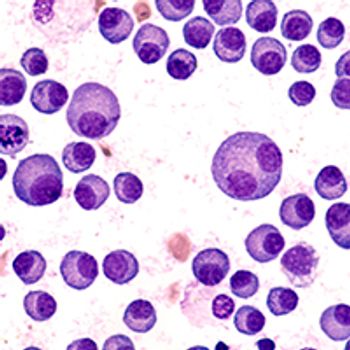
Ciltacabtagene autoleucel demonstrated a significant improvement in progression-free survival in patients with relapsed/lenalidomide-refractory multiple myeloma who received 1 to 3 prior lines of therapy.

Magenta Therapeutics has voluntarily paused enrollment for a phase 1/2 trial evaluating the antibody-drug conjugate MGTA-117 in patients with relapsed/refractory acute myeloid leukemia or myelodysplastic syndrome following the death of a patient.

The CAR T-cell therapy lisocabtagene maraleucel induced complete responses in patients with relapsed/refractory chronic lymphocytic leukemia or small lymphocytic leukemia.

The combination of avutometinib and defactinib elicited responses in patients with recurrent low-grade serous ovarian cancer, according to data from a planned interim analysis of the registration-directed phase 2 RAMP-201 trial.
Merck is discontinuing the phase 3 KEYNOTE-991 trial evaluating pembrolizumab plus enzalutamide and androgen deprivation therapy vs placebo plus enzalutamide/ADT in patients with metastatic hormone-sensitive prostate cancer due to futility.

Bavituximab in combination with pembrolizumab produced responses in patients with previously untreated advanced hepatocellular carcinoma.

Second-line ripretinib produced a clinical benefit in patients with advanced gastrointestinal stromal tumor harboring KIT exon 11 and 17/18 mutations who progressed on or were intolerant to imatinib.
Geneoscopy has submitted a premarket approval application to the FDA for a noninvasive, stool-based, at-home screening test to detect colorectal cancer and advanced adenomas in average-risk individuals.
The FDA has granted a priority review to the supplemental new drug application (sNDA) to avapritinib for the treatment of adult patients with indolent systemic mastocytosis.

First-line treatment with the combination of liposomal irinotecan plus 5-fluorouracil, leucovorin, and oxaliplatin produced a clinically meaningful and statistically significant improvement in overall survival and progression-free survival vs nab-paclitaxel plus gemcitabine in patients with metastatic pancreatic ductal adenocarcinoma, according to results from the phase 3 NAPOLI 3 trial.
The FDA has granted a fast track designation to EVX-01 in combination with pembrolizumab for the treatment of patients with metastatic melanoma.

The FDA has granted accelerated approval to tucatinib in combination with trastuzumab for adult patients with RAS wild-type, HER2-positive unresectable or metastatic colorectal cancer that has progressed after treatment with fluoropyrimidine-, oxaliplatin-, and irinotecan-based chemotherapy.
The Medicines and Healthcare Products Regulatory Agency has approved zanubrutinib in Great Britain for both the treatment of adult patients with chronic lymphocytic leukemia and the treatment of adult patients with marginal zone lymphoma who have received at least one prior anti-CD20–based therapy.

Adjuvant treatment with the combination of atezolizumab and bevacizumab demonstrated a statistically significant improvement in recurrence-free survival compared with active surveillance in patients with early-stage hepatocellular carcinoma at high risk of disease recurrence.

Perioperative treatment with the combination of toripalimab plus platinum-containing doublet chemotherapy, followed by toripalimab monotherapy as consolidation therapy after surgery, significantly extended event-free survival compared with chemotherapy plus placebo in patients with operable NSCLC.

The PIM1 kinase inhibitor TP-3654 was well tolerated and showcased preliminary signs of activity, including spleen volume reduction, symptom improvement, and broad cytokine reduction, in patients with myelofibrosis who were previously treated with or were ineligible for a JAK inhibitor.

Moxetumomab pasudotox-tdfk will be permanently discontinued in the United States market for the treatment of relapsed/refractory hairy cell leukemia.

The combination of BXCL701 and pembrolizumab produced encouraging responses in patients with small cell neuroendocrine carcinoma metastatic castration-resistant prostate cancer, according to topline data from a phase 2 trial.
The FDA has granted a fast track designation to best-in-class threonine tyrosine kinase inhibitor CFI-402257 for the treatment of adult patients with estrogen receptor (ER)–positive/HER2-negative advanced breast cancer after disease progression on prior CDK4/6 inhibitors and endocrine therapy.

Geneoscopy’s at-home, stool-based diagnostic screening test to detect colorectal cancer and advanced adenomas in average-risk individuals displayed high sensitivity and specificity, meeting the primary objectives of the phase 3 CRC-PREVENT trial.

The Center for Drug Evaluation of China's National Medical Products Administration has granted a breakthrough therapy designation to IBI351 for the treatment of patients with advanced non–small cell lung cancer harboring a KRAS G12C mutation who have received at least 1 prior line of systemic therapy.

Tovorafenib monotherapy generated responses in patients with recurrent or progressive pediatric low-grade glioma.

The addition of abequolixron to docetaxel generated responses in patients with relapsed/refractory non–small cell lung cancer or small cell lung cancer.
The FDA has accepted a biologics license application for glofitamab for the treatment of adult patients with relapsed or refractory large B-cell lymphoma after 2 or more lines of systemic therapy.

Adding the CDK4/6 inhibitor trilaciclib to platinum-based chemotherapy and avelumab maintenance produced an overall response rate comparable to chemotherapy and maintenance avelumab alone in patients with previously untreated locally advanced or metastatic urothelial carcinoma.