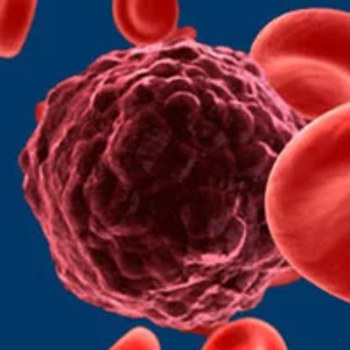

The FDA has granted a breakthrough therapy designation to adagrasib for use as a potential therapeutic option for patients with KRAS G12C–mutated non–small cell lung cancer following previous systemic therapy.

Your AI-Trained Oncology Knowledge Connection!


Associate Editorial Director, OncLive®
Kristi Rosa joined MJH Life Sciences in 2016 and has since held several positions within the company. She helped launch the rapidly growing infectious disease news resource Contagion, strengthened the Rare Disease Report, of HCPLive, and now oversees OncLive and its flagship publication OncologyLive. Prior to working at the company, she served as lead copywriter and marketing coordinator at The Strand Theater. Email: krosa@onclive.com

The FDA has granted a breakthrough therapy designation to adagrasib for use as a potential therapeutic option for patients with KRAS G12C–mutated non–small cell lung cancer following previous systemic therapy.

The addition of sintilimab to chemotherapy significantly improved overall survival over chemotherapy alone when used as a first-line treatment in patients with unresectable, locally advanced, recurrent, or metastatic esophageal squamous cell carcinoma, meeting the primary end point of the phase 3 ORIENT-15 trial.

The Chinese National Medical Products Administration has granted conditional approval to olaparib for use as a monotherapy in the treatment in adult patients with germline or somatic BRCA-mutated, metastatic castration-resistant prostate cancer who have progressed after previous treatment that included a new hormonal agent like abiraterone acetate or enzalutamide.

The anti-TIGIT agent domvanalimab in combination with zimberelimab with or without etrumadenant demonstrated promising objective response rates when given as a first-line treatment in patients with metastatic non–small cell lung cancer who have a PD-L1 expression of 50% or higher.

The next-generation CD37-directed radioimmunotherapy 177Lu lilotomab satetraxten has showcased early clinical activity with favorable tolerability when used in patients with relapsed/refractory diffuse large B-cell lymphoma who are not candidates for stem cell transplantation.

Individuals with cancer or who have a history of cancer should qualify for inclusion on COVID-19 vaccine trials, unless there is a safety justification for exclusion.

Savolitinib has been granted a conditional approval in China for use in patients with non–small cell lung cancer with MET exon 14 skipping alterations who experienced disease progression after previous systemic therapy or are unable to receive chemotherapy.

Loncastuximab tesirine-lpyl continued to demonstrate promising antitumor activity with an acceptable toxicity profile when used in the treatment of select patients with non-Hodgkin lymphoma, including diffuse large B-cell lymphoma and mantle cell lymphoma.

The European Commission has granted marketing authorization for the expanded use of subcutaneous daratumumab for use in 2 new indications.

Camidanlumab tesirine was found to elicit an objective response rate of 66.3% in patients with relapsed/refractory Hodgkin lymphoma.

The FDA has accepted for filing the resubmission of the new drug application for a unique formulation of sodium thiosulfate, for the prevention of ototoxicity that is induced by cisplatin chemotherapy in patients between the ages of 1 month and 18 years who have localized, nonmetastatic, solid tumors.

The European Commission has granted a conditional approval to selumetinib for the treatment of pediatric patients with symptomatic, inoperable plexiform neurofibromas and neurofibromatosis type 1 who are at least 3 years of age.

Pembrolizumab plus platinum-based chemotherapy with or without bevacizumab significantly improved overall survival and progression-free survival over the same platinum-based chemotherapy regimen with or without bevacizumab in patients with persistent, recurrent, or metastatic cervical cancer—irrespective of PD-L1 status.

Pirtobrutinib produced promising efficacy in patients with previously treated chronic lymphocytic leukemia/small lymphocytic lymphoma, those with mantle cell lymphoma and other non-Hodgkin lymphomas, and those who progressed on Richter transformation–directed therapy.

The China National Medical Products Administration has granted a conditional approval to zanubrutinib for the treatment of adult patients with Waldenström macroglobulinemia who have previously received at least 1 therapy.

A supplemental new drug application and a marketing authorization application seeking the approval of the combination of copanlisib and rituximab for the treatment of patients with indolent non-Hodgkin lymphoma have been submitted to the FDA and the European Medicines Agency, respectively.

The National Medical Products Administration of China has approved surufatinib for the treatment of patients with advanced pancreatic neuroendocrine tumors.

The European Commission has granted full marketing authorization to azacitidine tablets for use as a maintenance therapy in adult patients with acute myeloid leukemia who achieved complete remission or CR with incomplete blood recovery after induction therapy with or without consolidation treatment, and who are not eligible for, or do not choose to proceed to, hematopoietic stem cell transplant.

The FDA has granted an orphan drug designation to gunagratinib as a potential therapeutic option for patients with cholangiocarcinoma.

The FDA granted a breakthrough therapy designation to 177Lu-PSMA-617 for the treatment of patients with metastatic castration-resistant prostate cancer.

The FDA has granted priority review to the biologics license application for balstilimab for use in the treatment of patients with recurrent or metastatic cervical cancer who experienced disease progression on, or after, chemotherapy.

The 3-drug combination comprised of eprenetapopt, venetoclax, and azacitidine was found to induce a complete remission rate of 37% in patients with TP53-mutant acute myeloid leukemia.

The FDA has approved avapritinib (Ayvakit) for the treatment of adult patients with advanced systemic mastocytosis, including those with aggressive systemic mastocytosis, systemic mastocytosis with an associated hematological neoplasm, and mast cell leukemia.

LiPax, a precision-targeted, locally-delivered taxane, was found to induce a recurrence-free survival rate of 83% in patients with non–muscle invasive bladder cancer who had undergone transurethral resection of bladder tumor.

The safety and efficacy of abemaciclib will be examined in patients with hormone receptor–positive, HER2-positive, node-positive, high-risk early breast cancer who have completed standard adjuvant HER2-targeted treatment as part of the phase 3 eMonarcHER trial.

The rituximab biosimilar CT-P10 produced response and survival rates that were comparable to those previously reported with the reference product, along with acceptable tolerability, in patients with diffuse large B-cell lymphoma.

A water vapor ablation therapy has been shown to be able to reach and treat all prostate regions and eradicate intermediate risk, grade group 2 prostate cancer with acceptable safety and tolerability.

Fam-trastuzumab deruxtecan-nxki is under investigation with or without pertuzumab vs a standard-of-care regimen comprised of a taxane, trastuzumab, and pertuzumab in the frontline treatment of patients with HER2-positive metastatic breast cancer as part of the phase 3 DESTINY-Breast09 trial.

Rusfertide has been shown to be an effective option for patients with polycythemia vera in that it reverses iron deficiency, improves disease-related symptoms, and eliminates the need for therapeutic phlebotomy.

Zanubrutinib continued to induce deep responses with acceptable tolerability in patients with relapsed/refractory chronic lymphocytic leukemia, including those with high-risk cytogenetics.