
A brief overview of clinical trials evaluating the potential use of neoadjuvant immune checkpoint inhibitors—pembrolizumab, atezolizumab, and cemiplimab—in CSCC, followed by a focused discussion of recent cemiplimab trial data.
Martin Dietrich, MD, PhD, is a medical oncologist with The US Oncology Network Cancer Care Centers of Brevard and an assistant professor of internal medicine at the University of Central Florida College of Medicine in Orlando, Florida.
A brief overview of clinical trials evaluating the potential use of neoadjuvant immune checkpoint inhibitors—pembrolizumab, atezolizumab, and cemiplimab—in CSCC, followed by a focused discussion of recent cemiplimab trial data.
Key opinion leaders take time to review how immune checkpoint inhibitors have transformed outcomes in rectal cancer and non-cutaneous squamous cell cancers and consider how to better structure clinical trial endpoints in CSCC.
Shared insight on the use of immune checkpoint inhibitors in other patient populations within the skin cancer paradigm, and how lessons may be applied to patients with CSCC.
Expert panelists consider the broader evolution of therapy in resectable stage II-IV cutaneous squamous cell carcinoma.
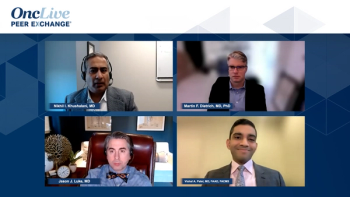
Expert perspectives on real-world, in-practice identification and management of patients with resectable CSCC.
Panelists round out their review of staging and risk stratification in CSCC by considering how each affects the selection of optimal surgical strategies.
Martin F. Dietrich, MD, PhD, discusses how mutational profiling can inform subsequent treatment selection for patients with non–small cell lung cancer.
Following their discussions on staging and risk stratification in CSCC, key opinion leaders work to define resectability in cutaneous squamous cell carcinoma.
Expert panelists share their perspectives on best strategies to risk stratify patients diagnosed with cutaneous squamous cell carcinoma.
A review of current staging systems used to categorize CSCC, particularly those from the American Joint Committee on Cancer and Brigham and Women's Hospital.
Opening their discussion on resectable cutaneous squamous cell carcinoma (CSCC), expert panelists elucidate its current incidence and known risk factors.
Balazs Halmos, MD, Martin F. Dietrich, MD, PhD, Roy S. Herbst, MD, PhD, Suresh S. Ramalingam, MD, FACP, FASCO, Mark Socinski, MD, and Heather Wakelee, MD, FASCO, discuss the use of antibody-drug conjugates (ADCs) in HER2-mutated non–small cell lung cancer.
Martin Dietrich, MD, PhD, discusses the current treatment landscape of mantle cell lymphoma.
Martin Dietrich, MD, PhD, shares how he navigates the non–small cell lung cancer (NSCLC) treatment landscape.
Final takeaways from ASCO 2021 and the use of immunotherapy to treat various types of patients with non–small cell lung cancer.
The potential clinical utility of blood-based biomarkers in non–small cell lung cancer based on recent data presented at ASCO 2021.
Drs Chaitali Nangia and Sandip P. Patel debate between best treatment approaches for patients with non–small cell lung cancer in the perioperative setting.
Dr Roy S. Herbst comments on the utilization of biomarkers and information needed to help aid in treatment decisions about perioperative therapy for patients with resectable non–small cell lung cancer.
Dr Martin Dietrich comments on the IMpower010 trial of atezolizumab versus best supportive care after adjuvant chemotherapy in patients with resected non–small cell lung cancer.
The impact of endpoints used in clinical trials of neoadjuvant therapy for resectable non–small cell lung cancer as they relate to newer drug approvals and real-world practice.
Martin Dietrich, MD, PhD, describes his interpretations of the KEYNOTE-799 study of pembrolizumab plus chemoradiation therapy for unresectable stage III non–small cell lung cancer.
Martin Dietrich, MD, PhD, describes his interpretations of the KEYNOTE-799 study of pembrolizumab plus chemoradiation therapy for unresectable stage III non–small cell lung cancer.
Variables that influence patient selection for durvalumab consolidation after CRT as part of treatment for unresectable stage III non–small cell lung cancer.
How to differentiate whether a patient with unresectable stage III non–small cell lung cancer develops pneumonitis from chemoradiation or durvalumab, and insight regarding techniques to help manage treatment toxicities.
Chaitali Nangia, MD, of the Patty and George Hoag Cancer Center, reacts to the significance of the 5-year overall survival data for the PACIFIC trial evaluating the use of durvalumab after chemoradiation as treatment for inoperable stage III non–small cell lung cancer.
Second-line treatment recommendations for patients with stage IV non–small cell lung cancer who experience disease progression after immunotherapy.
Future projections regarding the role of novel I-O therapies as frontline treatment for patients with metastatic non–small cell lung cancer.
Recommendations for managing immune-related adverse events associated with checkpoint inhibitors used to treat stage IV non–small cell lung cancer.
Martin Dietrich, MD, PhD, shares his thoughts on PD-L1 status, tumor mutational burden, and other predictive and prognostic biomarkers when making treatment decisions for patients with stage IV non–small cell lung cancer.
Considerations for selecting frontline therapy for metastatic non–small cell lung cancer based on various new data and treatment approvals in the field of immunotherapy.