Articles by Melissa L. Johnson, MD
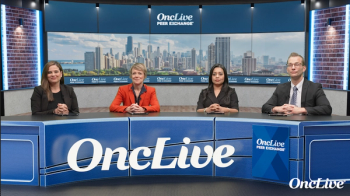
Panelists discuss how emerging targeted and biomarker-directed therapies are poised to transform the treatment landscape for both limited-stage and extensive-stage small cell lung cancer, highlighting the potential for improved patient outcomes through personalized approaches.
Panelists discuss how preliminary results from the pPhase 3 ARTEMIS-001 study indicate that iIfinatamab dDeruxtecan, a B7-H3 antibody-drug conjugate, demonstrates promising antitumor activity in relapsed small cell lung cancer, with a notable partial response rate and manageable safety profile among treated patients.
Panelists discuss how the overexpression of B7-H3 plays a crucial prognostic role in small cell lung cancer, exploring the mechanisms by which ifinatamab deruxtecan targets this protein to overcome treatment resistance and enhance tumor selectivity, while also considering the potential for durable responses and the use of patient-derived xenograft models to advance drug development and assess B7-H3 expression.
Panelists discuss how the treatment schedule of ifinatamab deruxtecan at 12 mg/kg intravenouslyIV Q3W once every 3 weeks may compare favorably to established regimens like amrubicin, topotecan, and lurbinectedin for relapsed small cell lung cancer, while also exploring potential dose adjustments, immunogenicity concerns, and the synergistic effects when combined with atezolizumab and carboplatin.
Panelists discuss how tarlatamab could serve as a promising combination therapy for previously treated small cell lung cancer, highlighting its potential clinical benefits when paired with durvalumab as maintenance therapy after standard regimens, and emphasizing the importance of statistically significant trial end points to encourage its adoption in community oncology practices.
Panelists discuss how the risks and clinical benefits of tarlatamab in relapsed or refractory extensive-stage small cell lung cancer must be carefully evaluated, considering the implications of bBlack bBox warnings for cytokine release syndrome and immune effector cell–-associated neurotoxicity syndrome, as well as the challenges of managing outpatient therapy for patients distant from treatment facilities, while also exploring the potential for reduced monitoring time between infusions given the safety profile observed in clinical studies.
Panelists discuss how the DeLLphi-301 clinical trial demonstrates an objective response rate of 32% to 40% with tarlatamab, which is clinically meaningful given the rapid onset of responses observed between 5 and 7 weeks, while also considering the implications of a median overall survival of 14 months and the duration of response exceeding 6six months for relapsed or refractory extensive-stage small cell lung cancer.
Panelists discuss how the definition of platinum sensitivity in extensive-stage small cell lung cancer may still rely on the 90-day criterion, while also exploring other factors contributing to treatment resistance, alongside an examination of tarlatamab’'s unique mechanism as a bispecific T-cell engager and its potential as a subsequent therapy after platinum-based chemotherapy.
Panelists discuss how the timing of consolidation therapy with a PD-L1 inhibitor after completion of chemoradiotherapy in limited-stage SCLC small cell lung cancer can vary from immediately to 6six weeks, while also exploring the potential for curative-intent immunotherapy with durvalumab, the role of SBRT cCRT concurrent chemoradiotherapy followed by durvalumab, and insights from the ADRIATIC clinical trial regarding the use of PCI in this patient population.
Panelists discuss how the interim results from the phase 3 ADRIATIC trial demonstrate significant overall survival and progression-free survival benefits for patients with limited-stage small cell lung cancer following concurrent chemoradiotherapy, highlighting the potential clinical relevance of durvalumab in improving life expectancy and its mechanisms of synergy within the tumor microenvironment.
Panelists discuss how the surgical approach to limited-stage small cell lung cancer varies, including the percentage of cases amenable to resection, the preference for lobectomy in stage I-IIA disease, and the role of mediastinal lymph node staging in shaping treatment strategies, alongside considerations for choosing between surgery and radiotherapy, the selection of systemic treatments, and the integration of prophylactic cranial irradiation in treatment plans.
Panelists discuss how the current landscape of first-line treatment for limited-stage small cell lung cancer is shaped by various clinical factors that influence the diagnostic workup and management, emphasizing the importance of a multidisciplinary team approach in developing effective treatment plans for these patients.

Melissa L. Johnson, MD, discusses the preliminary efficacy findings from the phase 1 RMC-6236-001 trial in patients with non–small cell lung cancer harboring KRAS mutations and details the significance of these findings for patients within the KRAS G12X-mutant NSCLC population.

Melissa L. Johnson, MD, discusses findings from a subgroup analysis of outcomes with ifinatamab deruxtecan in patients with refractory small cell lung cancer, which she presented at the 2023 IASLC World Conference on Lung Cancer.
Melissa L. Johnson, MD, discusses the development of the seizure-related homolog protein 6–targeting antibody-drug conjugate ABBV-011 and outcomes with this agent in patients with small cell lung cancer.

Melissa L. Johnson, MD, discusses findings from the phase 2 ARC-7 trial in patients with previously untreated metastatic, PD-L1–high non–small cell lung cancer.
Melissa L. Johnson, MD, discusses findings from the phase 1 BL-B01D1-101 trial investigating the efficacy and safety of the EGFR- and HER3-directed antibody-drug conjugate BL-B01D1 in patients with locally advanced or metastatic solid tumors, including non–small cell lung cancer.
Melissa L. Johnson, MD, discusses the evolution of frontline treatment in non–small cell lung cancer.

Melissa L. Johnson, MD, discusses the potential utility of TROP2 as a therapeutic target for all-comers with solid tumor malignancies.

Melissa L. Johnson, MD, discusses the emergence of datopotamab deruxtecan in non–small cell lung cancer with actionable genomic alterations.

Melissa L. Johnson, MD, discusses the promise of DS-7300 in small cell lung cancer and other advanced solid tumors.

Melissa L. Johnson, MD, discusses the clinical potential of AMG 757 in patients with small cell lung cancer.

Melissa L. Johnson, MD, discusses the results of the phase 2 CITYSCAPE trial in PD-L1–positive non–small cell lung cancer (NSCLC).
Melissa L. Johnson, MD, medical oncologist, Sarah Cannon Research Institute, discusses potential immunotherapy regimens for patients with lung cancer.


