Articles by Meredith McKean, MD, MPH
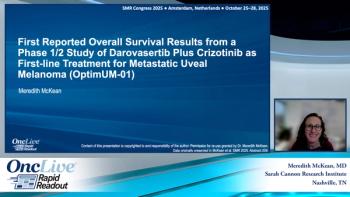
The presentation highlights results from the OptimUM-01 study evaluating
darovasertib + crizotinib as first-line treatment for metastatic uveal melanoma, showing
improved median overall survival (21.1 months) and higher response rates compared with
historical standard therapies. The combination demonstrated a manageable safety profile,
supporting its continued evaluation in the ongoing registrational OptimUM-02 trial.

Meredith McKean, MD, discusses the efficacy of fianlimab given in combination with cemiplimab for patients with advanced melanoma.

The Future of Metastatic and Unresectable Melanoma Treatment
ByMichael Postow, MD,John M. Kirkwood, MD,Meredith McKean, MD, MPH,Helen Moon, MD,Sapna Patel, BA, MD The panel concludes their discussion with a call for continued research and collaboration, emphasizing the need for more understanding of targeted therapies, monitoring tools like ctDNA, and ongoing development in the field of BRAF mutant melanoma treatment.
Key Data on Combination Immunotherapies in BRAF-Mutated Melanoma with Brain Metastases
ByMichael Postow, MD,John M. Kirkwood, MD,Meredith McKean, MD, MPH,Helen Moon, MD,Sapna Patel, BA, MD Doctors discuss the effectiveness of different treatment combinations for patients with BRAF-mutated metastatic melanoma and brain metastases, highlighting that consideration of patient preferences is essential in making treatment decisions.
Treatment Approaches For Patients With BRAF-Mutated Melanoma and Symptomatic Brain Metastases
ByMichael Postow, MD,John M. Kirkwood, MD,Meredith McKean, MD, MPH,Helen Moon, MD,Sapna Patel, BA, MD Experts discuss treatment of patients with BRAF-mutated melanoma and symptomatic brain metastases, detailing radiation therapy, corticosteroid use, and the choice between BRAF/MEK inhibitor therapy and immunotherapy.
Treatment Approaches For Patients With BRAF-Mutated Melanoma and Asymptomatic Brain Metastases
ByMichael Postow, MD,John M. Kirkwood, MD,Meredith McKean, MD, MPH,Helen Moon, MD,Sapna Patel, BA, MD For patients with BRAF-mutated melanoma with asymptomatic brain metastases, immunotherapy, particularly the combination of ipilimumab and nivolumab, is the preferred treatment option due to its effectiveness and durability, as supported by the seven-year follow-up data from the CHECKMATE 204 trial.
Efficacy and Safety of Rechallenge With BRAF/MEK Inhibitors in Patients With BRAF-Mutated Metastatic Melanoma
ByMichael Postow, MD,John M. Kirkwood, MD,Meredith McKean, MD, MPH,Helen Moon, MD,Sapna Patel, BA, MD Panelists discuss the potential benefits of rechallenging patients with BRAF-mutated metastatic melanoma with BRAF/MEK inhibitors after a break from treatment, especially for those who initially responded well, and emphasizing the success of this approach in some cases, while highlighting the importance of monitoring and utilizing ctDNA tracking for more informed decision-making.
Encorafenib Plus Binimetinib for BRAF-Mutated Metastatic Melanoma: 7-Year Follow-Up Data From the COLUMBUS Trial
ByMichael Postow, MD,John M. Kirkwood, MD,Meredith McKean, MD, MPH,Helen Moon, MD,Sapna Patel, BA, MD The 7-year follow-up data for encorafenib/binimetinib showing that around 21% of patients remained progression-free supports BRAF/MEK inhibition as a later treatment option after immunotherapy failure, but doctors are reluctant to stop BRAF/MEK inhibitors given lack of data, even in those patients doing well long-term on the medications with minimal toxicity.
Choosing Between Available Combination BRAF/MEK Inhibitor Options for Patients With BRAF-Mutated Metastatic Melanoma
ByMichael Postow, MD,John M. Kirkwood, MD,Meredith McKean, MD, MPH,Helen Moon, MD,Sapna Patel, BA, MD The panel explains which BRAF/MEK inhibitor combination therapy they each tend to turn to when treating a patient with BRAF-mutated metastatic melanoma.
Common Adverse Effects Seen With BRAF/MEK Inhibitor Therapy in Patients With BRAF-Mutated Metastatic Melanoma
ByMichael Postow, MD,John M. Kirkwood, MD,Meredith McKean, MD, MPH,Helen Moon, MD,Sapna Patel, BA, MD Key opinion leaders explain that clinicians should warn patients with BRAF-mutated metastatic melanoma starting BRAF/MEK inhibitor therapy about short-term toxicities like fever, chills, and rash that can differ greatly from immunotherapy toxicities.
Frontline Treatment Options for Patients With BRAF-Mutated Metastatic Melanoma
ByMichael Postow, MD,John M. Kirkwood, MD,Meredith McKean, MD, MPH,Helen Moon, MD,Sapna Patel, BA, MD Experts discuss a preference for ipilimumab/nivolumab as the frontline immunotherapy for patients with BRAF-mutant metastatic melanoma given its proven long-term efficacy but acknowledge nivolumab/relatlimab as an option with less toxicity, especially adrenal insufficiency.
Factors Influencing Treatment Decision-Making In Patients With BRAF-Mutated Metastatic Melanoma
ByMichael Postow, MD,John M. Kirkwood, MD,Meredith McKean, MD, MPH,Helen Moon, MD,Sapna Patel, BA, MD Beyond symptoms, doctors consider the psychosocial factors impacting treatment access and adherence, like insurance coverage, cost, family support, and preexisting conditions, when deciding between immunotherapy and targeted therapy for patients with BRAF-mutated metastatic melanoma.
Treatment Options for Patients With Metastatic Melanoma With a BRAF Mutation
ByMichael Postow, MD,John M. Kirkwood, MD,Meredith McKean, MD, MPH,Helen Moon, MD,Sapna Patel, BA, MD For patients with BRAF-mutant metastatic melanoma, doctors assess symptoms and disease status to determine if they should start treatment with combination immunotherapy, or 8-12 weeks of BRAF/MEK targeted therapy before switching to immunotherapy, which offers the possibility of durable responses or cure.
Differences Between Community and Academic Settings Regarding Biomarker Testing Practices in Metastatic Melanoma
ByMichael Postow, MD,John M. Kirkwood, MD,Meredith McKean, MD, MPH,Helen Moon, MD,Sapna Patel, BA, MD The panelists emphasize the importance of obtaining tissue for BRAF-mutation testing and dedicated tissue tracking in patients with metastatic melanoma, with immunohistochemistry followed by confirmatory next-generation sequencing, and discuss the promise of liquid biopsies like ctDNA as a future biomarker tracking modality.
Best Practices for Biomarker Testing in Metastatic Melanoma
ByMichael Postow, MD,John M. Kirkwood, MD,Meredith McKean, MD, MPH,Helen Moon, MD,Sapna Patel, BA, MD When a patient with metastatic melanoma patient tests negative for the BRAF V600E mutation, doctors recommend sending the sample for next-generation sequencing testing which can take 2-3 weeks, during which time they may start immunotherapy if the patient has aggressive disease, but ideally should wait for results to guide treatment.
The Role of Biomarker Testing in the Management of Metastatic Melanoma
ByMichael Postow, MD,John M. Kirkwood, MD,Meredith McKean, MD, MPH,Helen Moon, MD,Sapna Patel, BA, MD Expert panelists stress the importance of biomarker testing for BRAF mutations to guide treatment options when a patient is diagnosed with metastatic melanoma.

Meredith McKean, MD, MPH, discusses the efficacy and safety of treatment with the anti-TGIT agent etigilimab and the PD-1 inhibitor nivolumab in patients with solid tumors and PD-L1-low disease.

Meredith McKean, MD, MPH, discusses the rationale for investigating the LAG-3 inhibitor fianlimab in combination with cemiplimab-rwlc in patients with advanced melanoma, highlighting the combination's efficacy in both PD-1 inhibitor-exposed and –naïve populations, as well as the combinations its potential clinical significance within the advanced melanoma space.

Meredith McKean, MD, MPH, discusses the importance of molecular profiling in melanoma.


