

Following the RASolute 302 readout, ESMO now endorses daraxonrasib after chemotherapy progression in RAS-mutated metastatic pancreatic cancer.
Following the RASolute 302 readout, ESMO now endorses daraxonrasib after chemotherapy progression in RAS-mutated metastatic pancreatic cancer.
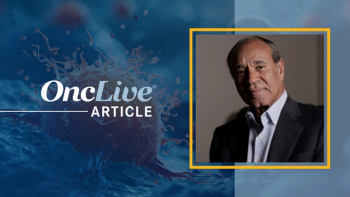
Harold P. Freeman, MD, pioneer of patient navigation and cancer disparities research, has died at 93. He spent decades bridging gaps in cancer care access.
Intismeran autogene plus pembrolizumab improved recurrence-free survival and distant metastasis–free survival in resected stage IIB to IV melanoma.

The oral OMNI-EGFR inhibitor earned fast track status for advanced EGFR C797S–positive non–small cell lung cancer that progressed on a third-generation EGFR TKI.

The oral PARG inhibitor ETX-19477 earned fast track status for BRCA-mutated, HR-positive, HER2-negative unresectable or metastatic breast cancer.

Weekly oral dordaviprone maintenance after allogeneic transplant produced no DLTs and low rates of grade 3/4 cytopenias in high-risk AML and MDS.

An analysis of 12 randomized trials validated MRD-negative CR as a surrogate for PFS in earlier-line relapsed/refractory multiple myeloma.
Sapanisertib and serabelisib plus paclitaxel received FDA fast track designation for pretreated advanced PI3K/AKT/mTOR pathway–altered endometrial cancer.

Topline phase 3 SAFFRON data showed osimertinib plus savolitinib significantly improved PFS and OS vs chemotherapy in MET-driven, osimertinib-resistant EGFR-mutated NSCLC.

T-DXd improved PFS in the phase 3 DESTINY-Lung04 trial for first-line HER2-mutant NSCLC.
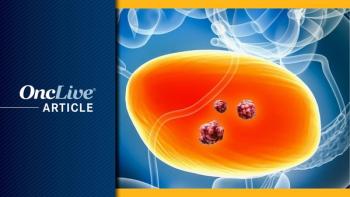
UGN-103, a next-generation mitomycin formulation built on the ZUSDURI foundation, is supported by three-month CR and six-month DOR data from the phase 3 UTOPIA trial.

The phase 3 eVOLVE-Lung02 trial is being discontinued after its IDMC found volrustomig plus chemotherapy unlikely to meet its dual primary end points.

No efficacy benefit was found in adding SBRT to dual checkpoint blockade, though a subset of patients responded to nivolumab plus ipilimumab.

The top 5 OncLive TV videos of the week cover insights in multiple myeloma, melanoma, ovarian cancer, prostate cancer, and hepatocellular carcinoma.

Data from EXCALIBER-RRMM supported FDA accelerated approval of iberdomide plus daratumumab/dexamethasone in R/R multiple myeloma.
The FDA approved iberdomide-based therapy for relapsed myeloma, rejected a neuroendocrine tumor therapy, and more.

Pembrolizumab plus denosumab produced a 31% ORR and 53% 6-month PFS rate in VEGFR TKI–pretreated advanced clear cell renal cell carcinoma.

The CLDN18.2/CD47 bispecific antibody spevatamig has received FDA fast track designation for advanced and metastatic biliary tract carcinoma.

Did you catch all of this week's top oncology news? Test your knowledge with OncLive's Weekly News Quiz.

The HER2-directed ADC produced confirmed responses across both biomarker-defined cohorts of advanced salivary gland carcinoma.
Zipalertinib plus chemotherapy produced a statistically significant, clinically meaningful PFS improvement vs chemotherapy alone at a planned interim analysis.
Neoadjuvant PD-1–based immunotherapy plus chemotherapy produced pCRs across 3 cohorts in resectable locally advanced HNSCC.

A post hoc analysis found similar safety outcomes for fixed-duration regimens containing acalabrutinib/venetoclax across age groups in treatment-naive CLL.

T-DXd plus pertuzumab was approved in China as first-line treatment for unresectable or metastatic HER2-positive breast cancer.

Topline phase 2a data showed a 48.9% six-month progression-free survival rate with intranasal NEO100 in previously treated IDH1-mutant glioma.

PDS Biotechnology will prioritize the IL-12 immunocytokine PDS0301 in metastatic colorectal cancer and pursue a partnership strategy for PDS0101.
An FDA advisory committee will meet in September to review the premarket approval application for the Galleri multi-cancer early detection blood test.

Read a refresh of GI cancer FDA news from July 2026, including an NDA acceptance for a RAS(ON) inhibitor in pancreatic cancer.

Divesiran significantly increased the proportion of clinical responders vs placebo in phlebotomy-dependent polycythemia vera.

In case you missed any, read a recap of the episodes of OncLive On Air that aired in July 2026.