
As with software upgrades, Carl H. June, MD, sees his work in cancer research as a job with ever-evolving updates.
As with software upgrades, Carl H. June, MD, sees his work in cancer research as a job with ever-evolving updates.
Immunotherapy continues to be one of the fastest-evolving fields in oncology. In recent years, numerous immunotherapies have shown good efficacy, safety, and durability across many tumor types, including some advanced solid tumors that have not seen meaningful treatment developments in decades.

Lung cancer alone accounts for 26.5% of all cancer-related mortalities in the United States, which is more than any other malignancy. Despite increased awareness that smoking is an important risk factor for lung cancer, which has reduced the number of smokers in the U.S., nearly a quarter of a million new diagnoses are expected in 2016.
Alan P. Venook, MD, The Madden Family Distinguished Professor of Medical Oncology and Translational Research at the University of California, San Francisco Helen Diller Family Comprehensive Cancer Center, discusses factors in determining first-line treatment for patients with metastatic colorectal cancer (mCRC).

The FDA has approved Mylotarg (gemtuzumab ozogamicin) for the treatment of adults with newly diagnosed CD33-positive acute myeloid leukemia (AML).
Palbociclib demonstrated consistent improvement in progression-free survival when combined with endocrine therapy in patients with advanced estrogen receptor-positive breast cancer.
A new clinical trial for women with clinically aggressive triple-negative breast cancer (TNBC) will test a novel theory: Will a diet low in an essential nutrient make TNBC cells more vulnerable to cell killing by a new cancer drug?

Several recent trials have supported the use of chemotherapy in the frontline setting for patients with hormone-sensitive metastatic prostate cancer.

Single-agent olaparib significantly improved progression-free survival compared with placebo in the maintenance setting for patients with advanced BRCA-positive ovarian cancer.

An interim analysis of an ongoing study showed potential for reducing time and improving acceptance of testing and counseling for patients with ovarian cancer.
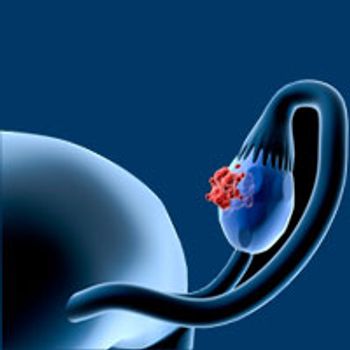
The addition of bevacizumab to neoadjuvant platinum-based chemotherapy led to a significantly increased rate of complete resection at interval debulking in advanced ovarian cancer.

Men with bone-metastatic castration-resistant prostate cancer appeared to derive additional benefits from treatment with radium-223 with concomitant bone-targeted therapies, according to data from an extended-access program.

The first trial evaluating the efficacy of abiraterone in patients with ovarian cancer has been halted early due to low response, according to results from the CORAL phase II trial, which were presented at the European Society for Medical Oncology Congress.

Adding a Toll-like receptor 8 agonist to standard care for patients with recurrent or metastatic squamous cell carcinoma of the head and neck failed to improve progression-free survival.

Robert C. Bast Jr, MD, who led the development of the first clinically relevant blood-based biomarker for ovarian cancer, was honored in the Gynecologic Malignancies category with a 2015 Giants of Cancer Care® award, a program that OncLive launched to recognize leaders in the field.

The addition of pembrolizumab (Keytruda) to frontline platinum-based chemotherapy for advanced non–small cell lung cancer almost doubled the response rate compared with chemotherapy alone.

First-line treatment with fulvestrant led to significantly better progression-free survival compared with anastrozole for patients with HR-positive advanced breast cancer.
First-line therapy with nivolumab failed to improve progression-free survival in PD-L1 positive non-small cell lung cancer compared with standard chemotherapy.

A technically negative trial in high-risk adult soft tissue sarcoma nonetheless produced a significant survival benefit for anthracycline-based neoadjuvant chemotherapy.

Progression-free survival was more than 3 times longer with ceritinib (Zykadia) than with chemotherapy, the current second-line standard, in patients with advanced ALK-positive non–small cell lung cancer who progressed after first-line crizotinib.

A fourth of patients with heavily pretreated advanced ovarian cancer achieved objective responses with novel antibody-drug conjugate targeting protein tyrosine kinase 7.
Postmenopausal women with hormone receptor-positive metastatic breast cancer had significant slowing of disease progression with the addition of the investigational cyclin-dependent kinase 4/6 inhibitor ribociclib to endocrine therapy.
Almost 40% of patients with resected early-stage non–small cell lung cancer had evidence of tumor regression following neoadjuvant treatment with nivolumab (Opdivo) in a preliminary clinical trial.
A strategy to stimulate an immune response in radiation-damaged tumor cells resulted in preliminary evidence of activity—including longer survival—in a small clinical trial of patients with metastatic breast cancer.

The addition of external-beam radiotherapy to interstitial brachytherapy failed to reduce prostate cancer progression compared to brachytherapy alone in men with intermediate-risk disease.
The Perlmutter Cancer Center at NYU Langone Medical Center has named noted clinician-scientist Kwok-Kin Wong, MD, PhD, as its new Chief of Hematology and Medical Oncology.
The total funding includes a National Cancer Institute award for more than $6 million that supports multidisciplinary prostate cancer research with goal of developing future drug therapies.
A Yale Cancer Center team completed a multi-institutional analysis of treatment options for patients with newly diagnosed EGFR-mutant non-small cell lung cancer with brain metastases to determine the best option for treatment.
Pooled data from ten universities finds added benefit from radiation boost among patients with negative margins following breast-conserving surgery.
In a recent study, a Yale Cancer Center team revealed that the addition of chemotherapy to postoperative treatment for adults with medulloblastoma improves survival.