Roy S. Herbst, MD, PhD, Yale Cancer Center
Articles by Roy S. Herbst, MD, PhD, Yale Cancer Center

Immunotherapy for NSCLC: Clinical Pearls
ByMark A. Socinski, MD, AdventHealth Cancer Institute,Martin Dietrich, MD, PhD,Roy S. Herbst, MD, PhD, Yale Cancer Center,Chaitali Nangia, MD, Patty and George Hoag Cancer Center,Sandip P. Patel, MD, University of California San Diego,Neal Edward Ready, MD, PhD, Duke Medical Center Final takeaways from ASCO 2021 and the use of immunotherapy to treat various types of patients with non–small cell lung cancer.
CRT and I-O for Unresectable Stage III NSCLC
ByMark A. Socinski, MD, AdventHealth Cancer Institute,Martin Dietrich, MD, PhD,Roy S. Herbst, MD, PhD, Yale Cancer Center,Chaitali Nangia, MD, Patty and George Hoag Cancer Center,Sandip P. Patel, MD, University of California San Diego,Neal Edward Ready, MD, PhD, Duke Medical Center Martin Dietrich, MD, PhD, describes his interpretations of the KEYNOTE-799 study of pembrolizumab plus chemoradiation therapy for unresectable stage III non–small cell lung cancer.
Appropriateness for Durvalumab in Unresectable Stage III NSCLC
ByMark A. Socinski, MD, AdventHealth Cancer Institute,Martin Dietrich, MD, PhD,Roy S. Herbst, MD, PhD, Yale Cancer Center,Chaitali Nangia, MD, Patty and George Hoag Cancer Center,Sandip P. Patel, MD, University of California San Diego,Neal Edward Ready, MD, PhD, Duke Medical Center Variables that influence patient selection for durvalumab consolidation after CRT as part of treatment for unresectable stage III non–small cell lung cancer.
Risks of Pneumonitis in Unresectable Stage III NSCLC
ByMark A. Socinski, MD, AdventHealth Cancer Institute,Martin Dietrich, MD, PhD,Roy S. Herbst, MD, PhD, Yale Cancer Center,Chaitali Nangia, MD, Patty and George Hoag Cancer Center,Sandip P. Patel, MD, University of California San Diego,Neal Edward Ready, MD, PhD, Duke Medical Center How to differentiate whether a patient with unresectable stage III non–small cell lung cancer develops pneumonitis from chemoradiation or durvalumab, and insight regarding techniques to help manage treatment toxicities.
Durvalumab for Unresectable Stage III NSCLC
ByMark A. Socinski, MD, AdventHealth Cancer Institute,Martin Dietrich, MD, PhD,Roy S. Herbst, MD, PhD, Yale Cancer Center,Chaitali Nangia, MD, Patty and George Hoag Cancer Center,Sandip P. Patel, MD, University of California San Diego,Neal Edward Ready, MD, PhD, Duke Medical Center Chaitali Nangia, MD, of the Patty and George Hoag Cancer Center, reacts to the significance of the 5-year overall survival data for the PACIFIC trial evaluating the use of durvalumab after chemoradiation as treatment for inoperable stage III non–small cell lung cancer.
Second-Line Therapy for Stage IV NSCLC
ByMark A. Socinski, MD, AdventHealth Cancer Institute,Martin Dietrich, MD, PhD,Roy S. Herbst, MD, PhD, Yale Cancer Center,Chaitali Nangia, MD, Patty and George Hoag Cancer Center,Sandip P. Patel, MD, University of California San Diego,Neal Edward Ready, MD, PhD, Duke Medical Center Second-line treatment recommendations for patients with stage IV non–small cell lung cancer who experience disease progression after immunotherapy.
Frontline Treatment of Stage IV NSCLC: What’s Next?
ByMark A. Socinski, MD, AdventHealth Cancer Institute,Martin Dietrich, MD, PhD,Roy S. Herbst, MD, PhD, Yale Cancer Center,Chaitali Nangia, MD, Patty and George Hoag Cancer Center,Sandip P. Patel, MD, University of California San Diego,Neal Edward Ready, MD, PhD, Duke Medical Center Future projections regarding the role of novel I-O therapies as frontline treatment for patients with metastatic non–small cell lung cancer.
Immune-Related Adverse Events in NSCLC
ByMark A. Socinski, MD, AdventHealth Cancer Institute,Martin Dietrich, MD, PhD,Roy S. Herbst, MD, PhD, Yale Cancer Center,Chaitali Nangia, MD, Patty and George Hoag Cancer Center,Sandip P. Patel, MD, University of California San Diego,Neal Edward Ready, MD, PhD, Duke Medical Center Recommendations for managing immune-related adverse events associated with checkpoint inhibitors used to treat stage IV non–small cell lung cancer.
Frontline Treatment of Stage IV NSCLC: Biomarkers
ByMark A. Socinski, MD, AdventHealth Cancer Institute,Martin Dietrich, MD, PhD,Roy S. Herbst, MD, PhD, Yale Cancer Center,Chaitali Nangia, MD, Patty and George Hoag Cancer Center,Sandip P. Patel, MD, University of California San Diego,Neal Edward Ready, MD, PhD, Duke Medical Center Martin Dietrich, MD, PhD, shares his thoughts on PD-L1 status, tumor mutational burden, and other predictive and prognostic biomarkers when making treatment decisions for patients with stage IV non–small cell lung cancer.
Frontline Treatment Decisions for Stage IV NSCLC
ByMark A. Socinski, MD, AdventHealth Cancer Institute,Martin Dietrich, MD, PhD,Roy S. Herbst, MD, PhD, Yale Cancer Center,Chaitali Nangia, MD, Patty and George Hoag Cancer Center,Sandip P. Patel, MD, University of California San Diego,Neal Edward Ready, MD, PhD, Duke Medical Center Considerations for selecting frontline therapy for metastatic non–small cell lung cancer based on various new data and treatment approvals in the field of immunotherapy.
Frontline Treatment of Stage IV NSCLC: IPI/NIVO
ByMark A. Socinski, MD, AdventHealth Cancer Institute,Martin Dietrich, MD, PhD,Roy S. Herbst, MD, PhD, Yale Cancer Center,Chaitali Nangia, MD, Patty and George Hoag Cancer Center,Sandip P. Patel, MD, University of California San Diego,Neal Edward Ready, MD, PhD, Duke Medical Center Neal Edward Ready, MD, PhD, describes which patients with stage IV non–small cell lung cancer may benefit from the combination of ipilimumab and nivolumab in the frontline treatment setting.
Frontline I-O Monotherapy Versus Combination Therapy for PD-L1+ Stage IV NSCLC
ByMark A. Socinski, MD, AdventHealth Cancer Institute,Martin Dietrich, MD, PhD,Roy S. Herbst, MD, PhD, Yale Cancer Center,Chaitali Nangia, MD, Patty and George Hoag Cancer Center,Sandip P. Patel, MD, University of California San Diego,Neal Edward Ready, MD, PhD, Duke Medical Center Drs Roy S. Herbst and Sandip P. Patel comment on patient candidacy for immunotherapy as monotherapy to treat PD-L1+ metastatic non–small cell lung cancer versus chemoimmunotherapy.
Frontline Treatment of PD-L1+ Stage IV NSCLC: Cemiplimab
ByMark A. Socinski, MD, AdventHealth Cancer Institute,Martin Dietrich, MD, PhD,Roy S. Herbst, MD, PhD, Yale Cancer Center,Chaitali Nangia, MD, Patty and George Hoag Cancer Center,Sandip P. Patel, MD, University of California San Diego,Neal Edward Ready, MD, PhD, Duke Medical Center Roy S. Herbst, MD, PhD, of Yale Cancer Center, highlights treatment advances in stage IV non–small cell lung cancer, including cemiplimab as frontline monotherapy based on EMPOWER-Lung 1.
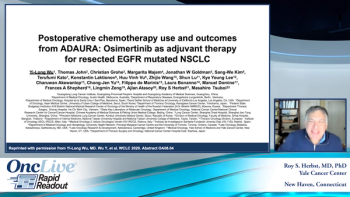
Roy S. Herbst, MD, PhD, presents slides from the IASLC 2020 World Conference on Lung Cancer for postoperative chemotherapy use and outcomes from the phase 3 ADAURA trial of osimertinib as adjuvant therapy in patients with resected EGFR mutated NSCLC.
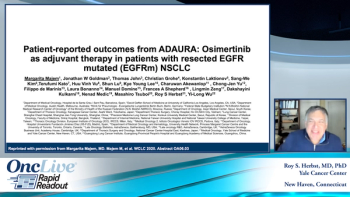
Roy S. Herbst, MD, PhD, presents slides from the IASLC 2020 World Conference on Lung Cancer for patient-reported outcomes from the phase 3 ADAURA trial of osimertinib as adjuvant therapy in patients with resected EGFR mutated NSCLC.
Multidisciplinary Management of Patients With Stage III NSCLC
ByMark A. Socinski, MD, AdventHealth Cancer Institute,Roy S. Herbst, MD, PhD, Yale Cancer Center,Stephen Liu, MD, Georgetown Lombardi Comprehensive Cancer Center,Kristin Higgins, MD, City of Hope,Brendon M. Stiles, MD 
Integrating Perioperative Immunotherapy Strategies in NSCLC
ByMark A. Socinski, MD, AdventHealth Cancer Institute,Roy S. Herbst, MD, PhD, Yale Cancer Center,Stephen Liu, MD, Georgetown Lombardi Comprehensive Cancer Center,Kristin Higgins, MD, City of Hope,Brendon M. Stiles, MD 
Molecular testing in Patients With Metastatic NSCLC
ByMark A. Socinski, MD, AdventHealth Cancer Institute,Roy S. Herbst, MD, PhD, Yale Cancer Center,Stephen Liu, MD, Georgetown Lombardi Comprehensive Cancer Center,Kristin Higgins, MD, City of Hope,Brendon M. Stiles, MD 
ADAURA: Osimertinib as Adjuvant Therapy in Stage III EGFR+ NSCLC
ByMark A. Socinski, MD, AdventHealth Cancer Institute,Roy S. Herbst, MD, PhD, Yale Cancer Center,Stephen Liu, MD, Georgetown Lombardi Comprehensive Cancer Center,Kristin Higgins, MD, City of Hope,Brendon M. Stiles, MD 
Varied Timing of IO Therapy in Patients With Stage III NSCLC
ByMark A. Socinski, MD, AdventHealth Cancer Institute,Roy S. Herbst, MD, PhD, Yale Cancer Center,Stephen Liu, MD, Georgetown Lombardi Comprehensive Cancer Center,Kristin Higgins, MD, City of Hope,Brendon M. Stiles, MD 
Treating for Stage III NSCLC After Progression on Durvalumab
ByMark A. Socinski, MD, AdventHealth Cancer Institute,Roy S. Herbst, MD, PhD, Yale Cancer Center,Stephen Liu, MD, Georgetown Lombardi Comprehensive Cancer Center,Kristin Higgins, MD, City of Hope,Brendon M. Stiles, MD 
Durvalumab in Stage III NSCLC Based on Performance Status
ByMark A. Socinski, MD, AdventHealth Cancer Institute,Roy S. Herbst, MD, PhD, Yale Cancer Center,Stephen Liu, MD, Georgetown Lombardi Comprehensive Cancer Center,Kristin Higgins, MD, City of Hope,Brendon M. Stiles, MD 
PACIFIC Trial: Durvalumab Following Chemotherapy for Stage III NSCLC
ByMark A. Socinski, MD, AdventHealth Cancer Institute,Roy S. Herbst, MD, PhD, Yale Cancer Center,Stephen Liu, MD, Georgetown Lombardi Comprehensive Cancer Center,Kristin Higgins, MD, City of Hope,Brendon M. Stiles, MD 
Mediastinal Staging in Non–Small Cell Lung Cancer
ByMark A. Socinski, MD, AdventHealth Cancer Institute,Roy S. Herbst, MD, PhD, Yale Cancer Center,Stephen Liu, MD, Georgetown Lombardi Comprehensive Cancer Center,Kristin Higgins, MD, City of Hope,Brendon M. Stiles, MD 
Review of Treatment for Limited-Stage Small-Cell Lung Cancer
ByMark A. Socinski, MD, AdventHealth Cancer Institute,Roy S. Herbst, MD, PhD, Yale Cancer Center,Stephen Liu, MD, MedStar Georgetown University Hospital,Kristin Higgins, MD 
Second- and Third-Line Treatment for ES-SCLC
ByMark A. Socinski, MD, AdventHealth Cancer Institute,Roy S. Herbst, MD, PhD, Yale Cancer Center,Stephen Liu, MD, MedStar Georgetown University Hospital,Kristin Higgins, MD 
Role of PCI Versus Brain MRI Surveillance in ES-SCLC
ByMark A. Socinski, MD, AdventHealth Cancer Institute,Roy S. Herbst, MD, PhD, Yale Cancer Center,Stephen Liu, MD, MedStar Georgetown University Hospital,Kristin Higgins, MD 
Expert Approaches to Treating Extensive Stage SCLC
ByMark A. Socinski, MD, AdventHealth Cancer Institute,Roy S. Herbst, MD, PhD, Yale Cancer Center,Stephen Liu, MD, MedStar Georgetown University Hospital,Kristin Higgins, MD 
KEYNOTE-604 and ECOG-ACRIN 5161 Trials for ES-SCLC
ByMark A. Socinski, MD, AdventHealth Cancer Institute,Roy S. Herbst, MD, PhD, Yale Cancer Center,Stephen Liu, MD, MedStar Georgetown University Hospital,Kristin Higgins, MD 
IMpower133 and CASPIAN Trials for Extensive Stage SCLC
ByMark A. Socinski, MD, AdventHealth Cancer Institute,Roy S. Herbst, MD, PhD, Yale Cancer Center,Stephen Liu, MD, MedStar Georgetown University Hospital,Kristin Higgins, MD