
Comprehensive genomic testing is not yet widespread, but a French study presented at the 2017 ASCO Annual Meeting suggested that DNA profiling can be of important value in advancing personalized medicine.
Comprehensive genomic testing is not yet widespread, but a French study presented at the 2017 ASCO Annual Meeting suggested that DNA profiling can be of important value in advancing personalized medicine.

Hackensack Meridian Health will pilot a study using IBM's Watson for Oncology and Cota.

Driven by newer agents, the cost of US oncology medicines has increased 88% over the past 5 years, according to the QuintilesIMS Institute Global Oncology Trends 2017 report.

Researchers achieved cost savings and cut down on the amount of drug they had to throw away by pooling drug vials and dosing all patients with a given disease on the same day of the week, according to data released ahead of the 2017 ASCO Annual Meeting.
Ahead of this year's meeting, researchers are increasingly interested in the state of communication between patients and doctors on immunotherapy.
Clara N. Lambert and the Association of Community Cancer Centers have created an online course called Financial Advocacy Boot Camp, which is designed to give experienced and novice financial navigators a review of essential knowledge for finding patient funds.
Terra Universal, an environmental solutions company based in Fullerton, California, came to a point recently where it was no longer willing to sell and design clean-room setups for oncology practices unless potential clients first sat down with a consultant who could give them reliable guidance on what they needed.
Researchers have successfully performed autonomous retroflexion of a robotic capsule during colonoscopy in a subject animal, according to data presented during Digestive Disease Week 2017 at McCormick Place in Chicago.
Practices that meet the goals for improvement in savings and outcomes will be eligible for performance incentive payments.

House Republicans have passed a revised version of the American Health Care Act by a vote of 217 to 213, without any Democratic support, and despite strenuous opposition from the healthcare community.
The rollout of the Oncology Care Model from CMS has proven to be a challenging road, specifically involving technological challenges, as practices have scrambled to find seamless solutions to bridging old electronic health records with new "patches" designed for the OCM.
With the increase of oral medications in oncology, adherence has become a significant issue since patients take the drugs home with them, and whether or not they stick to a regimen is hidden from the provider's view.
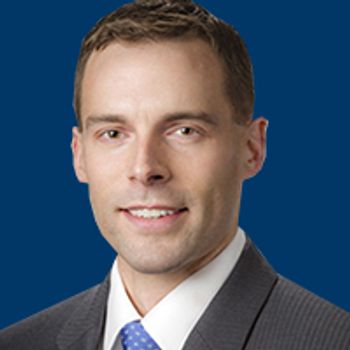
Josh Cox, PharmD, moderated a panel discussion on legislative initiatives to combat the rising power of Pharmacy Benefit Managers at the 2017 Community Oncology Conference. In the talk, he touched on the difficulties of monitoring therapy for patients receiving their drugs from outside pharmacies as well as murkiness off drug pricing and cash flow within the PBM systems.
The real impetus for fueling the Cancer Moonshot is coming from community oncology practices, not large research institutions, according to the Community Oncology Alliance.
More than half (54%) of practices are struggling with rising costs of equipment and facilities, staffing costs, and administration expenses.
A set of draft recommendations for controlling price escalation in the Medicare Part B program has ignited fresh concern from the oncology community, which battled last year to overcome the Medicare Part B Drug Payment Model cost reduction experiment.
According to results presented at the 2017 AACR Annual Meeting, 10% of patients showed impressive long-term survival in a phase I study of single agent anti-PD-L1 atezolizumab (Tecentriq) in patients with metastatic triple-negative breast cancer.
Jessica Turgon, MBA, of ECG Management Consultants says that changes in 340B Drug Pricing Program rules and the CMS physician payment formula are possible.
The Republican-led Affordable Care Act repeal and replace effort has the potential to be revived, but majority leaders may not want to risk further political capital in a battle that could go against them, speakers said at this year's Association of Community Cancer Centers' CANCERSCAPE annual conference.

Daniel F. Hayes, MD, and Stephen S. Grubbs, MD, discuss the perception that ASCO has not been truly representative of smaller, independent oncology practices throughout the United States, and how they plan to remedy that.
Robin Zon, MD, responds to questions regarding the fourth annual State of Cancer Care in America report from the American Society of Clinical Oncology.
The Affordable Care Act has improved access to cancer care for millions of Americans, and many new drugs and new indications for existing cancer drugs were approved in 2016, but there are frontiers in improving cancer care that include information barriers, disparities in the availability of rural care, and stressors on physicians and oncology practices, ASCO said in its annual report State of Cancer Care in America: 2017.

President Donald Trump has called his fiscal year 2018 budget proposal a "blueprint for making America great again," but oncological societies have been quick to denounce the budget plan, released Thursday, March 16, as a huge potential setback to health efforts in general and specifically to the fight against cancer.
Andrew L. Pecora, MD, has been awarded the inaugural Rosemarie J. Sorce Endowed Chair in Innovation at Hackensack Meridian Health.
For television personality, author, and lifestyle maven Sandra Lee the roots of her controversial decision to have a bilateral mastectomy go back to her childhood, when her grandmother was diagnosed with an advanced and aggressive form of stomach cancer.
Healthcare resource use and costs remain high among patients with metastatic triple-negative breast cancer, indicating a need for better targeted treatments for this patient class.
The so-called butterfly effect, in which a small creature can cause something on the scale of an earthquake merely by flapping its wings, is fodder for debate on whether the digital revolution in medicine can deliver on its promise for precision medicine.
Oncologists discuss their experience and best practices with phone triage programs.
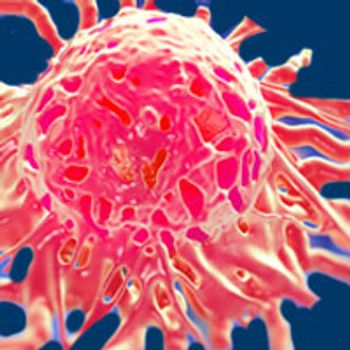
Immuno-oncology drugs can improve the level of care in many respects, but they bring a host of problems related to implementation that demands a new set of strategies.
A group of doctors and other healthcare industry professionals have set out to develop a more efficient tool for assessing the true value of immuno-oncology drugs.