
The consolidated tax bill that now goes to President Trump’s desk for a signature carries with it dire warnings from oncology interest groups that access to care will suffer under the federal spending cutbacks that are expected to result.
The consolidated tax bill that now goes to President Trump’s desk for a signature carries with it dire warnings from oncology interest groups that access to care will suffer under the federal spending cutbacks that are expected to result.
Investigators with the Austria Breast and Colorectal Cancer Study Group announced today that years can safely be shaved off anastrozole (Arimidex) treatment without affecting disease-free survival postmenopausal HR-positive breast cancer.

A trial to determine the value of trastuzumab plus standard adjuvant chemotherapy in patients with low levels of HER2 protein has shown no significant efficacy, confounding investigators who launched the trial based on opposing results from 2 earlier studies.

Oncology providers contend that the sweeping $1.5 trillion in tax cuts sought by Republicans would trigger sequester cuts that would drive more independent practices out of business and reduce patient access to care.

A lot of information goes into the electronic health record, but doctors complain that it's not that easy to get useful information out of it.

PARP inhibitors offer exciting opportunities to improve outcomes for patients with ovarian cancer and hopefully will be moved to the front-line setting if the evidence warrants it, said Susana M. Campos, MD.

Because genetic abnormalities play a role in multiple myeloma, it is important to understand these better to improve outcomes, particularly for high-risk patients, said Shaji K. Kumar, MD.

A newly announced CMS policy to redistribute savings under the 340B Drug Discount Program so that Medicare beneficiaries save money on copayments has garnered a mixture of praise and criticism from supporters and critics of the program.
Ado-trastuzumab emtansine (Kadcyla) is active and well tolerated in patients with advanced HER2-mutant or amplified lung cancers as identified by next generation sequencing.
The potent small molecule TKI ensartinib has shown promise and meaningful intercranial activity in ALK-positive, TKI-naïve patients with non–small cell lung cancer.

Patient reported outcomes from the PACIFIC trial of durvalumab versus placebo after chemoradiation in locally advanced unresectable NSCLC show that durvalumab had no serious impact on quality of life.
Second-generation EGFR inhibitor dacomitinib showed clear superiority over first-generation TKI gefitinib (Iressa) in a comparison of performance in EGFR mutation subtypes exon 19 deletion and L858R in advanced NSCLC.
In addition to proving the superiority of alectinib versus crizotinib, the phase III ALEX trial provided clear guidance on which of 2 assays evaluated could provide stronger guidance on which patients would respond to ALK-specific therapy.

Fred R. Hirsch, MD, PhD, provides highlights of the International Association for the Study of Lung Cancer 18th World Conference on Lung Cancer, leading with his excitement for updated quality-of-life data from the PACIFIC trial of patients with locally advanced, unresectable stage III non–small cell lung cancer.

Chimeric antigen receptor T-cell therapy for hematological malignancies took a huge step forward this summer with the FDA approval of Novartis
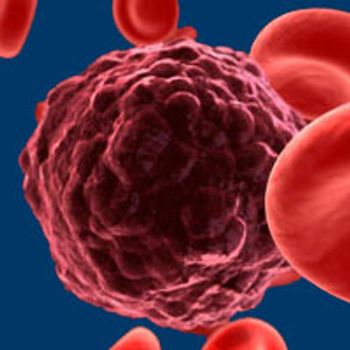
Novartis’ just-approved chimeric antigen receptor (CAR) T-cell therapy tisagenlecleucel is going to be introduced on the market at a price of $475,000 for a single infusion, an amount that is within the range anticipated by oncologists.
End-of-life palliative care consultations can significantly reduce healthcare utilization, according to a broad-based population study published in the Journal of Oncology Practice.
It is not far-fetched to believe that, one day soon, automated systems will be able to obtain payer approval for therapies without any human involvement.
Chimeric antigen receptor (CAR) T-cell therapies could spawn a new and lucrative industry in anticancer immunotherapy, resulting in single-infusion treatments costing hundreds of thousands of dollars, and even attracting medical tourism from abroad, where regulatory permissions are likely to come more slowly than in the United States.

The Association of Community Cancer Centers has long recognized the principle of mass-producing success based on an individual cancer center's achievement.
When it comes to treating older populations for cancer, it’s often the case that the only available data are based on trials of younger patients in far healthier condition.
As rumors circulate in Washington, DC, ASCO has called for efforts to reach a consensus on drug value to ensure affordability and access for patients and spur manufacturers to work harder on bringing innovative medicines to market.

In 2016, just a quarter of oncology practices considered themselves prepared for upcoming US Pharmacopeia (USP) standards on hazardous drug management, according to the 2017 Genentech Oncology Trend Report.
About 5 years ago, Texas Oncology moved to improve accountability and pathways compliance by introducing a pay incentive that put 2% to 3% of a physician’s pay at risk.

There is a lack of hard data on practice performance that makes it difficult to understand where to make improvements so that goals under the OCM can be reached.
CMS has put so much emphasis on reported data that it is now paramount for oncology practices to understand how data should be sifted and interpreted to arrive at meaningful conclusions.
Senate Republicans have introduced a healthcare bill that would revise many of the changes imposed by the Patient Protection and Affordable Care Act, cutting federal support for Medicaid and repealing the individual and employer mandates for having and providing insurance.

Regulatory actions have significantly reduced oncologists' pay in recent years, as part of the effort to improve value, but reforms are needed much higher up the drug distribution chain.
Researchers at Dana-Farber Cancer Institute and Brigham and Women’s Hospital are attempting to improve personalized medicine by analyzing DNA samples for known cancer biomarkers.
In recognition of the potential for real-world evidence to significantly improve the way patients with cancer are treated, CancerLinQ has formed new partnerships with the US government that are expected to coordinate the sharing of patient data and incorporate that information into the FDA regulatory process.