

The updated NCCN myeloma guideline broadens the diagnostic criteria for active disease and integrates novel therapies into the treatment paradigm.
The updated NCCN myeloma guideline broadens the diagnostic criteria for active disease and integrates novel therapies into the treatment paradigm.

Locoregional therapies are now considered potentially curable options that should be considered alongside transplant and resection for patients with hepatocellular carcinoma.

Mismatch repair-deficient gastrointestinal tumors are highly responsive to checkpoint blockade with anti-PD-1 therapy.

Neoadjuvant treatment with carboplatin and paclitaxel-based chemotherapy produced a 27.9% pathologic complete response rate in patients with resectable esophageal cancer, according to results of the NEOSCOPE trial.

The VEGFR inhibitor pazopanib was efficacious independent of T-cell receptor–gamma entropy in metastatic renal cell carcinoma setting.

A selective class I oral histone deactylase inhibitor may increase the antitumor effect of high- dose interleukin-2 in renal cell carcinoma.

The investigational anti-PD-L1 antibody avelumab demonstrated antitumor activity with an acceptable safety profile in a phase Ib trial of patients with metastatic urothelial cancer refractory to standard therapy.

A post hoc analysis of the COU-AA-302 clinical trial suggests that docetaxel has antitumor activity as first subsequent therapy following disease progression with abiraterone acetate in men with chemotherapy-naïve, metastatic castration-resistant prostate cancer.

Palbociclib enhances cell cycle control when added to anastrazole in the neoadjuvant setting in women with ER-positive primary breast cancer.

Breast cancer recurrence was similar whether postmenopausal women with ductal carcinoma in situ received anastrozole or tamoxifen for 5 years following local excision in the IBIS-II trial.

The risk of complications from mastectomy plus reconstruction was increased by two-fold compared with lumpectomy plus whole breast irradiation, after adjustment for other treatment differences.

Adding carboplatin to neoadjuvant chemotherapy improves disease-free survival significantly in women with triple-negative breast cancer but not HER2-positive breast cancer.

Premenopausal women with high-risk breast cancer of the luminal A subtype derive no benefit from adjuvant chemotherapy.

An investigational antibody that targets programmed death-ligand 1 (PD-L1) in combination with bevacizumab had strong antitumor activity and induced responses in 4 of 10 patients with metastatic renal cell carcinoma (mRCC) in an open-label phase Ib study.

Ramucirumab added to docetaxel significantly improved PFS compared with docetaxel monotherapy as second-line treatment in a phase II study of patients with metastatic transitional cell carcinoma.

In patients evaluable for treatment response, the ORR with the combination was 50%, with 11% having a CR.

The beneficial effect of abiraterone acetate on overall survival in men with progressive metastatic CRPC in the COU-AA-302 study becomes even more pronounced after adjustment for crossover from placebo to active treatment.
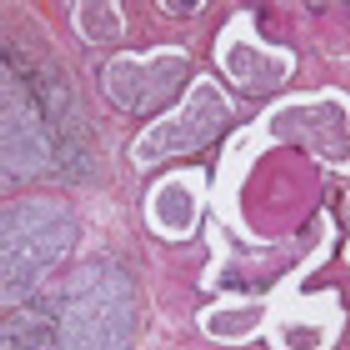
A phase I study conducted at the NIH, combining a fixed dose of PROSTVAC with escalating doses of the checkpoint inhibitor ipilimumab, produced encouraging survival results in mCRPC.

Duvelisib (IPI-145), an inhibitor of PI3K-δ and PI3K-γ signaling, had a favorable risk:benefit profile in patients with relapsed/refractory indolent non-Hodgkin lymphoma (iNHL) in a phase I study, reported Ian Flinn, MD, PhD

Treatment with elotuzumab in combination with lenalidomide and dexamethasone demonstrated encouraging efficacy in patients with relapsed/refractory multiple myeloma.

Idelalisib monotherapy shows activity in treatment-naïve patients ≥65 years with CLL or SLL, with nearly 90% of patients enrolled in a phase II study demonstrating a partial response.

Somatic mutations in the ATRX gene are observed in about 13% of pheochromocytomas/paragangliomas, the first such report of somatic ATRX mutations in these tumors.

Low nuclear expression of CDKN1B, a cyclin-dependent kinase inhibitor gene that encodes p27, in gastroenteropancreatic (GEP) neuroendocrine tumors (NETs) appears to be associated with a worse prognosis.

Somatostatin analogs remain the mainstay of medical therapy for symptom control in patients with carcinoid syndrome.

A subcutaneous depot formulation of octreotide has a rapid onset, greater bioavailability, and a similar duration of effect compared with intramuscular octreotide long-acting repeatable.
The rate of PFS with axitinib in patients with advanced carcinoid tumors is promising.

Selection of first-line treatments and the rational sequencing of therapies are among the unresolved questions in the treatment of pancreatic neuroendocrine tumors.

Adding saracatinib to vascular endothelial growth factor (VEGF)-targeted therapy did not improve response rates or overall survival while adding to toxicity in VEGF-resistant metastatic renal cell carcinoma
A high level of tumor infiltrating lymphocytes (TILs) may be a marker of pathologic complete response (pCR) to neoadjuvant chemotherapy in breast cancer, especially in patients with triple-negative or HER2-positive disease

Durable responses were obtained with the immune checkpoint inhibitor nivolumab, with a manageable safety profile, in a phase II dose-ranging trial conducted in patients with previously treated metastatic renal cell carcinoma (mRCC).