

Sergio A. Giralt, MD, reviewed emerging strategies to improve stem cell transplantation outcomes by reducing the risk of relapse using novel drugs and targeted radiotherapy.
Sergio A. Giralt, MD, reviewed emerging strategies to improve stem cell transplantation outcomes by reducing the risk of relapse using novel drugs and targeted radiotherapy.

Rates of early relapse post-autologous stem cell transplant in patients with relapsing multiple myeloma have not changed over time, but post-relapse survival among early relapsers has improved for patients transplanted after 2005 and for those relapsing since 2008.

According to data from a phase I/II clinical trial, carfilzomib can be safely combined with melphalan in a conditioning regimen prior to autologous hematopoietic cell transplantation in patients with relapsed multiple myeloma.

The addition of a platinum agent to standard gemcitabine and nab-paclitaxel was found to be associated with impressive response and overall survival rates in patients with stage IV pancreatic cancer.

Real-world data presented at the 2017 Gastrointestinal Cancers Symposium demonstrated that there were significantly higher costs associated with FOLFIRINOX as first-line therapy compared with the combination of nab-paclitaxel and gemcitabine in patients with metastatic pancreatic cancer.

The addition of ADI-PEG 20, a pegylated form of an arginine-depleting enzyme, to nab-paclitaxel and gemcitabine showed encouraging activity and minimal additional toxicity in the treatment of patients with advanced pancreatic adenocarcinoma.

Adding vemurafenib to the routinely employed combination of irinotecan and cetuximab prolonged progression-free survival in patients with BRAF-mutant metastatic colorectal cancer.

In a single-arm phase II study, cabozantinib demonstrated clinical activity in patients with advanced carcinoid and pancreatic neuroendocrine tumors.

Results from a retrospective multicenter study suggest that continuing trastuzumab beyond progression may improve survival in patients with HER2-positive advanced gastric or gastroesophageal junction adenocarcinoma who progress on first-line trastuzumab plus platinum-based chemotherapy.
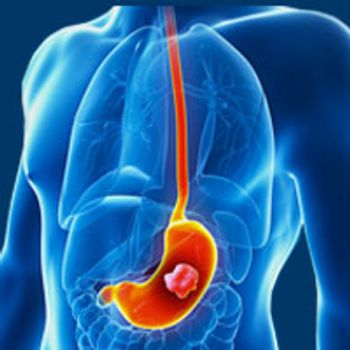
Surgical palliation in patients treated for malignant gastric outlet obstruction maintains quality of life and improves solid food intake for at least 3 months after surgery.

A continuous low-dose of ribociclib demonstrated both preliminary activity and an acceptable safety profile when compared with an intermittent dose of ribociclib when combined with fulvestrant in the treatment of postmenopausal patients with hormone receptor-positive, HER2-negative advanced breast cancer.

The addition of daratumumab to standard-of-care regimens tripled the increase in conversion to negative minimal residual disease status in the treatment of patients with relapsed/refractory multiple myeloma.

Testing for BRCA1 methylation or mRNA silencing did not predict a better response to carboplatin over docetaxel in patients with advanced triple-negative or BRCA1/2 breast cancer.

The combination of elotuzumab, lenalidomide, and dexamethasone has excellent activity and is well-tolerated in the treatment of high-risk smoldering multiple myeloma (SMM), providing hope that it can delay or even halt progression to MM.

The HER2-enriched subtype of HER2-positive breast cancer is a strong predictor of sensitivity to dual HER2 blockade without the use of chemotherapy.

First results from the phase III DATA study show no advantage to extending anastrozole therapy from 3 years to 6 for the primary endpoint of 5-year adapted disease-free survival.

Adding venetoclax to bortezomib and dexamethasone showed very promising efficacy and acceptable safety for patients with relapsed/refractory multiple myeloma.

The investigational Bruton tyrosine kinase inhibitor acalabrutinib was shown to be well-tolerated in patients with chronic lymphocytic leukemia and small lymphocytic leukemia who display intolerance to ibrutinib (Imbruvica).

Lenalidomide as maintenance following first-line immunochemotherapy substantially improves progression-free survival in the treatment of patients with high-risk chronic lymphocytic leukemia.

Phase I findings of a study examining the efficacy of osimertinib (Tagrisso) in heavily pretreated patients with EGFR-mutated advanced non-small cell lung cancer and leptomeningeal disease showed promising activity in the patient population.
Pembrolizumab (Keytruda) is associated with an exceptional overall response rate in patients with relapsed/refractory Hodgkin lymphoma.

Alectinib improved progression-free survival by 66% compared with the current standard crizotinib as initial inhibitor therapy in patients with advanced or recurrent ALK-positive non–small cell lung cancer.

About one third of patients with advanced renal cell carcinoma who were treated with single-agent nivolumab in the second-line setting or later were still alive at 4 and 5 years in long-term follow-up data from phase I and phase II clinical trials.

A regimen consisting of carfilzomib, pomalidomide, and dexamethasone merits further investigation for the treatment of patients with multiple myeloma whose disease progresses while on lenalidomide in the earlier stages of disease.

Anti–PD-1 therapy in the first-line induced responses in more than half of patients with advanced Merkel cell carcinoma, with encouraging durability to the responses.

The combination of ado-trastuzumab emtansine and pertuzumab was superior to the combination of paclitaxel and trastuzumab as neoadjuvant treatment for women with HER2-positive breast cancer.

A 70-gene signature (MammaPrint) demonstrated a high level of accuracy at identifying a large subset of women with clinically high-risk early stage breast cancer for whom adjuvant chemotherapy was unlikely to produce benefit.

The combination of ipilimumab (Yervoy) and nivolumab (Opdivo) showed a 42% improvement in overall survival compared with ipilimumab monotherapy for patients with advanced melanoma in a 2-year assessment of the phase II CheckMate-069 trial.

A new NCCN guideline for the management of vulvar cancer outlines the use of resection, radiation therapy, and chemotherapy based on disease site and stage, recognizing that only 2 randomized treatment trials have been completed.
Testing for EGFR mutations should be routine in patients with non–small cell lung cancer. With the presence of an EGFR mutation TKIs are an appropriate treatment option across multiple lines of therapy, according to the latest update from the NCCN.