



Breast Cancer
Latest News
Advertisement
Latest Videos




































































Advertisement
More News
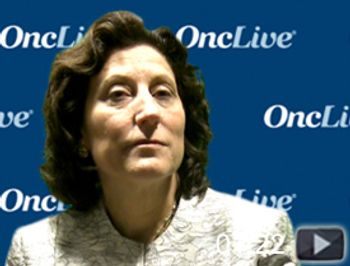
Hope Rugo, MD, professor of medicine, director of the Breast Oncology Clinical Trials Program, UCSF Helen Diller Family Comprehensive Cancer Center, discusses resistance to CDK4/6 inhibitors in hormone receptor (HR)-positive breast cancer.

The FDA has granted a priority review designation to a supplemental biologics license application for the frontline combination of atezolizumab plus nab-paclitaxel for patients with unresectable locally advanced or metastatic PD-L1–positive triple-negative breast cancer.

Terry L. Evans, MD, clinical assistant professor of medicine, University of Pittsburgh School of Medicine, UPMC Hillman Cancer Center, discusses the tolerability of CDK4/6 inhibitors in hormone receptor (HR)-positive breast cancer.

Low NR2F1 expression in disseminated tumor cells (DTCs) that is found in bone marrow may be indicative of developing metastatic breast cancer, according to results of a study published in Breast Cancer Research.

Fabrice Andre, MD, PhD, professor of medical oncology, Institut Gustave Roussy, Villejuif, France, discusses the rationale for the SOLAR-1 trial in breast cancer.

The efficacy of combination therapy with a checkpoint inhibitor and chemotherapy has been proved in the triple-negative breast cancer space, and the additive and early toxicity may be worth the survival benefit, according to Lisa A. Carey, MD.

Hope S. Rugo, MD, discusses CDK4/6 inhibition in HR-positive breast cancer, mechanisms of resistance to these drugs, and other potential pathway blockades.

Michelle E. Melisko, MD, discusses the clinical implications of the TAILORx and MINDACT studies.

In a presentation during an OncLive® State of the Science Summit™, Melanie Majure, MD, discussed the duration of endocrine-directed therapy for estrogen receptor–positive breast cancer.

Peter Schmid, MD, PhD, shares the results of IMpassion130 and discussed his thoughts on the future of immunotherapy in breast cancer.

Joseph A. Sparano, MD, discusses the potential for liquid biopsy and the ongoing challenge of improving survival for patients with metastatic breast cancer.

Peter Schmid, MD, PhD, lead at the Centre for Experimental Cancer Medicine, Barts Cancer Institute, discusses findings from the IMpassion130 trial in triple-negative breast cancer (TNBC).
More than half of patients with advanced solid tumors associated with NTRK gene fusions responded to treatment with the small-molecule inhibitor entrectinib, an integrated analysis of 3 clinical trials showed.

Fabrice André, MD, PhD, professor, Department of Medical Oncology, Institut Gustave Roussy, discusses the impact of the SOLAR-1 findings in breast cancer at the 2018 ESMO Congress.





The addition of the PI3K inhibitor alpelisib to fulvestrant nearly doubled median progression-free survival compared with the endocrine therapy alone in patients with HR-positive/HER2-negative advanced breast cancer who have a PIK3CA mutation.

The combination of palbociclib plus fulvestrant led to a clinically meaningful benefit in overall survival in patients with hormone receptor–positive, HER2-negative advanced breast cancer who had progressed or relapsed on prior endocrine therapy.
Advertisement
Advertisement
Trending on OncLive
1
FDA Approves Tucatinib Plus Trastuzumab/Pertuzumab as First-Line Maintenance in Advanced HER2+ Breast Cancer
2
FDA Grants Breakthrough Device Designation to Natera’s Multi-Cancer Early Detection Assay
3
Five Under 5: Top Oncology Videos for the Week of 10/5/2026
4
GI Cancer Monthly Rewind: Key News and Expert Insights You May Have Missed in September 2026
5