



Breast Cancer
Latest News
Advertisement
Latest Videos






























































Advertisement
More News

Frank A. Vicini, MD, radiation oncologist, 21st Century Oncology of Michigan, compares the use of partial breast irradiation (PBI) with that of whole breast irradiation (WBI) in women with early-stage breast cancer at the 2018 San Antonio Breast Cancer Symposium.

Improvements observed in progression-free survival and overall survival with the addition of first-line atezolizumab to nab-paclitaxel in patients with metastatic triple negative breast cancer or inoperable locally advanced TNBC are exclusive to those patients with PD-L1 expression ≥1% in immune cells.
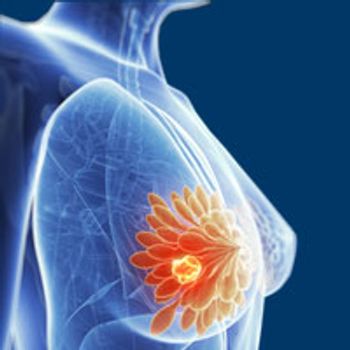
Delayed treatment with chemotherapy of more than 30 days after surgery for patients with triple-negative breast cancer is associated with worse survival rates and outcomes than those who receive adjuvant chemotherapy within 30 days of their procedure.
Jennifer Litton, MD, associate professor in the Department of Breast Medical Oncology at The University of Texas MD Anderson Cancer Center, discusses a neoadjuvant study of talazoparib (Talzenna) for patients with BRCA1/2 mutated triple-negative breast cancer (TNBC) during the 2018 San Antonio Breast Cancer Symposium.
Dawn Hershman, MD, MS, professor of Medicine and Epidemiology, Columbia University Medical Center, leader of the breast cancer program at NewYork-Presbyterian/Columbia University Irving Medical Center, discusses the association between cardiovascular medication and cardiovascular events following a diagnosis of early-stage breast cancer during the 2018 San Antonio Breast Cancer Symposium.
Pathologic complete response following neoadjuvant chemotherapy appeared to be associated with improved survival outcomes among patients with breast cancer.
Adam M. Brufsky, MD, PhD, associate director, Clinical Investigation, University of Pittsburgh, discusses genomic assays for breast cancer.

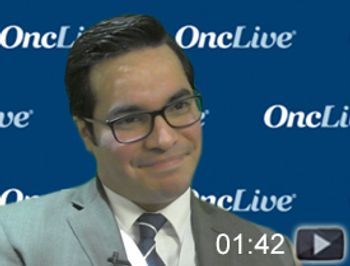
Roberto A. Leon Ferre, MD, oncologist, Mayo Clinic, discusses ongoing research in triple-negative breast cancer (TNBC).

Women between the ages of 30 and 39 who have at least 1 of 3 risk factors may benefit from starting their annual mammography screening at age 30.
Ruth O’Regan, MD, discusses the current landscape of hormone receptor–positive breast cancer and the unanswered questions that still need to be addressed.
Judy C. Boughey, MD, chair, Division of Surgery Research, Mayo Clinic, discusses the surgical management of patients with node-positive breast cancer.

The treatment options for women with hormone receptor (HR)–positive metastatic breast cancer have evolved rapidly in the past decade, with the introduction of the CDK4 and CDK6 inhibitors representing a major advance.

Fabrice Andre, MD, PhD, discusses the SOLAR-1 findings and their impact on the breast cancer landscape.
Advertisement
Advertisement
Trending on OncLive
1
FDA Approves Tucatinib Plus Trastuzumab/Pertuzumab as First-Line Maintenance in Advanced HER2+ Breast Cancer
2
FDA Grants Breakthrough Device Designation to Natera’s Multi-Cancer Early Detection Assay
3
Five Under 5: Top Oncology Videos for the Week of 10/5/2026
4
GI Cancer Monthly Rewind: Key News and Expert Insights You May Have Missed in September 2026
5