
Breast Cancer
Latest News
Advertisement
Latest Videos


































































Advertisement
More News
The FDA has approved talazoparib (Talzenna) for patients with deleterious or suspected deleterious germline BRCA-mutated, HER2-negative locally advanced or metastatic breast cancer.
Massimo Cristofanilli, MD, discusses a session at the 20th Annual Lynn Sage Breast Cancer Symposium on the roles of a multidisciplinary team.
George Sledge, Jr., MD, discusses the benefit to the cost of genomic sequencing decreasing overtime.

Molecular Profiling in Metastatic Breast Cancer: Not Yet Standard of Care, But May Be in Near Future
As the cost of sequencing continues to fall, genomic testing will likely become widespread in all types of metastatic cancer, including breast cancer.
William J. Gradishar, MD, discusses how far the breast cancer field has advanced over the last 20 years and the data he is anticipating to read out in the future.
Multiple gene signature assays have been developed that supply prognostic information for decisions on adjuvant chemotherapy and whether therapy should be of extended duration.

Determining the optimal adjuvant therapy in young women with breast cancer remains challenging, but some clarity is beginning to emerge.
Kathryn Ruddy, MD, discusses how genetic testing could impact treatment of patients with breast cancer.
Andrea V. Barrio, MD, discusses the challenges with phyllodes tumors of the breast and how to manage this disease moving forward.
Elizabeth Mittendorf, MD, PhD, discusses the rationale for updating the AJCC staging system in patients with breast cancer. This system was originally developed in the 1970s but is still used today.

All triple-negative breast cancers are not created equal, and clinicians should consider their inherent heterogeneity during diagnosis and treatment planning.
Monica Morrow, MD, addresses how she treats patients with breast cancer who have locoregional recurrence and how therapeutic approaches have evolved over recent years.
Sara McLaughlin, MD, professor of Surgery, Mayo Clinic, discusses the frequency that lymphedema appears in patients with breast cancer and addresses the complications in identifying this after her presentation at the Lynn Sage Breast Cancer Symposium.
Just as immunotherapies are transforming clinical practice for oncologists, these new therapies are also changing the practice of pathology and offering new ways for oncologists and pathologists to collaborate and improve patient care.
Luis Z. Blanco Jr., MD, assistant professor of Pathology, Northwestern University, discusses the role a pathologist plays in the treatment of a patient with breast cancer during a presentation at the Lynn Sage Breast Cancer Symposium.
Scalp cooling to limit alopecia in patients with cancer who are receiving chemotherapy is edging closer to becoming a widespread patient offering following recent FDA clearances.
Michelle E. Melisko, MD, associate clinical professor, Department of Medicine, University of California, San Francisco Helen Diller Family Comprehensive Cancer Center, reflects on the findings from the MINDACT trial in breast cancer.
Laura J. Esserman, MD, MBA, discusses the goals of the I-SPY trials and their impact thus far on patients with high-risk early breast cancer.
Sara A. Hurvitz, MD, director of the Breast Oncology Program, medical director of the Clinical Research Unit, University of California, Los Angeles Jonsson Comprehensive Cancer Center, discusses novel agents in HER2-positive breast cancer.

Hope Rugo, MD, professor of medicine, director of the Breast Oncology Clinical Trials Program, UCSF Helen Diller Family Comprehensive Cancer Center, discusses pathway blockade in breast cancer.

Laura J. Esserman, MD, MBA, professor, University of California, San Francisco Helen Diller Comprehensive Cancer Center, 2018 Giant of Cancer Care® for Cancer Diagnostics, discusses the I-SPY 2 trial in breast cancer.
Matthew J. Ellis, MD, PhD, professor and director, Lester and Sue Smith Breast Center, associate director of precision medicine, Dan L. Duncan Comprehensive Cancer Center, Baylor College of Medicine, discusses adjuvant CDK4/6 inhibition in hormone receptor (HR)-positive breast cancer.
Patients with early-stage breast cancer facing a high risk of recurrence would benefit from the expanded use of adjuvant therapy, according to updated guidelines from the American Society of Clinical Oncology.
Advances in subtype-specific treatments, immunotherapy, ongoing issues with younger patients, the optimal use of neoadjuvant and adjuvant regimens, and molecular testing will be discussed at the 20th Annual Lynn Sage Breast Cancer Symposium.
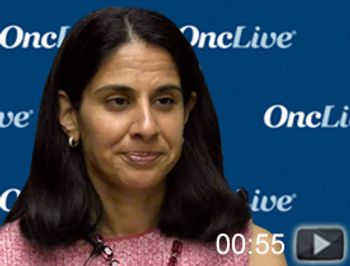
Sara M. Tolaney, MD, MPH, instructor of medicine, Harvard Medical School, attending physician of medical oncology, Dana-Farber Cancer Institute, discusses recent advances in the treatment of patients with hormone receptor-positive breast cancer.
Advertisement
Advertisement
Trending on OncLive
1
FDA Approves Tucatinib Plus Trastuzumab/Pertuzumab as First-Line Maintenance in Advanced HER2+ Breast Cancer
2
FDA Grants Breakthrough Device Designation to Natera’s Multi-Cancer Early Detection Assay
3
Five Under 5: Top Oncology Videos for the Week of 10/5/2026
4
GI Cancer Monthly Rewind: Key News and Expert Insights You May Have Missed in September 2026
5