



Breast Cancer
Latest News
Advertisement
Latest Videos


































































Advertisement
More News
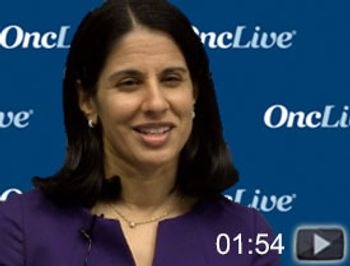
Sara M. Tolaney, MD, MPH, instructor of medicine, Harvard Medical School, attending physician of medical oncology, Dana-Farber Cancer Institute, discusses the phase Ib results of abemaciclib (Verzenio) plus pembrolizumab (Keytruda) for hormone receptor-positive, HER2-negative metastatic breast cancer.

In a groundbreaking study of costs and quality of cancer care among cancer clinics in the state of Washington, investigators found wide disparity in end-of-life care, suggesting that improvements in cost and quality could be attained if treatment centers share information on what works and endeavor to improve.

Yelena Novik, MD, discusses the application of CDK4/6 inhibition and methods to overcome resistance in ER-positive breast cancer.
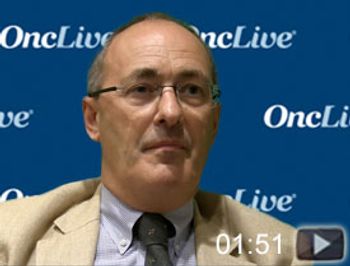
Matthew J. Ellis, MD, PhD, professor and director, Lester and Sue Smith Breast Center, associate director of precision medicine, Dan L. Duncan Comprehensive Cancer Center, Baylor College of Medicine, discusses resistance to endocrine therapy in hormone receptor (HR)-positive breast cancer.

Wendy A. Woodward, MD, PhD, professor and chief, Clinical Breast Radiotherapy Service, Department of Radiation Oncology, The University of Texas MD Anderson Cancer Center, discusses radiotherapy in breast cancer.
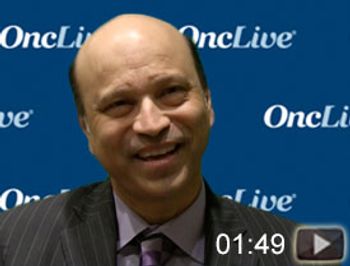
Debu Tripathy, MD, professor and chairman, Department of Breast Medical Oncology, Division of Cancer Medicine, The University of Texas MD Anderson Cancer Center, discusses the management of hormone-receptor (HR)-positive early-stage breast cancer.
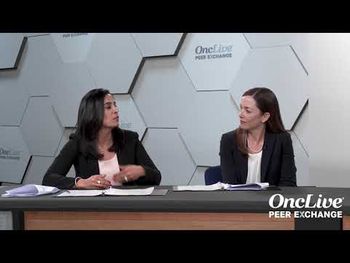


Maryann J. Kwa, MD, discusses the optimal duration of endocrine therapy in the treatment of patients with early-stage ER-positive breast cancer.

Michael A. Savin, MD, shares his insight on adjuvant endocrine therapy for premenopausal women with hormone receptor-positive breast cancer.
Alex E. Denes, MD, discusses the mixed results looking at the optimal duration of adjuvant endocrine therapy in postmenopausal women with breast cancer.
Francisco J. Esteva, MD, PhD, medical oncologist, New York University’s Perlmutter Cancer Center, discusses the impact of the approval of the trastuzumab (Herceptin) biosimilar MYL-1401O (Ogivri; trastuzumab-dkst).
Jacqueline Vuky, MD, discusses the management of metastatic disease and CDK4/6 inhibitors in breast cancer.

David B. Page, MD, discusses emerging treatment approaches for patients with triple-negative breast cancer.
Maryann J. Kwa, MD, instructor, Department of Medicine, NYU Langone’s Perlmutter Cancer Center, discusses the results of the TAILORx trial in breast cancer.
Advertisement
Advertisement
Trending on OncLive
1
FDA Approves Tucatinib Plus Trastuzumab/Pertuzumab as First-Line Maintenance in Advanced HER2+ Breast Cancer
2
Five Under 5: Top Oncology Videos for the Week of 10/5/2026
3
GI Cancer Monthly Rewind: Key News and Expert Insights You May Have Missed in September 2026
4
FDA Grants Fast Track Designation to PSV359 for Advanced FAP-Positive Solitary Fibrous Tumors
5