
Breast Cancer
Latest News
Advertisement
Latest Videos

































































Advertisement
More News

Sara Hurvitz, MD, shares insight on the 3 CDK4/6 inhibitors approved in HR-positive breast cancer, and looks toward the future of these agents, which will likely include combination strategies.
Hatem Soliman, MD, medical oncologist, The Center for Women’s Oncology, Moffitt Cancer Center, discusses the use of combination therapies in the treatment of patients with breast cancer.
Mark Burkard, MD, PhD, discusses an unusual study launched at the University of Wisconsin.
Adam M. Brufsky, MD, PhD, professor of Medicine, associate chief of Hematology/Oncology, co-director of the Comprehensive Breast Care Center, associate director of Clinical Investigation, University of Pittsburgh, discusses multiparametric assays in breast cancer.

Susan A. McCloskey, MD, MSHS, assistant professor of radiation oncology, University of California Los Angeles (UCLA) Medical Center, Jonsson Comprehensive Cancer Center, discusses the evolution of postoperative radiation in patients with breast cancer.
Reshma L. Mahtani, DO, discusses the use of adjuvant endocrine therapy in premenopausal breast cancers, specifically the use of ovarian function suppression and GnRH agonists.
Dennis J. Slamon, MD, PhD, director, Clinical/Translational Research, Revlon/University of California, Los Angeles (UCLA) Women's Cancer Research Program, Jonsson Comprehensive Cancer Center, UCLA, discusses the use of biosimilars in clinical practice.
Everolimus demonstrated strong potential as an effective tool for overcoming endocrine resistance in postmenopausal women with ER-positive, HER2-negative metastatic breast cancer resistant to AI therapy.
Hung T. Khong, MD, discusses the benefits of neoadjuvant endocrine therapy and addresses the use of adjuvant endocrine therapy in ER-positive breast cancer.
Hatem Soliman, MD, discusses the potential role of immunotherapy in triple-negative breast cancer.
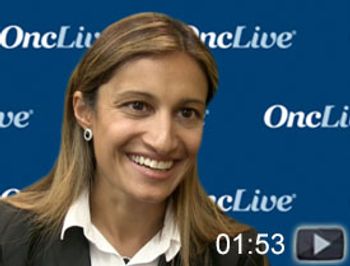
Rena D. Callahan, MD, assistant clinical professor of medicine, University of California, Los Angeles Jonsson Comprehensive Cancer Center, discusses the use of endocrine therapy in patients with estrogen receptor (ER)-positive breast cancer.
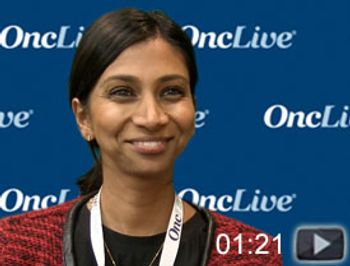
Aashini Master, DO, assistant clinical professor, Division of Hematology/Oncology, University of California, Los Angeles Medical Center, discusses the WINS and WHEL trials in patients with breast cancer.
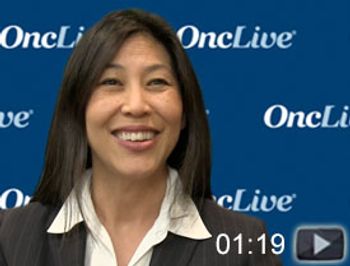
Maggie DiNome, MD, associate professor of surgery, University of California, Los Angeles Medical Center, discusses the evolution of surgical approaches in patients with breast cancer.
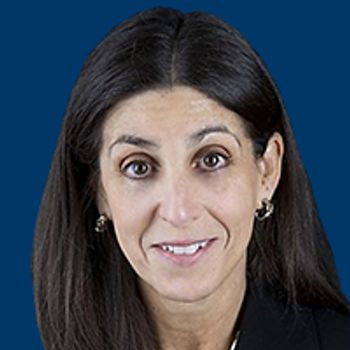
Nadine M. Tung, MD, discusses the role of PARP inhibitors for patients with BRCA-positive breast cancer and the importance of genetic testing.

Women with HER2-negative metastatic breast cancer associated with a germline BRCA mutation may have a slight survival advantage with a PARP inhibitor instead of chemotherapy.
Laura M. Freedman, MD, discusses the impact of the updated NCCN guidelines on clinical applications of radiation therapy in patients with breast cancer.
Ruta D. Rao, MD, elaborates on the findings of the ABCSG-16, SOFT, and TEXT clinical trials and how they have shaped adjuvant treatment for ER-positive breast cancer.
Kimberly L. Blackwell, MD, medical oncologist, Duke Cancer Institute, discusses the treatment of young women with breast cancer.
Frances Valdes-Albini, MD, assistant professor of clinical medicine, Sylvester Comprehensive Cancer Center, University of Miami Health System, discusses the FDA approval of adjuvant pertuzumab (Perjeta) in patients with HER2-positive breast cancer.
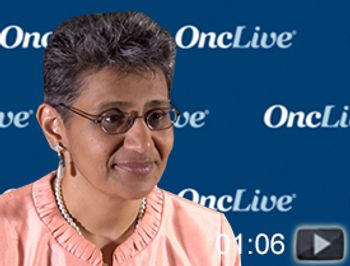
Anees B. Chagpar, MD, FACS, associate professor, Department of Surgery, Yale School of Medicine, assistant director, Global Oncology, Yale Comprehensive Cancer Center, discusses surgery of the primary tumor in the metastatic setting of breast cancer.
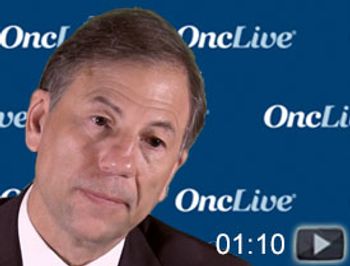
Eleftherios (Terry) P. Mamounas, MD, medical director of the Comprehensive Breast Program at the University of Florida Health Cancer Center, discusses the management of neoadjuvant chemotherapy for patients with breast cancer.
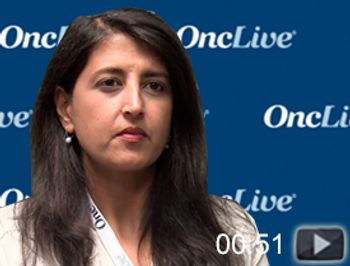
Reshma L. Mahtani, DO, assistant professor of clinical medicine, Sylvester Comprehensive Cancer Center, University of Miami Miller School of Medicine, discusses side effects of ovarian suppression in patients with breast cancer.
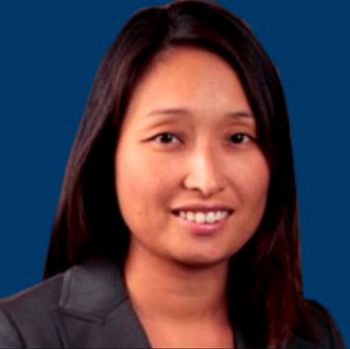
Heather Han, MD, discusses emerging approaches for combating endocrine resistance in patients with ER-positive breast cancer.
An analysis of clinical characteristics, gene expression, and 21-gene Breast Recurrence Score results identified distinctive biologic features of breast cancer in men.
Susan Domchek, MD, director of the Basser Center for BRCA at Penn Medicine, discusses areas of investigation in breast cancer.
Advertisement
Advertisement
Trending on OncLive
1
FDA Approves Tucatinib Plus Trastuzumab/Pertuzumab as First-Line Maintenance in Advanced HER2+ Breast Cancer
2
Five Under 5: Top Oncology Videos for the Week of 10/5/2026
3
GI Cancer Monthly Rewind: Key News and Expert Insights You May Have Missed in September 2026
4
FDA Grants Fast Track Designation to PSV359 for Advanced FAP-Positive Solitary Fibrous Tumors
5