




Breast Cancer
Latest News
Advertisement
Latest Videos





































































Advertisement
More News

A new American Society for Radiation Oncology guideline calls for hypofractionated whole breast irradiation for patients with breast cancer regardless of age, tumor stage, and previous chemotherapy treatment.

Kelly McCann, MD, PhD, a medical oncologist in the Breast Cancer Research Group at the University of California, Los Angeles, discusses ongoing research in the field of HER2-positive breast cancer.
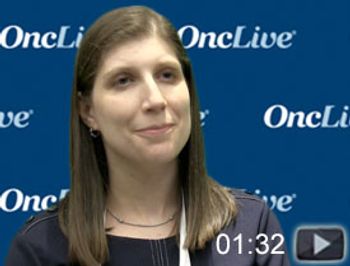
Naamit K. Gerber, MD, assistant professor, Department of Radiation Oncology, NYU Langone’s Perlmutter Cancer Center, discusses advances in radiation oncology in the treatment of patients with breast cancer.

The combination of palbociclib (Ibrance) and fulvestrant (Faslodex) failed to improve overall survival compared with fulvestrant and placebo in the phase III PALOMA-3 trial for patients with HR-positive, HER2-negative metastatic breast cancer.

Max Wicha, MD, shares insight on the intriguing research being conducted on breast cancer stem cells.

Michael Simon, MD, MPH, discusses advances in genetic testing for breast cancer, highlighting the overlap between genomic risk assessment and tumor genomic profiling.
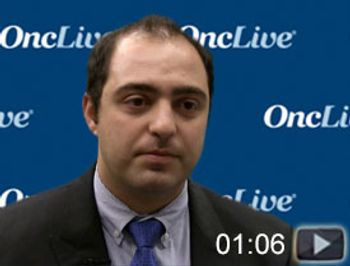
Zahi Mitri, MD, MS, assistant professor of medicine, Oregon Health and Science University, discusses the use of neratinib (Nerlynx) and pertuzumab (Perjeta) in patients with HER2-amplified breast cancer.

Kelly McCann, MD, PhD, a medical oncologist in the Breast Cancer Research Group at the University of California, Los Angeles, discusses the current prognosis for patients with HER2-positive breast cancer.

Patients younger than 65 years experienced net cancer costs that were higher for breast, colorectal, lung, and prostate cancer compared with patients who were 65 years and older.
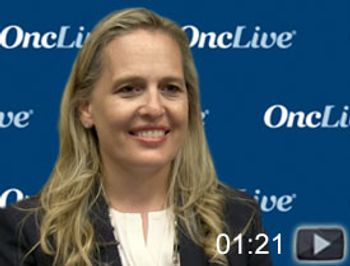
Rebecca Dent, MD, senior consultant, National Cancer Center, Singapore, discusses the results of the LOTUS trial in patients with triple-negative breast cancer.
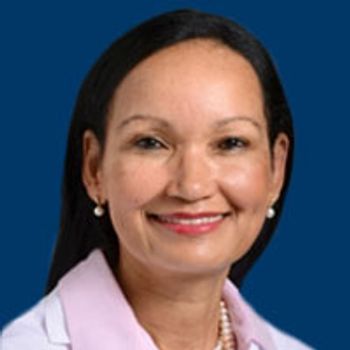
Lisa A. Newman, MD, discusses de-escalation strategies emerging in breast cancer surgery.

Eleanor M. Walker, MD, discusses advances in radiation therapy in breast cancer and the rationale for hypofractionated scheduling.

The FDA has granted a priority review to a new drug application for talazoparib for the treatment of patients with germline BRCA mutation–positive, HER2-negative locally advanced or metastatic breast cancer.

Half of patients with metastatic triple-negative breast cancer achieved disease control when treated with the combination of niraparib (Zejula) and pembrolizumab (Keytruda).

Arpana M. Naik, MD, associate professor of surgery, Division of Surgical Oncology, School of Medicine, Oregeon Health and Science University, discusses surgical approaches in the treatment of patients with breast cancer.
Dennis J. Slamon, MD, PhD, director, Clinical/Translational Research, Revlon/University of California, Los Angeles (UCLA) Women's Cancer Research Program, Jonsson Comprehensive Cancer Center, UCLA, discusses findings of the phase III MONALEESA-3 trial evaluating ribociclib (Kisqali) plus fulvestrant (Faslodex) in postmenopausal women with hormone receptor (HR)-positive, HER2-negative advanced breast cancer.
First-line treatment with the oral AKT inhibitor ipatasertib shows a promising trend toward improving overall survival when added to paclitaxel for the treatment of locally advanced or metastatic triple-negative breast cancer.

Adding the CDK4/6 inhibitor ribociclib to fulvestrant significantly prolonged progression-free survival in postmenopausal women with hormone receptor-positive, HER2-negative advanced breast cancer who received no or 1 prior line of therapy.

Adjuvant endocrine therapy alone is noninferior to adjuvant chemoendocrine therapy in patients with hormone receptor–positive, HER2-negative, node-negative early-stage breast cancer.

Personalized therapy based on tumor molecular profiling resulted in improved overall survival for patients with advanced, hard-to-treat cancers.

Treatment with taselisib in combination with fulvestrant provided a modest progression-free survival benefit of 2 months compared with fulvestrant alone in patients with estrogen receptor–positive, PIK3CA-mutant locally advanced or metastatic breast cancer

Advertisement
Advertisement
Trending on OncLive
1
FDA Approves Tucatinib Plus Trastuzumab/Pertuzumab as First-Line Maintenance in Advanced HER2+ Breast Cancer
2
Five Under 5: Top Oncology Videos for the Week of 10/5/2026
3
GI Cancer Monthly Rewind: Key News and Expert Insights You May Have Missed in September 2026
4
FDA Grants Fast Track Designation to PSV359 for Advanced FAP-Positive Solitary Fibrous Tumors
5