



Breast Cancer
Latest News
Advertisement
Latest Videos



































































Advertisement
More News
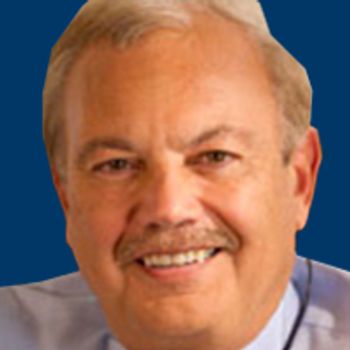
Dennis J. Slamon, MD, PhD, discusses how the MONALEESA-3 results have shifted the understanding of therapy placement in women with HR-positive, HER2-negative advanced breast cancer.
Jennifer Ligibel, MD, senior physician, Susan F. Smith Center for Women’s Cancer at Dana-Farber Cancer Institute, associate professor of medicine, Harvard Medical School, discusses lifestyle intervention in the treatment of patients with breast cancer.
Denise Yardley, MD, senior investigator, Sarah Cannon Research Institute, discusses the RESPECT trial in HER2-positive breast cancer.
Sara Hurvitz, MD, director of the Breast Oncology Program, medical director of the Clinical Research Unit, University of California, Los Angeles Jonsson Comprehensive Cancer Center, discusses HER2-targeted therapies for the treatment of breast cancer.
Sylvia Adams, MD, associate professor, Department of Medicine, director, Clinical Research, Breast Cancer Disease Management Group, NYU Langone’s Perlmutter Cancer Center, discusses whether the number of prior lines of therapy impact response to immunotherapy in patients with triple-negative breast cancer (TNBC).
Debu Tripathy, MD, professor and chairman, Department of Breast Medical Oncology, Division of Cancer Medicine, The University of Texas MD Anderson Cancer Center, discusses combination strategies with CDK4/6 inhibitors for the treatment of patients with hormone receptor (HR)-positive breast cancer.
Wendy A. Woodward, MD, PhD, professor and chief, Clinical Breast Radiotherapy Service, Department of Radiation Oncology, The University of Texas MD Anderson Cancer Center, discusses regional nodal irradiation for the treatment of patients with breast cancer.
Rashmi K. Murthy, MD, assistant professor, Department of Breast Medical Oncology, Division of Cancer Medicine, The University of Texas MD Anderson Cancer Center, discusses de-escalation strategies for patients with HER2-positive breast cancer.
Banu Arun, MD, professor in the Department of Breast Medical Oncology, Division of Cancer Medicine, The University of Texas MD Anderson Cancer Center, discusses immunogenicity in triple-negative breast cancer (TNBC).
In an effort to address strategies that many patients with cancer are adopting, ASCO has endorsed recommendations regarding the use of complementary therapies to manage symptoms and adverse effects of breast cancer treatment.
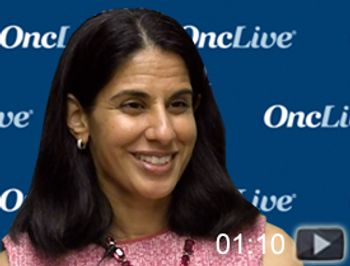
Sara M. Tolaney, MD, MPH, instructor of medicine, Harvard Medical School, attending physician of medical oncology, Dana-Farber Cancer Institute, discusses unmet needs in the treatment of patients with estrogen receptor (ER)-positive breast cancer.
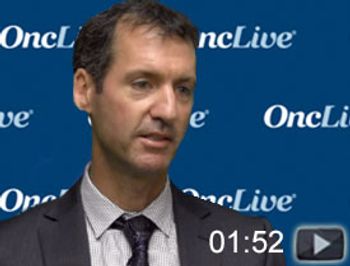
Ian E. Krop, MD, PhD, chief, Breast Oncology, Susan F. Smith Center for Women’s Cancers, clinical research director, Breast Oncology Center, associate professor of Medicine, Harvard Medical School, Dana-Farber Cancer Institute, discusses the impact of recent advances in breast cancer.
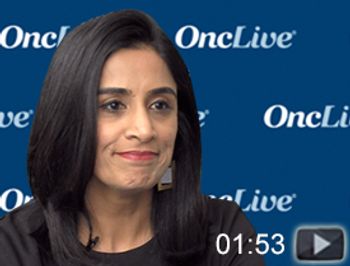
Komal L. Jhaveri, MD, FACP, medical oncologist, Memorial Sloan Kettering Cancer Center, discusses a basket trial of taselisib in patients with PIK3CA-mutated locally advanced or metastatic solid tumors.
Matthew J. Ellis, MD, PhD, discusses the use of CDK4/6 inhibitors in the treatment of patients with hormone receptor–positive breast cancer.
Banu K. Arun, MD, discusses the challenge of treating patients with TNBC and BRCA1-related breast cancers, the value of genotyping, and what she hopes to see in future trial results.
Zhaoming Wang, PhD, bioinformatics scientist, Department of Computational Biology, St. Jude Children’s Research Hospital, discusses a genomic analysis of breast cancer risk in pediatric cancer survivors.

Maryam Nemati Shafaee, MD, discusses the pivotal trials in breast cancer that were reported at the 2018 ASCO Annual Meeting.
Douglas Yee, MD, professor of medicine and pharmacology, Hematology, Oncology and Transplant, medical oncologist, University of Minnesota, discusses the categorization of patients with triple-negative breast cancer.

Sara M. Tolaney, MD, MPH, discusses developments in the treatment paradigms for patients with HR-positive or HER2-positive breast cancer.

Denise A. Yardley, MD, senior investigator of breast cancer research, Sarah Cannon Research Institute, discusses data with talazoparib in breast cancer.
Joseph A. Sparano, MD, associate director for clinical research, Albert Einstein Cancer Center, Montefiore Medical Center, discusses unmet needs in metastatic breast cancer.
Silvia Chiara Formenti, MD, chair, Department of Radiation Oncology, Weill Cornell, associate director, Meyer Cancer Center, radiation oncologist-in-chief, NewYork-Presbyterian Hospital, discusses the role of the immune system in cancer treatment.
Debu Tripathy, MD, professor and chairman, Department of Breast Medical Oncology, Division of Cancer Medicine, The University of Texas MD Anderson Cancer Center, discusses frontline endocrine therapies for patients with hormone receptor (HR)-positive breast cancer.
Patrick Borgen, MD, chair, Department of Surgery, director, Breast Center, Maimonides Medical Center, discusses important factors of deciding which patients with breast cancer need axillary lymph node dissection.

Combining Alpelisib (BYL719) with fulvestrant improved progression-free survival versus fulvestrant alone in postmenopausal women and men with HR-positive, HER2-negative, PIK3CA-mutant advanced or metastatic breast cancer that progressed after aromatase inhibitor treatment with or without a CDK4/6 inhibitor, meeting the primary endpoint of the phase III SOLAR-1 trial.
Advertisement
Advertisement
Trending on OncLive
1
FDA Approves Tucatinib Plus Trastuzumab/Pertuzumab as First-Line Maintenance in Advanced HER2+ Breast Cancer
2
FDA Grants Breakthrough Device Designation to Natera’s Multi-Cancer Early Detection Assay
3
Five Under 5: Top Oncology Videos for the Week of 10/5/2026
4
GI Cancer Monthly Rewind: Key News and Expert Insights You May Have Missed in September 2026
5