Breast Cancer
Latest News
Advertisement
Latest Videos
































































Advertisement
More News

David B. Page, MD, medical oncologist, Providence Cancer Center, discusses hormone-directed strategies in the treatment of patients with triple-negative breast cancer (TNBC).
Charlotte Kubicky, MD, PhD, associate professor of radiation medicine, School of Medicine, medical director, Tuality Oregon Health and Science Cancer Center, Oregon Health and Science University, discusses the optimal use of radiation in the treatment of patients with breast cancer.

Haythem Y. Ali, MD, discusses adjuvant advances in HER2-postitive breast cancer and emerging agents in the field.
Komal L. Jhaveri, MD, FACP, medical oncologist, Memorial Sloan Kettering Cancer Center, discusses acquired resistance to CDK 4/6 inhibitors in breast cancer.
Lisa A. Newman, MD, director, Breast Oncology Program, Henry Ford Cancer Institute, discusses advances in axillary surgery for the treatment of patients with node-positive breast cancer.
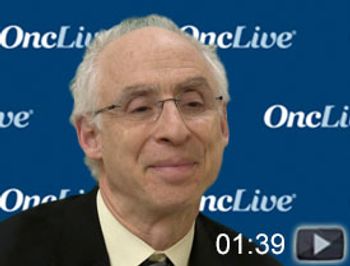
Michael Simon, MD, MPH, medical oncologist, Karmanos Cancer Institute, discusses genomic assays for patients with breast cancer.

Eleanor M. Walker, MD, senior staff physician, division director, Breast Services in the Department of Radiation Oncology, Henry Ford Cancer Institute, discusses the use of radiation therapy in patients with breast cancer.
Dennis J. Slamon, MD, PhD, and Sara A. Hurvitz, MD, discuss the impact of CDK4/6 inhibitors in ER-positive breast cancer.

Rena D. Callahan, MD, discusses controversies in the management of early-stage HR-positive breast cancer and neoadjuvant trial designs for these patients.

Aashini Master, DO, discusses efforts to integrate nutrition and health into breast cancer survivorship.
Advertisement
Advertisement
Trending on OncLive
1
FDA Approves Tucatinib Plus Trastuzumab/Pertuzumab as First-Line Maintenance in Advanced HER2+ Breast Cancer
2
Five Under 5: Top Oncology Videos for the Week of 10/5/2026
3
GI Cancer Monthly Rewind: Key News and Expert Insights You May Have Missed in September 2026
4
FDA Grants Fast Track Designation to PSV359 for Advanced FAP-Positive Solitary Fibrous Tumors
5