




Breast Cancer
Latest News

Frontline Palbociclib Effective Regardless of Prior Treatment in Breast Cancer Subgroups
By Tony Hagen
Advertisement
Latest Videos






































































Advertisement
More News

Improvements in progression-free survival with olaparib (Lynparza) remained consistent regardless of baseline tumor burden for patients with HER2-negative breast cancer with a germline BRCA1/2 mutation.

Debu Tripathy, MD, professor and chairman, Department of Breast Medical Oncology, Division of Cancer Medicine, The University of Texas MD Anderson Cancer Center, discusses the FDA approval of olaparib (Lynparza) for patients with BRCA-positive breast cancers and the impact it has had on clinical practice. Tripathy shared this insight in an interview during the 35th Annual Miami Breast Cancer Conference.

Claudine Isaacs, MD, professor, medical director, Fisher Center for Familial Cancer Research, co-director, Breast Cancer Program, Georgetown University/Lombardi Cancer Center, discusses antibody drug conjugates in the treatment of patients with triple-negative breast cancer.

Richard S. Finn, an associate professor of medicine at the Geffen School of Medicine at the University of California, Los Angeles, discusses the FDA approval of abemaciclib (Verzenio) for use in combination with an aromatase inhibitor for the frontline treatment of women with hormone receptor (HR)-positive, HER2-negative advanced or metastatic breast cancer.

The FDA has approved abemaciclib for use in combination with an aromatase inhibitor for the frontline treatment of postmenopausal women with hormone receptor-positive, HER2-negative advanced or metastatic breast cancer.

The survival benefit with adjuvant chemotherapy in ER-negative breast cancer patients with isolated locoregional recurrence was sustained in the final analysis of the phase III CALOR trial.

Low-coverage genome-wide sequencing of cell-free DNA from plasma is capable of profiling cancer genomes from blood and predicting survival outcomes for patients with metastatic triple-negative breast cancer.


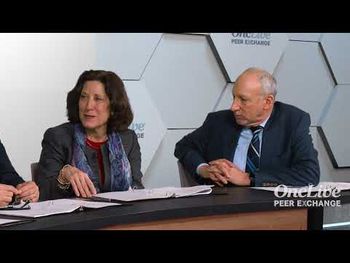
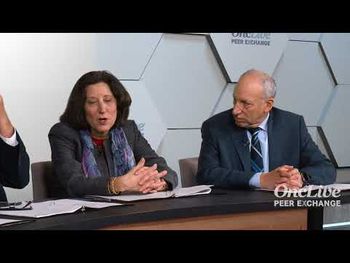







Aditya Bardia, MD, MPH, assistant professor of medicine, Harvard Medical School, attending physician, Medical Oncology, Massachusetts General Hospital, discusses the role of the microenvironment in the treatment of metastatic triple-negative breast cancer (TNBC).

Hope S. Rugo, MD, discusses the importance of individualizing doses of nab-paclitaxel in triple-negative breast cancer.

Prudence Francis, MD, Peter MacCallum Cancer Centre, discusses ovarian suppression in young women with hormone receptor (HR)-positive breast cancer.

Advertisement
Advertisement
Trending on OncLive
1
FDA Approves Tucatinib Plus Trastuzumab/Pertuzumab as First-Line Maintenance in Advanced HER2+ Breast Cancer
2
GI Cancer Monthly Rewind: Key News and Expert Insights You May Have Missed in September 2026
3
Five Under 5: Top Oncology Videos for the Week of 10/5/2026
4
FDA Grants Fast Track Designation to PSV359 for Advanced FAP-Positive Solitary Fibrous Tumors
5